


Editor’s Letter — The Italy Issue · July 2026
Italy isn’t a vacation. It’s a way of holding yourself.
I want to begin with a confession, because confession is the only honest way to open an issue about a country everyone thinks they already understand. For years I believed I loved Italy. I had the evidence: the photographs, the receipts, the small leather notebook with restaurant names underlined twice. And then one afternoon in a borrowed apartment in Turin not a famous city, not a postcard city, a working city of arcades and fog, I watched an old man drink an espresso, and I realised I had loved the wrong thing entirely.
He did not check his phone. He did not photograph the cup. He stood at the bar, one hand in his coat pocket, and he drank the coffee in three unhurried movements as though the act itself were sufficient. Thirty seconds. Then he nodded to the barista, set down a coin, and left. There was no performance in it, which is precisely why I couldn’t stop watching.
He was not having an experience.
He was simply, completely, where he was.
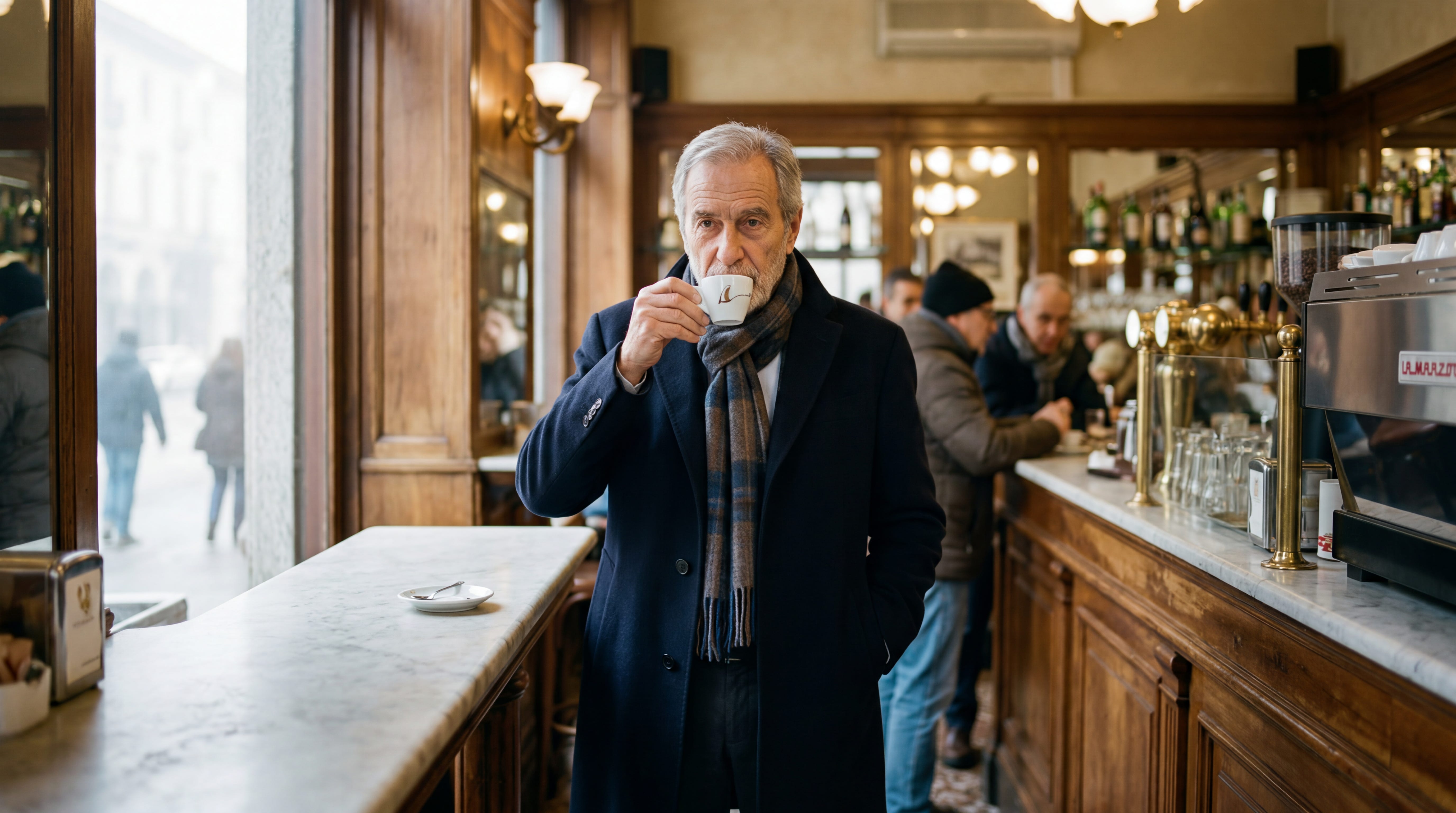
That is the thing tourism cannot sell you, and it is the only thing worth crossing a border for.
We have spent a decade learning to consume Italy as content. The aperitivo at golden hour, the lemons, the Vespa, the long table on the terrace a vocabulary so worn that it now arrives pre-grieved, nostalgic for itself before the photo is even taken. And in learning to consume the surface, we missed the structure underneath it.
Because the man at the bar was not displaying taste.
He was enacting it.
The restraint, the economy of gesture, the refusal to make a small moment into a large announcement that was the real luxury, and it cannot be bought, only practised.
This is the thesis of the entire issue, so let me say it plainly: Italy, at its best, is not a place you go. It is a discipline you adopt. A posture. A way of standing in your own life with enough confidence that you no longer need to explain yourself.
Consider what Italian culture, at its most refined, has understood for centuries that the rest of us are only now, exhausted, beginning to relearn. That the most expensive thing in any room is space. That the most elegant sentence is the one with a word removed. That a jacket that fits is worth more than ten that impress, that a meal of three ingredients can ruin you for a meal of thirty, and that the surest sign of someone who has nothing to prove is that they have, visibly, stopped trying to prove it.
None of this is decoration.
It is architecture, the load-bearing belief that beauty grows stronger the moment it stops explaining itself.
This is why Italy remains so difficult to imitate.
The surface is easy.
The discipline is not.
Anyone can buy the linen shirt, pour the negroni, arrange the tomatoes, book the palazzo, photograph the table, and caption the afternoon as though life has briefly become more beautiful. But the Italian lesson, when it is real, does not live in the objects. It lives in the refusal to over-explain them.
The tomato is not elevated because it has been styled. It is elevated because someone knew when to stop touching it. The shirt is not elegant because it is expensive. It is elegant because it understands the body and then leaves it alone. The room is not luxurious because every surface has been filled. It is luxurious because someone had the courage to leave space.
That courage is what interests me.
Because restraint is not emptiness.
It is judgment.
It is the ability to recognise the moment before beauty becomes decoration, before appetite becomes excess, before taste becomes performance, before the good thing is weakened by the anxious desire to make it undeniable.
Italy, at its best, teaches a kind of confidence that does not need constant translation. It does not ask every object to announce value. It does not ask every meal to become an event. It does not ask every woman to look newly assembled. It allows patina, routine, repetition, appetite, ageing, repair, and ordinary pleasure to remain visible.
That may be why it feels so radical now.
In a culture built around optimisation, Italy still offers the dangerous idea that a life can become more beautiful by becoming less edited for approval and more edited for truth.
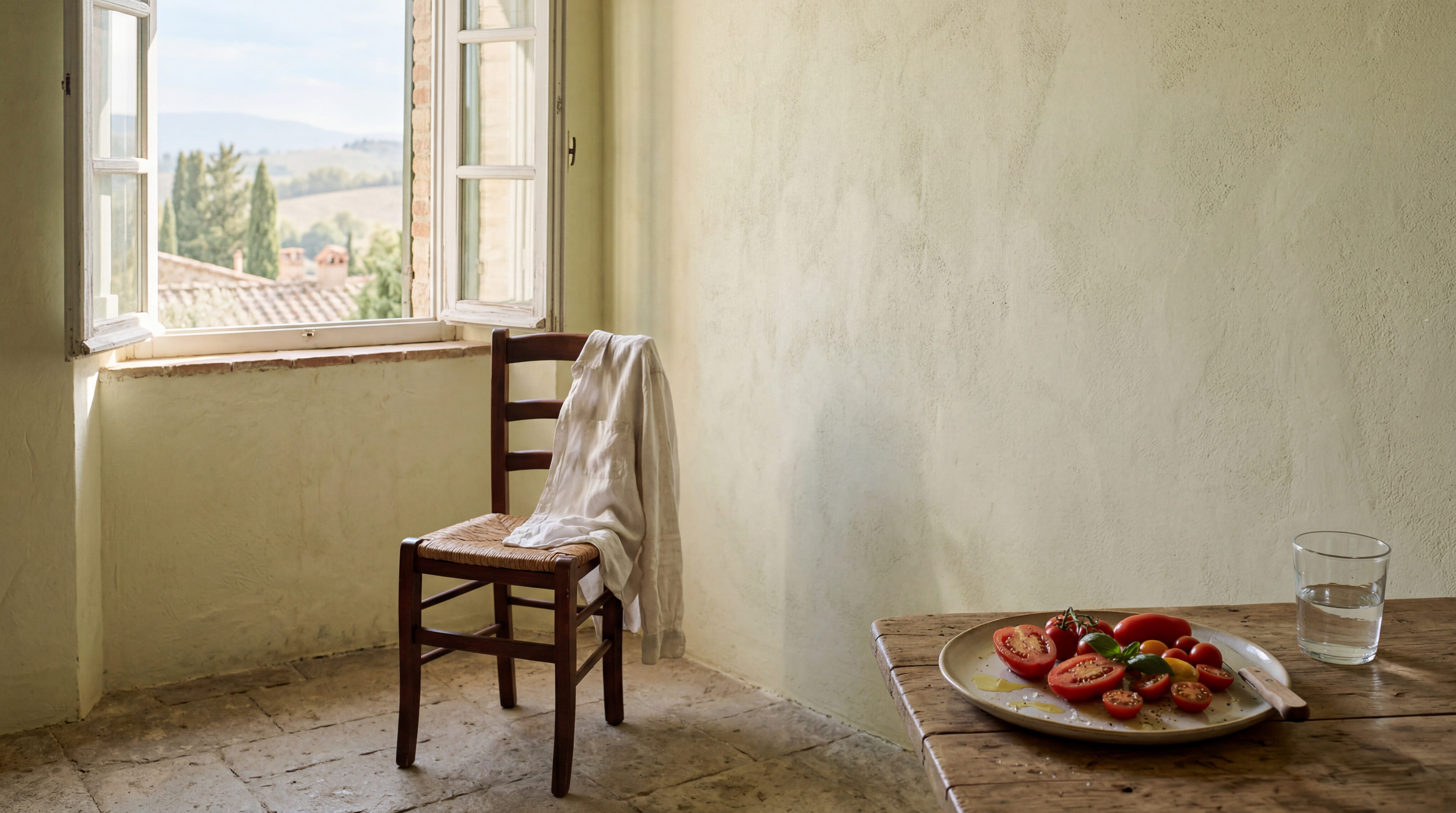
We named this issue The Italy Issue, but I’ll tell you a secret: it is barely about Italy at all.
It is about restraint.
It is about the decisions that make something feel considered.
Across the next four weeks we will move through fashion, opulence, fame, food, and beauty but in every pillar we are asking the same quiet question:
What does it look like to want less, and mean it more?
We will look at why the Italians invented quiet luxury long before a hashtag made it loud. Why an Italian car feels less like a machine and more like something that is, frankly, in love with you. Why their food regulates your nervous system before it ever flatters your mouth. Why the world’s most powerful beauty houses quietly manufacture in Lombardy and let you believe otherwise.
And we will sit with the harder ideas, too how taste is taught as inheritance rather than information, and why the most stylish people in Milan own far fewer clothes than you would ever guess.
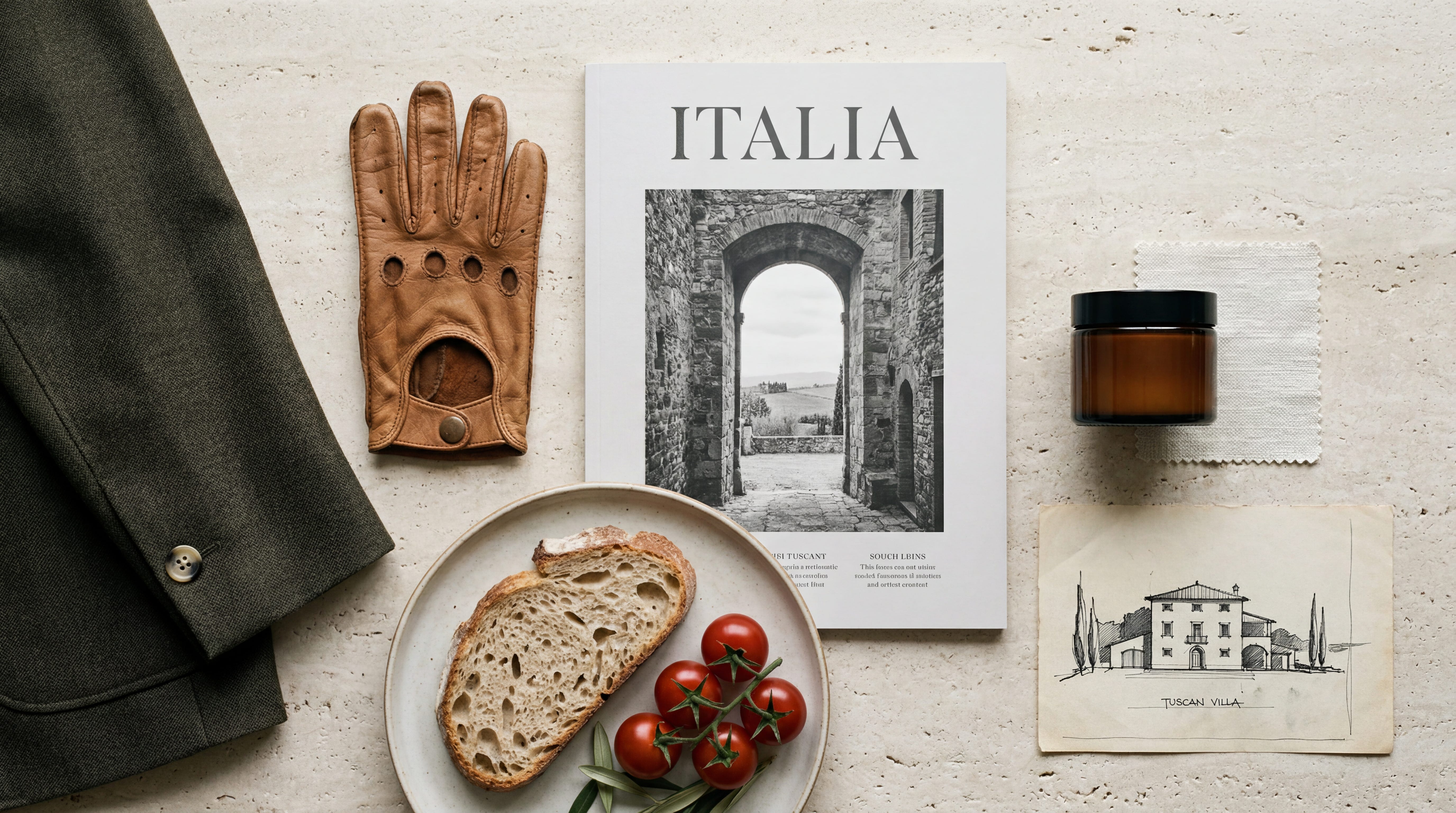
There will be no travel guide here.
No map of where to go.
If you want to find the real Italy, I can only offer you a method, not an address: stop performing the moment, and the moment will finally become yours.
I think I chose Italy for July because I needed the reminder too. Not to do more, prove more, or explain more but to edit. To return to the few things that actually hold a life together: appetite, beauty, work, care, and the discipline of choosing well.
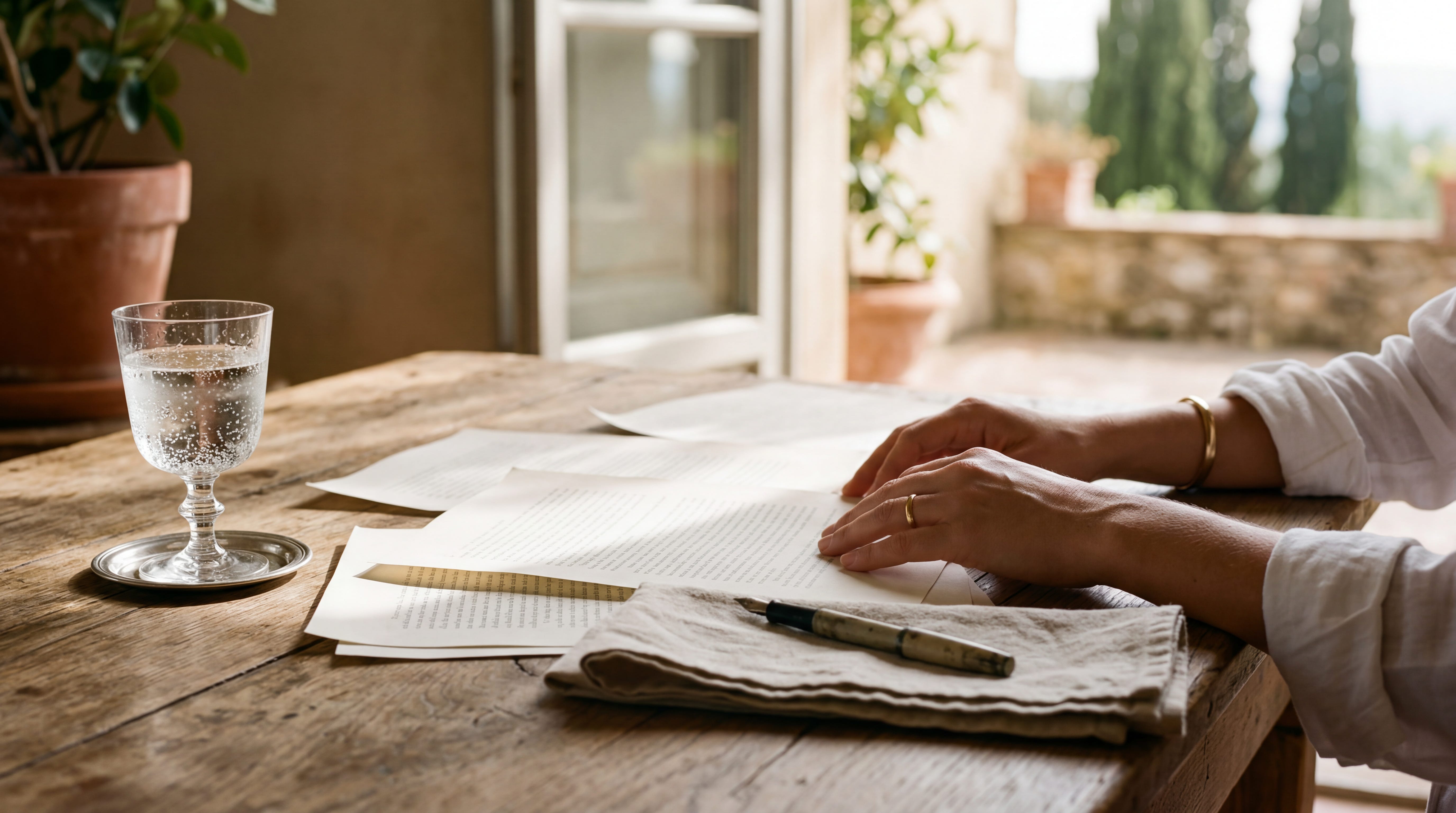
So pour something.
Sit somewhere with good light.
And read this slowly that, too, is the posture.
This is not a month about escape.
It is a month about return.
Welcome to The Italy Issue.
— Maria, Editor, OFFF DUTY
Next: How the Italians built the architecture of restraint long before anyone gave it a name — The Italians Invented Quiet Luxury.
Subscribe to stay inside The Italy Issue. This month, OFFF DUTY is decoding Italy through fashion, food, beauty, craft, interiors, and status one essay at a time.