


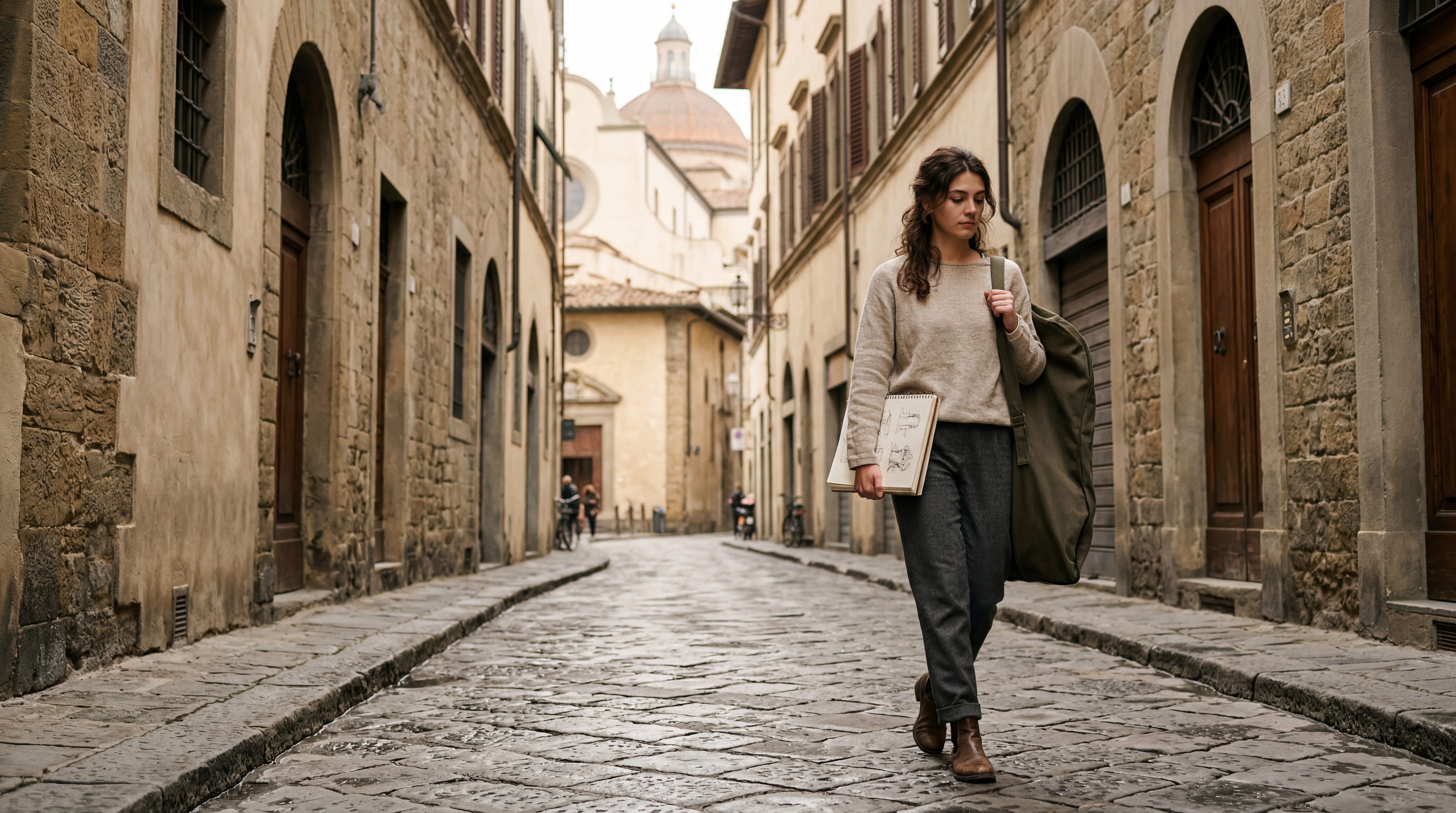
Italy does not teach fashion like content. It teaches it like inheritance.
Somewhere right now a nineteen-year-old is watching a forty second video that promises to explain “the rules of style,” and they will absorb it the way we absorb everything now fast, flat, and forgotten by lunch.
This is how most of the world learns taste in 2026: as information, downloaded and discarded.
And then there is Florence, where they are still doing something almost embarrassingly old-fashioned. They are teaching taste the slow way.
The only way it has ever actually taken.
Polimoda sits inside one of the few ecosystems on earth where fashion is not an idea about clothes but a living industrial culture a city and a region where the mills, the tanneries, the ateliers, the pattern-cutters, and the maisons are not abstractions in a lecture but a half-hour drive away, smelling of leather and steam, run by people whose grandparents ran them.
To study taste in Florence is to study it in situ, surrounded by the physical evidence of how the best things in the world are actually made.
That proximity changes everything, and it is the single thing no online course, however brilliant, can replicate.
You can stream the theory of a great seam.
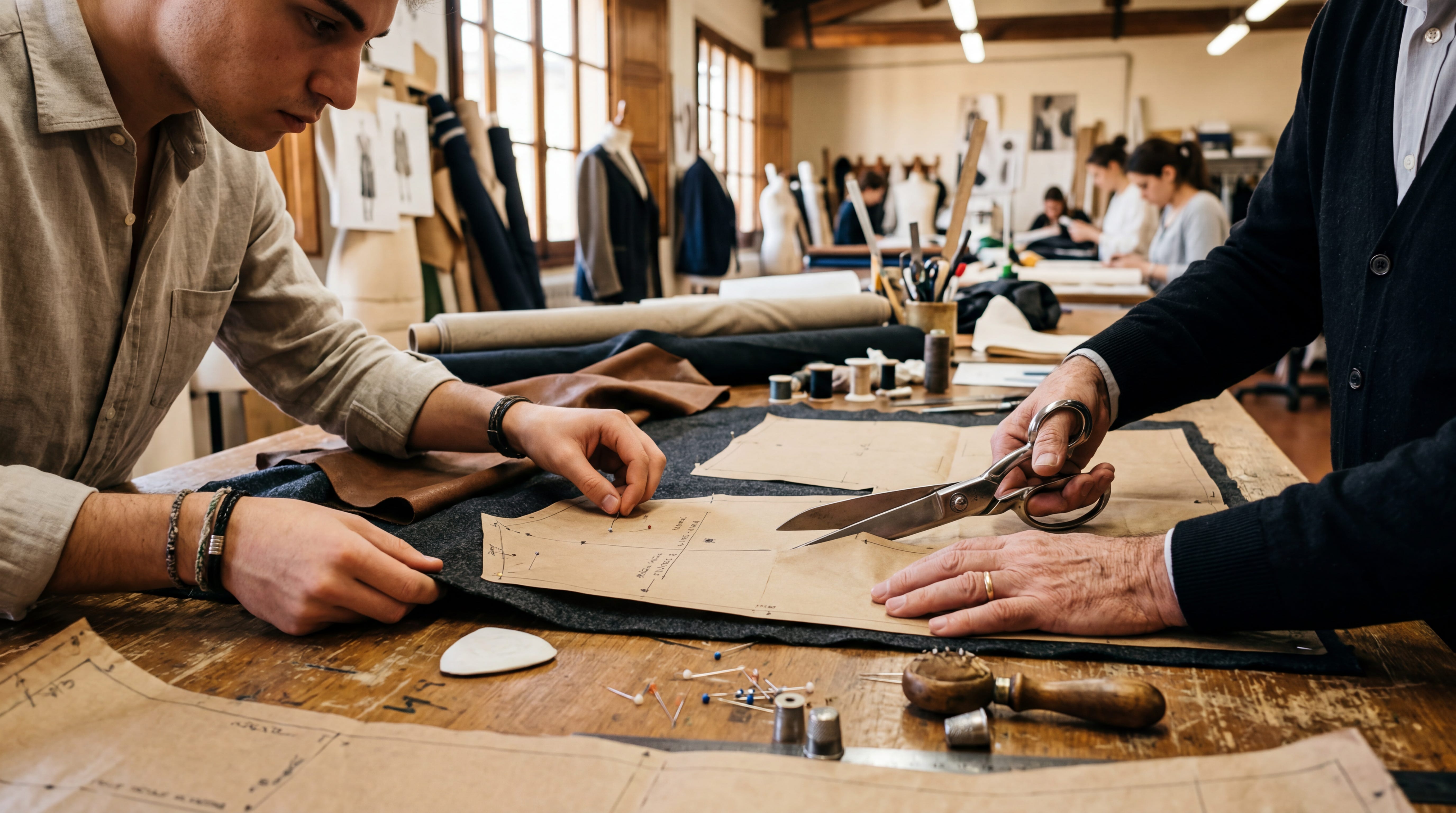
You cannot stream the moment a master makes you redo it for the fourth time because the third one had no soul.
This is the distinction at the heart of the Italian method, and it is worth dwelling on because it explains why their graduates carry an authority that is almost impossible to fake.
Most fashion education teaches you what is good.
The Italian education teaches you how to know which is a completely different and far more durable thing.
Information ages.
A trend you learned as gospel becomes a cliché within a season. But judgement, once installed, compounds for life.
The Italians are not trying to fill you with the right answers. They are trying, patiently and sometimes painfully, to build the apparatus inside you that generates the right answers on its own, forever, in situations no curriculum could have predicted.
How do they do it?
By apprenticeship logic, even inside a modern institution. By making you work with the actual materials until your hands know what your eyes cannot yet articulate. By placing you beside people who have given forty years to a single craft and letting their standards become, by sheer proximity, your standards.
There is a humbling that happens in these rooms a junior arrives certain they have taste, and a maker shows them, without cruelty, the gulf between liking something and understanding it.
That humbling is the curriculum.
Taste, the Italians insist, begins the day you discover how little you knew you did not know.
The Education of the Eye
This is the part of taste education that makes it uncomfortable. Real taste does not flatter the student at first. It corrects them.
It interrupts the easy confidence that comes from saving images, naming brands, and knowing the language of style before knowing the labour behind it.
A person can speak beautifully about fashion and still not know why one sleeve collapses and another holds, why one leather looks expensive after ten years and another looks tired after ten months, why one black dress feels inevitable and another feels merely safe.
That difference is not vocabulary.
It is exposure.
Taste is built through repeated contact with better standards than your own. You stand near the thing made properly. You compare. You fail to see the difference. Someone points it out. You look again. Slowly, painfully, the eye becomes less innocent.
What once looked similar becomes obviously unequal.
What once impressed you begins to feel loud.
What once seemed plain becomes almost impossible to improve.
This is why place still matters, despite everything technology has made available. A screen can show you references. It can explain history. It can introduce vocabulary. It can even sharpen instinct.
But it cannot fully replace the atmosphere of a place where the standard is not theoretical.
In Florence, beauty is not treated as a mood. It is embedded into streets, workshops, windows, leather, stone, proportion, and the daily evidence of people who have chosen material seriousness over speed.
The student absorbs this before they can articulate it. That is formation.
Not being told what to like.
Being changed until you can no longer like carelessly.

And there is the matter of time, which the rest of the educational world now treats as the enemy. Everywhere else, speed is the selling point: learn faster, qualify sooner, monetise immediately.
Florence is gloriously, defiantly unhurried.
It believes that taste cannot be rushed any more than a wine can, that the slow accumulation of corrections and exposures and small failures is not the cost of the education but the substance of it.
You are not paying for the certificate.
You are paying for the years for the unfashionable luxury of being formed slowly, in a place that still believes formation is a thing that happens to a person rather than a file that gets transferred.
This is why I would argue the question for any serious young creative is not “where can I learn the most, fastest?” but the far better question the Italians force you to ask:
Where will I be changed?
Because the schools that merely inform you will be obsolete the moment the information is.
The places that form you that rewire how you see, that install a standard you can never again unseen those are the ones whose effect you carry into every room for the rest of your working life.
An education in taste is not a transaction.
It is, if it works, a permanent alteration of the self.
Here is the OFFF DUTY intelligence, the practical edge, for anyone weighing where to go.
Look past the rankings and the alumni lists and ask one thing: is this place teaching me answers, or is it teaching me judgement?
Is it near the real making, or only near the talking about making?
Will I leave with a folder of trends, or with a built-in instrument that will still be generating good decisions when those trends are landfill?
The Italian model Florence, Polimoda, the whole ecosystem of craft pressing in from every side is one of the last places that has chosen judgement over answers, formation over information, the long alteration over the quick download.

The nineteen-year-old with the forty second video will know a hundred rules by Friday and forget them by Monday.
The one who goes to Florence will learn almost no rules at all.
They will learn something rarer and infinitely more expensive:
how to see.
And once you can truly see, you never need to be told what is good again.
You simply know the way the Italians have always known in the hands, in the eye, in the bone.
Next: James Knight Paccheco asks whether Dubai’s Rialto serves Italy or performs it — Italian, or Italian-Coded?
Read the rest of The Italy Issue on Substack.