


The summer hair conversation usually begins too late.
By the time the breakage appears, the colour has already oxidised, the ends are already splitting, and the person looking in the mirror is trying to repair damage that was significantly easier to prevent.
Sun, salt, chlorine, and heat do not behave like separate events.
They accumulate.
Each one compounds the effects of the others, in a sequence that is entirely predictable and almost entirely preventable with a protocol that costs less, in aggregate, than the repair treatments required after the fact.
This is that protocol.
It is not glamorous. It does not involve twelve steps or a curated rotation of products designed to photograph well. It involves understanding what summer actually does to the hair shaft, and then doing the specific things that address those mechanisms.
Four products.
A few habits.
The protocol that holds from June to September without drama.

What Summer Actually Does to Hair
The damage accumulation follows a consistent pattern, and understanding it changes how you approach prevention.
UV exposure contributes to protein degradation and weakens the structural integrity of the hair shaft. Hair is composed primarily of keratin a fibrous structural protein and prolonged exposure to sunlight can make the fibre more brittle, more porous, and more likely to break. The result is progressive roughness, dullness, and the specific kind of breakage that seems to appear suddenly, even though the damage has been accumulating for weeks.
Hair does not have melanin in the same regenerative system as skin.
The melanin in hair, which is responsible for colour, does not replenish once damaged. UV oxidation of melanin contributes to the characteristic brassiness in colour-treated hair and the lightening in natural hair, neither of which is a styling choice when it is happening against your will and ahead of schedule.
Salt water strips and dehydrates.
The hair cuticle the outermost layer of the hair shaft, composed of overlapping scales is protected by a surface lipid layer that contributes to moisture retention, smoothness, and shine. Seawater can disrupt that balance. The cuticle becomes rougher. Porosity increases. The hair feels dry, looks dull, and absorbs subsequent damage more readily because the protective surface has been compromised.
Chlorine oxidises and roughens.
Pool chlorine is a more aggressive disruptor than most people account for. It is an oxidising agent the same chemical logic that makes it effective as a sanitiser also makes it challenging for hair pigment and fibre quality. Repeated exposure without intervention can contribute to colour shift, dullness, and the straw-like texture that resists ordinary conditioning regardless of how much product is applied afterwards.
Heat styling on already heat-stressed hair accelerates visible damage.
Summer heat — ambient temperature, sun exposure, outdoor drying already stresses the hair shaft. Adding a hot tool to hair that is already depleted, porous, or roughened compounds the issue significantly.
Most people doing significant hair damage in summer are doing at least three of these things simultaneously, without a preventive protocol, and then wondering why the repair products are not working.
Repair is always slower and more expensive than prevention.
Before: UV Protection and Preparation
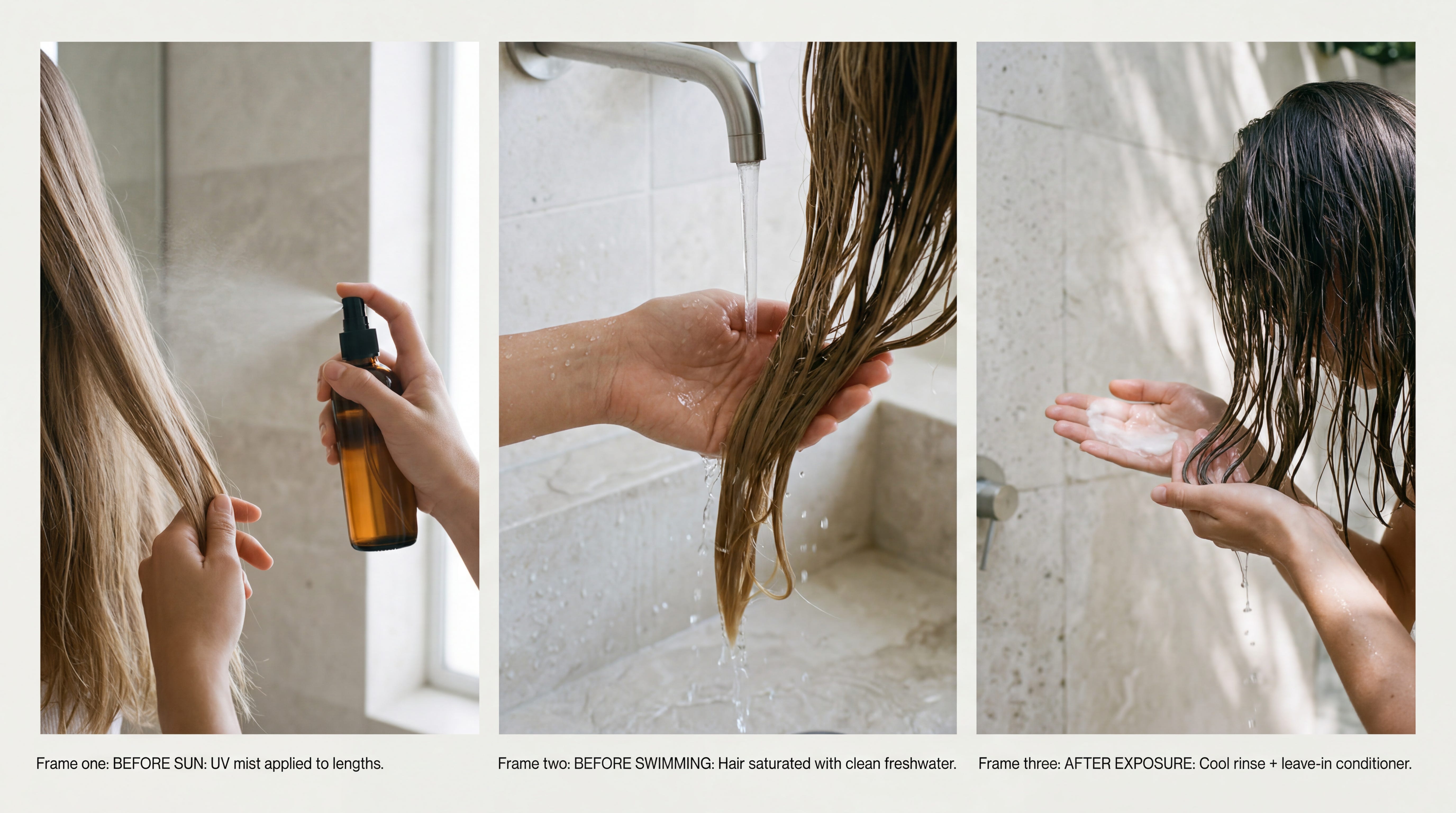
The single most neglected step in summer hair care is also one of the most useful: UV protection formulated specifically for hair, applied before meaningful sun exposure.
This is not sunscreen for skin applied to hair.
The mechanisms are different, the formulations are different, and applying skin sunscreen to hair usually creates an unpleasant texture while providing unreliable cosmetic results. Hair-specific UV protectors sprays, mists, or lightweight serums formulated for the hair fibre are designed to sit more elegantly on the hair and create a protective layer that helps reduce exposure-related dryness and colour shift.
Apply before outdoor exposure, not after.
The product is a shield, not a repair. It works when it is present between the sun and the hair shaft.
Freshwater saturation before swimming is the least glamorous and highest-return habit in the entire routine.
The hair shaft is porous and will absorb liquid. If you saturate the hair with clean freshwater before entering the sea or a pool, the shaft has less capacity to absorb salt water or chlorinated water. The damage mechanism relies partly on absorption. Reduce the absorption capacity and you reduce the damage load.
This takes approximately thirty seconds.
It requires a shower, a sink, or a bottle of water.
It is the habit most people skip because it looks too simple to matter.
It matters.
After: The Recovery Sequence
The first recovery step is a cool water rinse immediately after swimming or significant sun exposure.
Hot water encourages an already roughened cuticle to remain lifted. Cool water helps the hair feel smoother and reduces the sense of swelling, roughness, and friction. The temperature of the water you use to rinse salt or chlorine from your hair determines how the fibre behaves for the next several hours.
Rinse early.
Do not let salt or chlorine dry into the hair and then try to compensate with a mask three days later.
Leave-in conditioner is the next step, ideally with panthenol, glycerin, amino acids, lightweight conditioning agents, or other fibre-supportive ingredients depending on the formula.
Panthenol, or provitamin B5, is a useful functional ingredient in hair care because it can interact with the hair fibre, support moisture retention, and improve the feel and strength of hair with consistent use. Applied as a leave-in after washing, it addresses the moisture depletion that salt, sun, chlorine, and heat exposure create.
Applied consistently through summer, it becomes less of a styling product and more of a daily support layer.
That distinction matters.
The summer mistake is treating recovery as an occasional mask.
The better approach is maintenance after every exposure.
The Consistency Problem
The reason summer hair falls apart is rarely one catastrophic event.
It is usually the repeated absence of small protection.
One swim without rinsing. One afternoon without UV spray. One rough towel-dry on hair already swollen with salt water. One hot tool used because the hair looked impossible after a day outside. None of these moments looks dramatic in isolation. That is why people underestimate them.
Summer damage is cumulative because the hair shaft cannot repair itself in the way skin can. Skin is living tissue with active renewal systems. Hair, once it has emerged from the follicle, is not repairing its own protein structure. The condition of the visible hair depends on how well it is protected, handled, coated, cleansed, and maintained from the outside.
This changes the logic completely.
The question is not: what can I use when my hair is already damaged?
The better question is: what habits prevent the damage from crossing the point where repair becomes cosmetic rather than structural?
This is where the protocol becomes useful. A UV spray before sun exposure is not glamorous, but it helps reduce avoidable degradation. A freshwater rinse before swimming is not sophisticated, but it reduces how much salt or chlorine the hair absorbs. A cool rinse afterwards is not a treatment, but it removes residues before they continue drying the shaft. A leave-in conditioner is not an emergency mask, but a daily support layer.
The point is not intensity.
It is repetition.
Summer hair does not need a complicated routine.
It needs the same intelligent moves repeated before the damage becomes visible.
The Shine Question
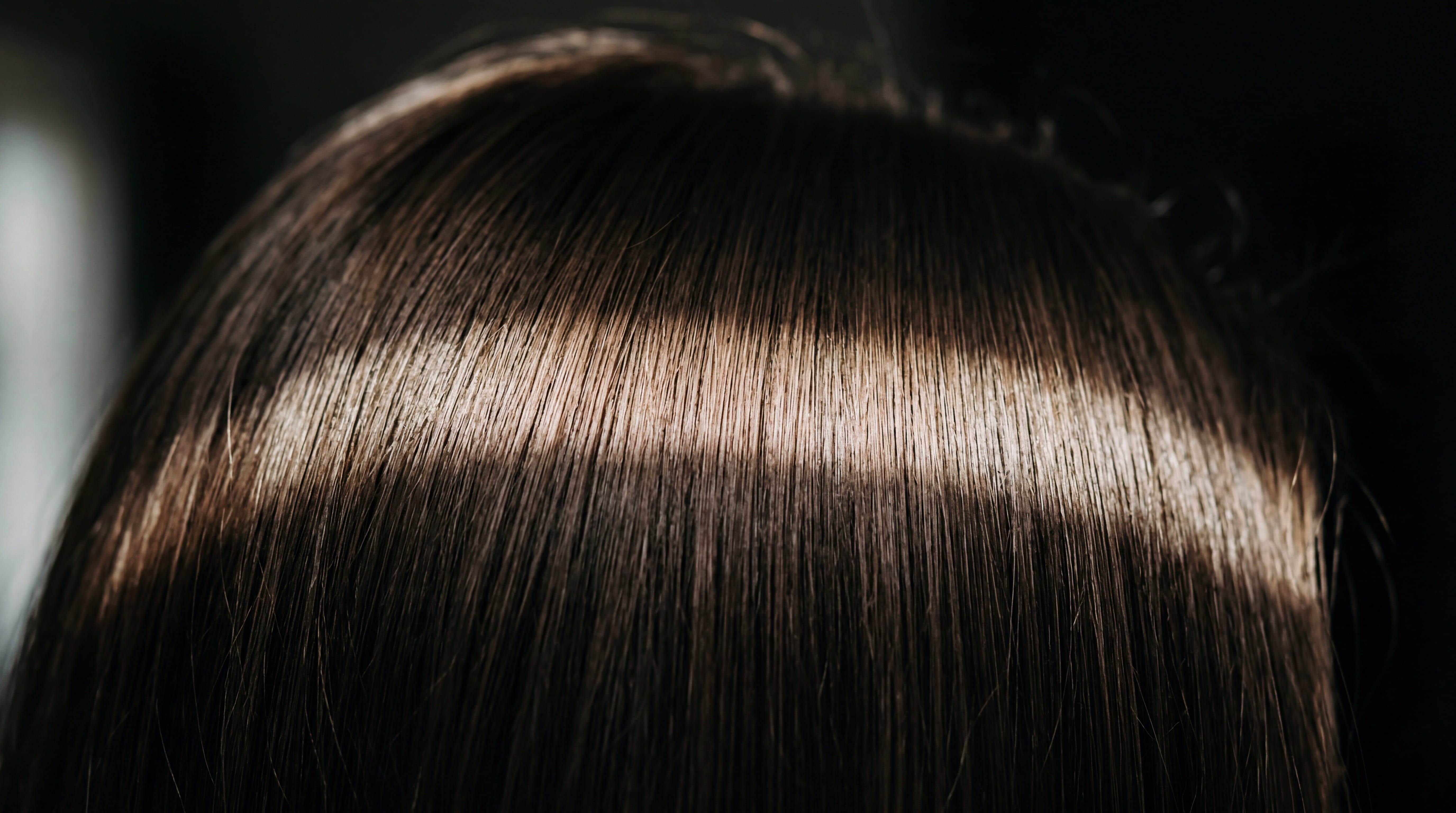
Shine is the result of light reflecting evenly off a smooth, flat cuticle surface.
Damaged hair loses shine because the cuticle scales become lifted and uneven, causing light to scatter in multiple directions rather than reflect cleanly.
The fastest route to restored shine is not always a shine serum. Most shine serums add surface-coating ingredients that create the visual impression of shine without addressing the cuticle condition producing the problem. They can be useful. They can make the hair look better quickly. But they do not solve the underlying roughness.
The better question is why the hair stopped reflecting light cleanly in the first place.
A pH-balancing rinse or professional acidic sealer can help the cuticle lie flatter temporarily, improving smoothness and light reflection. A diluted apple cider vinegar rinse used carefully and well diluted operates on similar pH logic, but it is not appropriate for every scalp or every hair condition.
Use only well diluted, avoid irritated scalps, and do not use immediately after colour services unless your colourist has advised it.
For a more controlled version of the same logic, professional acidic sealers or glossing treatments are preferable.
Neither is glamorous.
Both understand the mechanism.
The Four-Product Edit
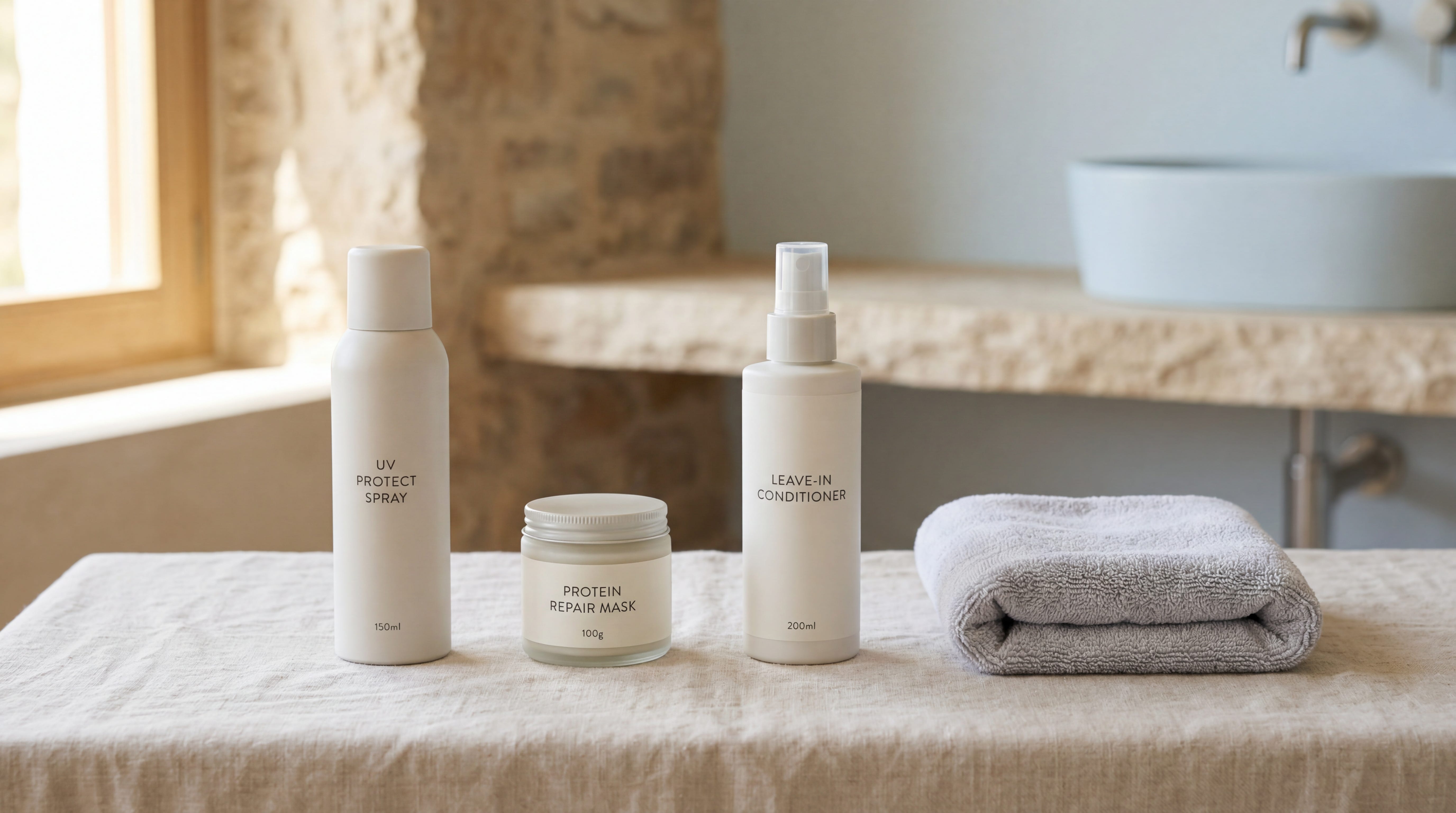
This is the entire summer protocol in product terms.
Buy these once.
Use them all summer.
One: A UV Protector Formulated Specifically for Hair
Apply before sun exposure, especially if you spend significant time outdoors, drive in strong sunlight, sit near windows, or swim regularly.
Aveda Sun Care Protective Hair Veil is one widely available option from a specialist hair brand; verify current availability and formulation before purchasing because products change. The broader point is the category: a lightweight UV-protective hair mist or serum that you will actually use.
The best product is the one that does not make your hair feel so coated that you stop applying it after three days.
Two: A Weekly Protein or Bond-Repair Treatment
Once per week, not every wash.
Olaplex No.3, K18, Redken Acidic Bonding Concentrate, and similar repair-category products are examples of widely recognised options with different technologies and claims. Choose according to hair type, colour history, damage level, and professional advice where possible.
The important point is frequency.
More is not automatically better. Hair that has been overloaded with repair products can feel stiff, coated, or difficult to style. A weekly rhythm is enough for most people unless a stylist has advised otherwise.
Three: A Leave-In Conditioner with Panthenol or Fibre-Supportive Ingredients
Applied after washing and, where appropriate, refreshed lightly through the week.
This is the habit that makes the largest cumulative difference over a summer of swimming, sun, air-conditioning, and washing. It does not need to be expensive. It needs to be light enough to use consistently and functional enough to support moisture, softness, and combability.
A leave-in conditioner is not there to make the routine look serious.
It is there to reduce daily friction.
Four: A Microfibre Towel
The least seductive recommendation in the protocol, and probably the one most likely to be skipped.
That would be a mistake.
The mechanical friction caused by standard cotton towel-drying on lifted, porous, wet hair contributes to breakage that most people attribute to other sources. A microfibre towel absorbs moisture by wicking rather than by aggressive rubbing. The difference over a summer of frequent washing and swimming is meaningful.
The towel is not an accessory.
It is damage prevention.
What to Stop Doing
Stop heat styling on damp or insufficiently dried hair.
The steam created when a hot tool contacts damp hair can damage the hair shaft from within. If you are heat styling in summer, the hair must be fully dry before any tool contact.
Stop rough towel-drying.
The friction is avoidable.
Avoid it.
Stop ignoring chlorine.
The post-swimming rinse is not optional if you swim regularly in pools. Chlorine left on the hair shaft continues to interact with the hair after you exit the water. Rinse with clean water immediately after swimming, every time.
Stop treating shine as a serum problem.
Shine is often a surface-condition problem. A shine serum applied to a damaged, lifted cuticle can improve appearance temporarily, but it does not repair the structural issue underneath. Address the cuticle condition and the shine follows more convincingly.
Stop expecting repair to be as fast as damage.
The protein structures and surface condition that UV, salt, chlorine, heat, and friction affect over three months of summer do not recover fully from one deep conditioning treatment.
The protocol is maintenance as well as repair.
Maintenance requires consistency over the season rather than intensive correction at its end.
The Final Rule
Summer hair is not ruined by summer.
It is ruined by entering summer without a protocol.
The best routine is not the most elaborate one. It is the one that understands the sequence: protect before exposure, reduce absorption before swimming, rinse immediately after, support the fibre consistently, and stop adding unnecessary friction.
The point is not to rescue summer hair in September.
It is to make sure it never collapses in the first place.
Save this before summer properly begins.