


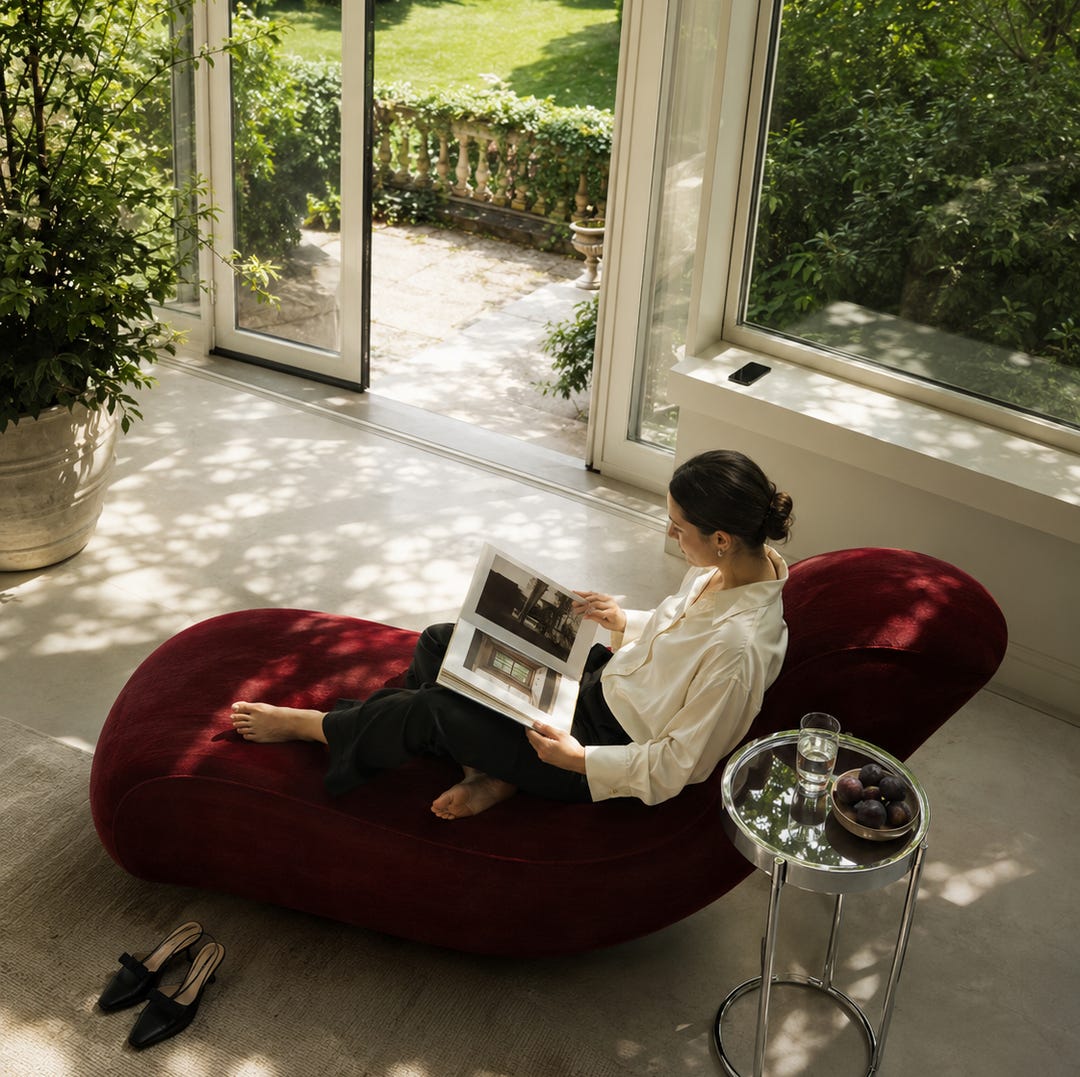
There is a particular sadness in a beautiful object preserved from life.
The glasses remain in the cabinet because the evening is not important enough. The dress stays inside its cover because the invitation is not quite right. The fragrance is used sparingly, as though pleasure might run out faster when it is allowed into daylight. A room is improved for guests, then returned to indifference when they leave.
Nothing is wrong with saving something for an occasion. The trouble begins when the occasion becomes the only part of life permitted to receive our full attention.
This August, OFFF DUTY is opening The Opulence Issue with a different proposition: the beautiful life is not a performance prepared for exceptional days. It is a standard practised on ordinary ones.
Opulence has been made visually easy and emotionally shallow. It is often represented by scale, price, access and evidence. More rooms. More objects. More visible proof that the person inside the image has moved beyond necessity. The result is recognisable, but recognition is not the same as desire. A life can look expensive and still feel badly arranged.
The modern form of opulence is more intimate. It is time that has not been overscheduled. A room that anticipates the body. Clothes that let a woman enter without correcting herself. A table that creates conversation rather than displaying effort. A beauty signature that becomes more exact through repetition. A public presence that does not collapse when attention moves elsewhere.
These things are not modest substitutes for a larger life. They are the architecture of one.
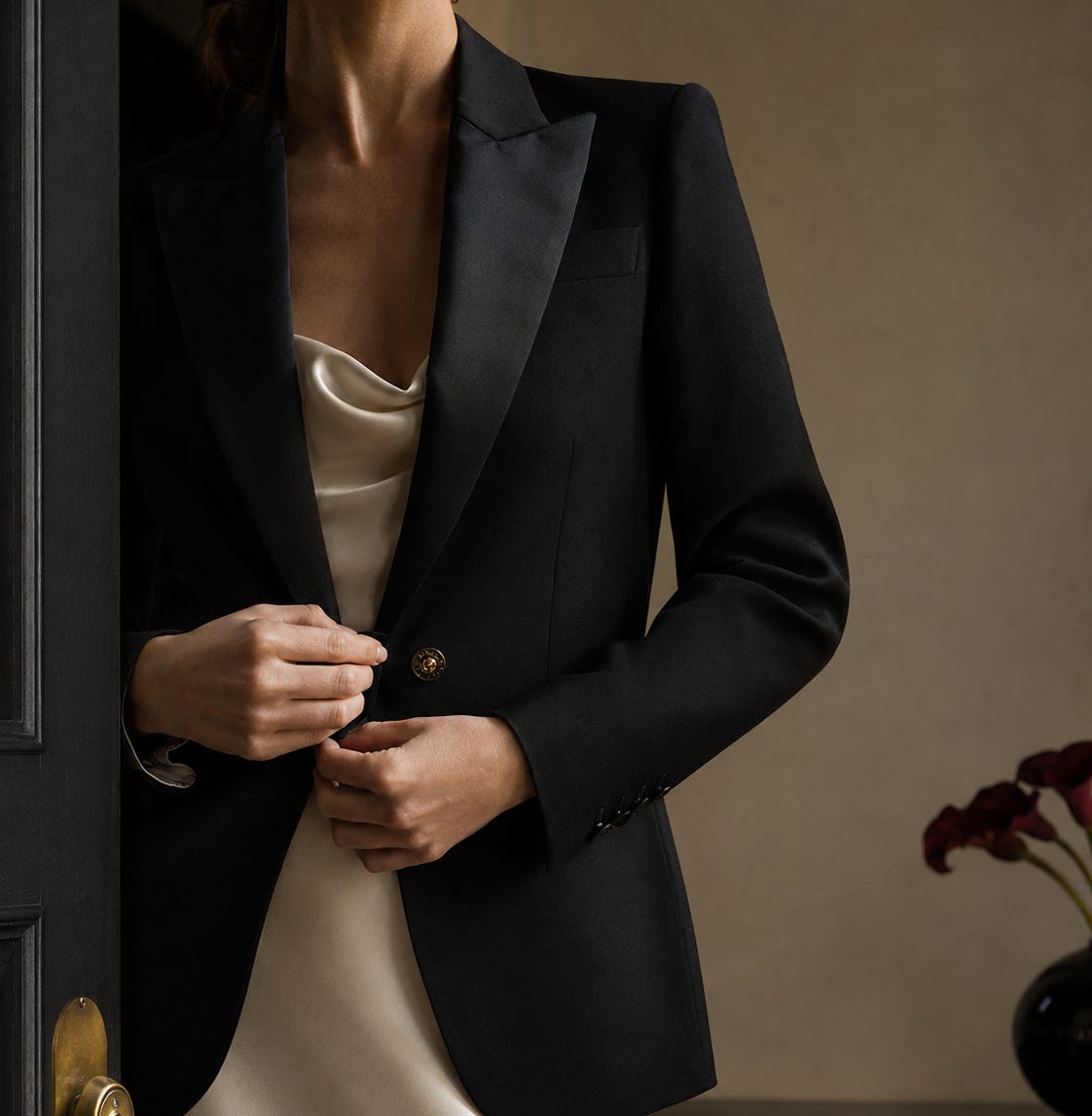
Fashion: wear the life that is happening
Clothes are often delayed because the imagined future seems more deserving of them.
The white shirt waits until the body changes. The heel waits for a better dinner. The silk waits because the day contains errands rather than an entrance. This is how a wardrobe becomes a storage system for postponed identities.
Fashion has a more generous purpose. It can help the wearer understand the room, choose a position within it and participate without self-surveillance. The well-dressed woman is not the one who has preserved every beautiful piece. She is the one who has learned when and how to use it.
That requires care, not recklessness. Clothes should be maintained. Shoes should survive the route. Fabric should suit the chair, weather and hour. But protection is not the same as preservation. A garment earns its place through contact with life.
The August fashion pieces will move from the practical intelligence of reading a dress code to the wider cultural return of looking dressed again. The argument is not for discomfort or formality. It is for visible intention.
Fame: prepare what remains after attention
Fame appears to be made from exposure because exposure is the part the public can see.
The photograph arrives everywhere. The headline repeats. The name becomes briefly unavoidable. Yet attention is only the opening condition. It does not decide what the culture will remember when the distribution slows.
Presence is built from repetition with intelligence: a visual code, a body of work, a point of view, controlled reinvention and an absence that protects rather than erases. A career-defining image is powerful because it gives those elements one clear frame. It does not create the entire structure. It makes the structure legible.
This month, OFFF DUTY will examine the image that looks accidental but was carefully prepared, and the women who remain culturally present after the attention economy has found a new object. Fame is not treated here as judgement or gossip. It is studied as image, timing, work and memory.
Food: let the table hold more than plates
A dinner can be technically impressive and emotionally flat.
Every plate arrives correctly. The flowers are expensive. The table is full. The host is absent for most of the evening because the production requires constant proof of care.
The dinner people remember works differently. It begins before the first plate: the arrival has somewhere to land; the first drink changes the pace of the day; the seating creates permission; the menu rises and falls rather than insisting on the same intensity; the host sits down while the evening is still becoming itself.
Generosity is not the number of dishes. It is the amount of attention available to the people eating them.
The August Food essays will offer a three-act system for building that rhythm. Welcome. Centre. Final memory. A structure simple enough to use, and strong enough to make an ordinary dinner feel considered.

Beauty: repeat what becomes truer
The beauty industry depends on the possibility that a new answer is always arriving.
A new face, new finish, new correction, new version of the self to pursue. A signature interrupts that cycle. It says that recognition can be more powerful than novelty, and that repetition can be evidence of self-knowledge rather than fear.
Sade’s sleek line, red mouth and gold hoop remain immediately legible because the relationship between them has been protected. The details have shifted across decades without surrendering the code. This is not resistance to change. It is evolution with memory.
Fragrance makes the same argument invisibly. The perfume worn often enough stops behaving like an accessory. It becomes an atmosphere associated with the wearer - an emotional trace that can enter memory without requiring a photograph.
This month, that story belongs to Amouage Guidance 46: a composition I love because its softness contains structure, and because it refuses the demand that a woman be one readable thing at a time.
Opulence: make care perceptible
The room reveals its standard before anyone explains it.
There is a place for the coat. The light allows faces to remain visible. The temperature has been considered. The first drink does not create work. A request survives the handover between two people. A mistake is solved by the person who receives it.
Opulence is felt most clearly through the removal of friction.
This is why a beautiful hotel suite can expose itself so quickly. Marble, flowers and generous square footage can create an impressive arrival, but service determines whether the room continues to feel cared for. The guest should not have to carry information from booking to reception, from reception to housekeeping, from housekeeping to the restaurant. The standard is continuity.
The same principle applies at home. A room becomes more generous when the host enters it as a guest and notices where the body hesitates.
The twenty-four-hour opulence edit
The issue begins with five decisions that can be made now. Use one beautiful object that has been waiting for permission.
Wear one piece that belongs to the life already happening.
Remove one friction point from a room.
Repeat one beauty detail that feels unmistakably yours.
Create one unhurried act of hospitality, even when no one else will see it.
None of these decisions require an audience. That is the point.
A beautiful life is not created for display. It is created to be lived. The evidence may eventually appear in the photograph, the room, the table or the way a woman enters. But it begins in private, at the moment she decides that the ordinary day is worthy of her full standard.
The Opulence Issue starts there.
Subscribe to OFFF DUTY to receive every August essay - Fashion, Fame, Food, Beauty and Opulence - directly in your inbox.