


There is a meal I keep returning to in my mind.
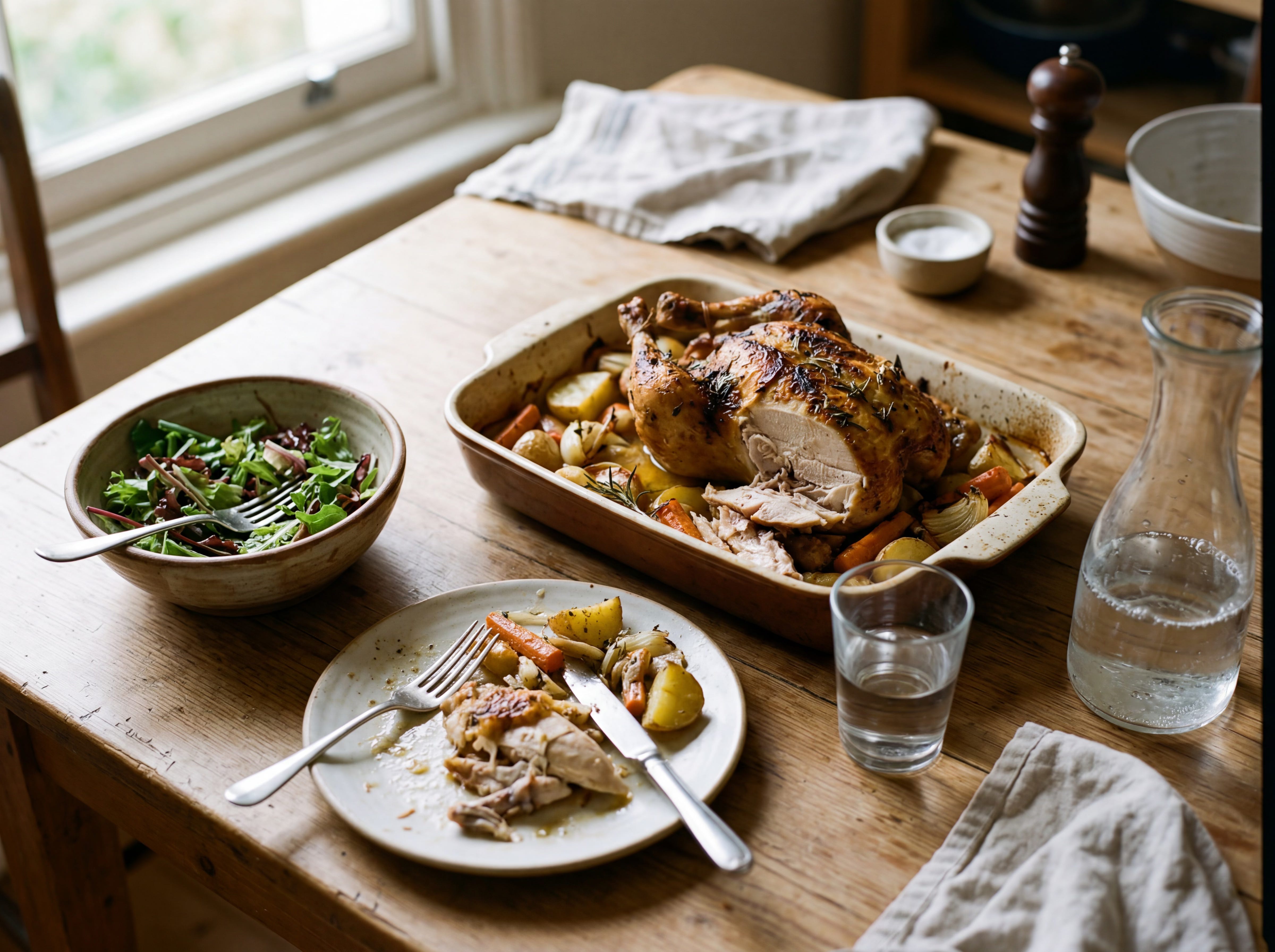
Not a specific meal or rather, a specific quality that certain meals have and that I find increasingly rare, and increasingly worth seeking out: the quality of not performing.
I mean this precisely. A meal that does not perform is not the same as a meal that is unambitious. It is not a simple meal, necessarily, or a cheap one, or one made without care. The meals I am thinking of are often extraordinarily considered. What they are not is aware of an audience.
They exist for the people eating them. Fully, without reservation, without one eye on how they will translate.
In an era where the highest compliment a restaurant can receive is that it is photogenic, and where a significant proportion of dining decisions are made on the basis of what the plate will look like rather than what it will taste like, this quality, the quality of a meal that does not perform has become one of the most interesting things in food.
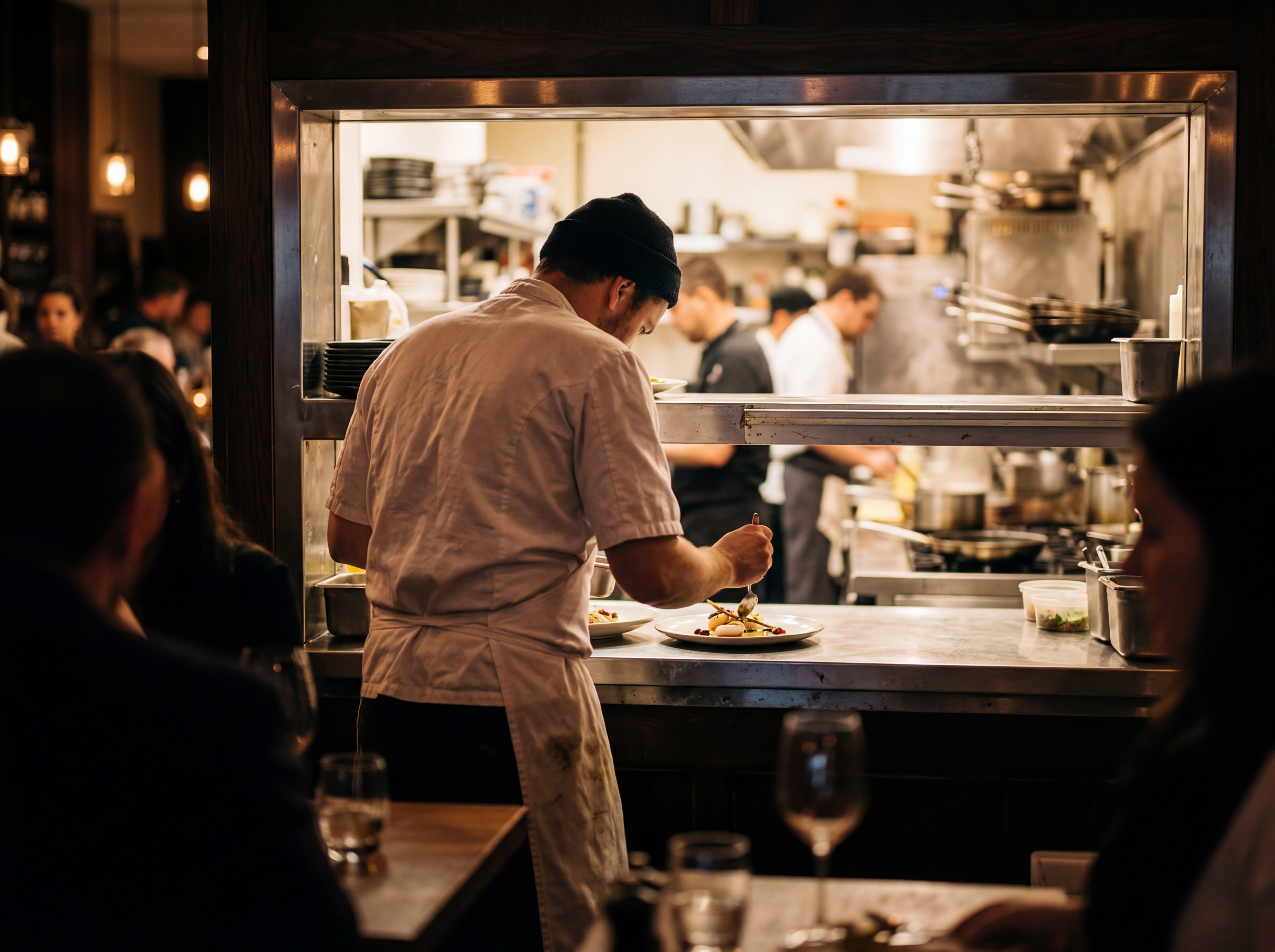
On the performance of eating
I want to think carefully about what it means for a meal to perform, because I think the phenomenon is worth examining rather than simply dismissing.
Performing a meal is not inherently dishonest. Hospitality has always been, partly, a performance the table set with care, the presentation considered, the effort made visible so that the guest understands they are being honoured. There is a long and serious tradition of food as ceremony, and ceremony, by definition, has an audience.
The performance I am describing is different.
It is the performance that exists not for the people present but for the people absent. The photograph taken before the first bite. The caption composed before the conversation. The choice of restaurant made with the story in mind before the reservation is placed. The meal that is primarily an event to be reported rather than an experience to be inhabited.
This is new. Not completely, people have always talked about where they ate and with whom, but the scale of it is new, and the primacy of it is new. The meal has become, in many contexts, secondary to the documentation of the meal. And this inversion has done something strange to the experience of eating.
It has made it lonelier.
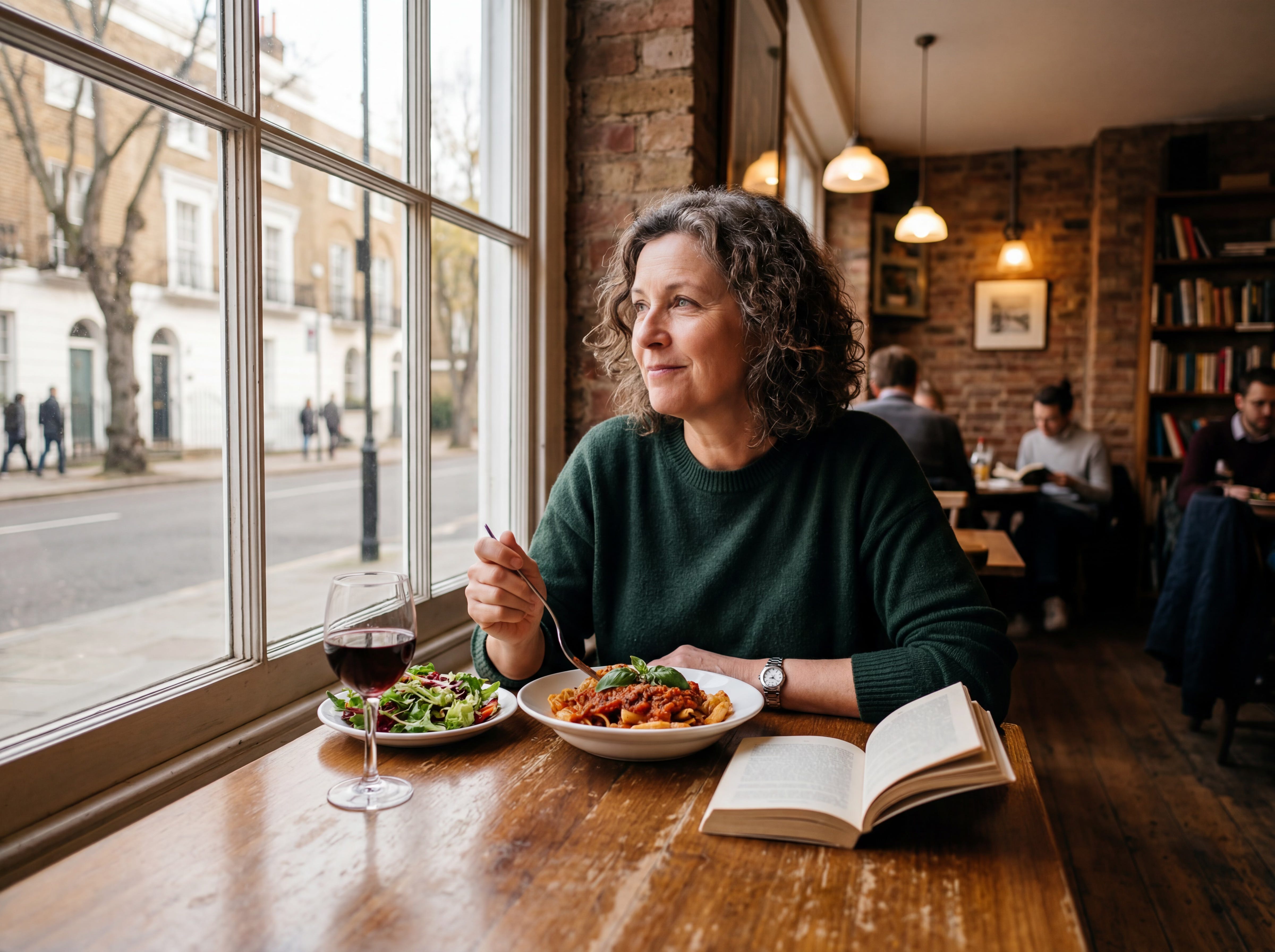
What the body knows
There is a physiological dimension to this that I find fascinating, partly because it is so rarely discussed in the context of food culture.
Eating in a state of genuine presence, without the low-grade distraction of documentation, without the simultaneous composition of how to communicate the experience, produces a measurably different physiological response than eating in a state of performance.
The digestive system is governed partly by the parasympathetic nervous system, the part of the autonomic system associated with rest and internal function. Performance, the act of being observed or the act of observing oneself activates the sympathetic system, the system associated with alertness, response, and output. These two systems are not designed to run simultaneously at full capacity.
When you eat in a state of genuine presence, your body can do what it is designed to do with food. When you eat in a state of performance, it is doing two things at once, and neither is done as well.
This is why the meals we remember most vividly, the ones that have stayed in the body as well as the memory are almost never the most photographed ones. They are the ones where, for whatever reason, the performance requirement fell away, and the experience was simply had.
A summer lunch that went on too long. A kitchen table at three in the morning. A bowl of something simple in a city you were visiting alone. A meal with someone where the conversation made you forget to eat until the food went cold, and then you ate it cold and it was still extraordinary.
These meals were not performing. And you were not performing at them. And that mutual non-performance created something that the most technically brilliant restaurant meal, eaten with one eye on the light, cannot.
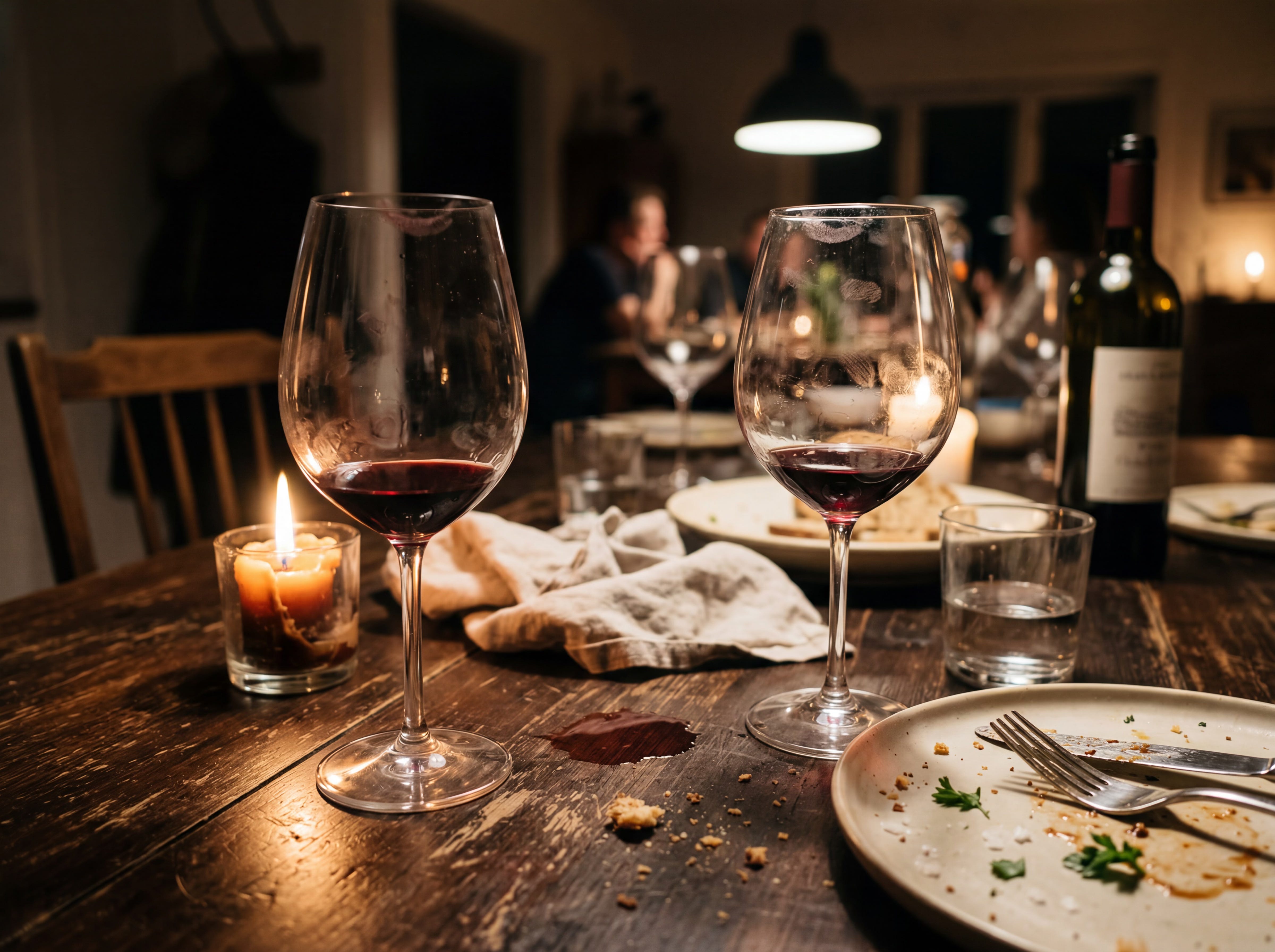
The restaurants that understand this
They are not hard to identify, once you know what to look for.
The restaurants that understand what I am describing are not necessarily the most expensive ones, though some of them are. They are not necessarily the most minimal, though they often tend toward simplicity. They are not the ones making the most noise about themselves on any platform.
They are the ones where the light has been thought about genuinely thought about, not Instagram-optimised, but considered for how it falls on the faces of the people at the table. Where the acoustics allow conversation at a normal register. Where the distance between tables has been calibrated for privacy rather than capacity. Where the menu is the right length not so short that it feels withholding, not so long that it feels anxious. Where the service has the particular quality of being present without being felt.
These places exist. There are fewer of them than there used to be, partly because the economics of restaurants are brutal and partly because the skills required to build them are different from the skills required to generate attention. But they exist.
And finding them, building a map of them, being the kind of person who knows where they are and returns to them is, I would argue, one of the most considered things you can do with the small portion of your week that is genuinely discretionary.
The meal as practice
I want to end with something that is less about restaurants and more about the act of eating itself.
Because the meal that does not perform is not only available in restaurants. It is available at your own table, if you choose to build the conditions for it.
This is not a wellness argument. I am not interested in telling you to put your phone in another room and be grateful for your food. That is not the register I am working in, and it is not the register this publication works in.
What I am interested in is the meal as a practice of attention.
The meal, any meal, in any context is one of the few moments in a contemporary day that has a natural beginning and end, a built-in social structure, a biological necessity that anchors it to the body rather than to the screen. It is, in other words, one of the few moments that will always push back against the tendency to perform, if you let it.
Letting it requires only one thing: the decision, made before you sit down, that this meal is for eating.
Not for documenting. Not for performing. Not for proving anything to anyone, including yourself.
Just for eating.
The meal that results from that decision is, in my experience, almost always the better meal. Not because the food is better it might be exactly the same food. But because the eating is better. The tasting is better. The conversation, if there is conversation, is better. The sense of time passing at the right pace rather than against the current of something else that is better.
The meal that does not perform is not a rejection of culture or pleasure or even of ambition.
It is the fullest expression of all three.
There is another dimension to this that becomes visible only after you have experienced enough of these meals to recognise the pattern, and it has less to do with food itself than with what the absence of performance begins to restore.
Because what is removed, when a meal does not perform, is not simply the act of documentation. It is the subtle but persistent pressure to interpret the experience as it is happening. The pressure to decide, in real time, how it will be remembered, how it will be described, how it will be positioned in relation to everything else you have consumed.
That pressure is so normalised now that its absence can feel unfamiliar at first.
You sit down, the table is set without insistence, the room holds itself without asking to be noticed, the food arrives without announcing what it is trying to be, and for a moment there is nothing to do but encounter it directly. No framing, no translation, no immediate categorisation into whether it is worth sharing or not.
And in that moment, something recalibrates.
The experience is no longer being filtered through the future, through how it will appear later, when it is recalled, described, or displayed, but is allowed to exist entirely in the present, without needing to justify itself beyond the fact that it is happening.
This is what makes these meals feel different, even when, on paper, they are not dramatically different from others you have had.
They are not competing with anything.
They are not trying to be the best version of a category, or the most interesting example of a cuisine, or the most photogenic interpretation of a familiar dish. They are simply complete within their own logic, and that completeness removes the need for comparison.
Which, in a culture that is built almost entirely on comparison, is an unusually powerful thing.
Because comparison fragments attention in a different way. It takes the experience you are having and places it against every other version of that experience you have seen, stored, or imagined, and asks you to evaluate it rather than inhabit it.
A meal that does not perform removes that layer.
It allows the experience to be singular.
And singular experiences are the ones that stay.
Not because they are louder or more dramatic, but because they were never divided to begin with.
This is also why these meals tend to resist easy description afterwards.
You can explain what you ate. You can describe the room. You can reconstruct the sequence of the evening. But none of that fully accounts for what made it feel the way it did, because what made it feel that way was not a single element but the absence of something that is usually present.
The absence of performance.
And absence is always harder to articulate than presence, precisely because it does not announce itself.
You recognise it retrospectively, in the quality of the memory, in the way the evening settles into your thinking not as a highlight but as something more stable, something that does not need to be revisited constantly in order to remain intact.
This is where the value of these meals begins to extend beyond food.
Because what they offer is not just a better way of eating, but a different relationship to experience itself.
A relationship that is less mediated, less anticipatory, less concerned with how something will be perceived and more concerned with how it is actually lived.
And that shift, once noticed, does not remain contained to restaurants.
It begins to appear elsewhere.
In the way you choose where to go, what to do, who to spend time with, what you decide is worth documenting and what you decide is not.
It introduces a different question into those decisions, one that is quieter but more precise.
Not “how will this look,” or even “how will this feel,” but “does this require me to perform in order to exist.”
And if the answer is yes, you begin to notice the cost more clearly.
The cost in attention, in presence, in the subtle division of experience into something that is lived and something that is prepared to be shown.
The meal that does not perform removes that division.
It allows the experience to remain whole.
And once you have experienced that kind of wholeness enough times, even briefly, even imperfectly, it becomes increasingly difficult to return to environments that require you to split yourself in order to participate.
Not because those environments are worse in any objective sense.
But because you have felt the difference.
And the body, once it recognises the difference between something that is whole and something that is fragmented, tends to remember.
— OFFF DUTY
There is a moment that happens quietly.
You start noticing that some things feel more resolved than others. A face that looks natural, but not accidental. A space that feels calm, but not empty. A person who holds attention without asking for it.
Nothing about it is obvious, and that is precisely the point.
Most people see the surface of these things. They see the outcome, but not the structure behind it. And because of that, it feels difficult to recreate, or even to explain.
That is the space OFFF DUTY is interested in.
Not what is visible, but what sits underneath it. The decisions, the restraint, the editing, the patterns that make something feel considered rather than improvised.
The free pieces will give you a sense of those shifts as they happen.
The paid essays go further, not faster, but deeper, into how those signals are constructed and why they hold.
This is not about consuming more content. It is about seeing more clearly. And once that shift begins, it tends to stay. If that is something you want to develop, you can subscribe.