



There is a hotel bar in Geneva where the chairs are arranged slightly too far apart for comfortable conversation.
I assumed, the first time, that it was bad design. It took me two visits to understand that it was the most expensive design decision in the building. The distance forces you to lower your voice and lean in, or to sit back and say nothing. Either way, the room stays quiet.
And the quiet is the product.
The drinks are almost beside the point. People pay twenty-eight francs for a glass of wine that costs eleven across the street, and what the seventeen franc difference buys is the absence of other people’s volume.
Once you see this, you cannot stop seeing it. Silence is the through-line of almost every genuinely expensive experience I can remember.
The car door that closes with a thud instead of a clatter. The restaurant where the tables are far enough apart that you never learn a stranger’s opinions. The first-class cabin, which is not selling legroom, legroom is the alibi it is selling the social agreement that nobody will speak to you for seven hours. The watch that does not tick audibly. The office with a door. The neighbourhood where you cannot hear the road.
Trace the money in a luxury transaction and it terminates, remarkably often, at the same purchase: the removal of noise.
This is not only a metaphor. It is a market, and it prices with brutal precision. Housing research has repeatedly found that noise is capitalised into property values: an additional decibel can be measured in what buyers are no longer willing to pay. Recent US research found substantial premiums when traffic noise was reduced.
An airline curtain blocks almost no sound and still performs its function perfectly. It announces that whatever is happening behind it belongs to another cabin.
Even the language gives the game away. We say quiet luxury. Nobody ever called it loud luxury; loud was simply called luxury until the quiet kind needed distinguishing. The fact that it needed distinguishing tells you exactly when the counterfeiting began.
Because here is the uncomfortable middle of this essay, the part I would skip if I were writing for the algorithm: noise is what the luxury market taught the aspirational consumer to recognise as proof of arrival.
The champagne spray. The bottle sparkler. The engine that announces the car before the car arrives. The unboxing video, a genre built almost entirely on the rustle of tissue paper, the ASMR of acquisition.
An entire generation was trained to associate arrival with amplitude. The training was not accidental. Volume is a growth strategy. A logo shouted across a chest is an advertisement the wearer pays to run. A loud lobby moves people through faster. Noise monetises. Silence merely costs.
Which is why silence remained most available to the people who could afford things that merely cost.
I spent an afternoon once with a man who manages money for families whose names you would not recognise, which is the point of the families and also of the man. His office had no reception music, no visible branding and a phone that did not ring. It lit.
I asked him, near the end, what his clients actually bought with their money, since none of them seemed to buy things.
He thought about it longer than I expected. Then he said: they buy the ability not to react.
Markets drop; they do not have to sell. Headlines scream; they do not have to answer. Someone insults them at dinner; they can simply decide it did not happen. He called it optionality, which is a finance word, but what he was describing was silence, the internal kind.
The ability to let an event pass through the room without letting it pass through you.
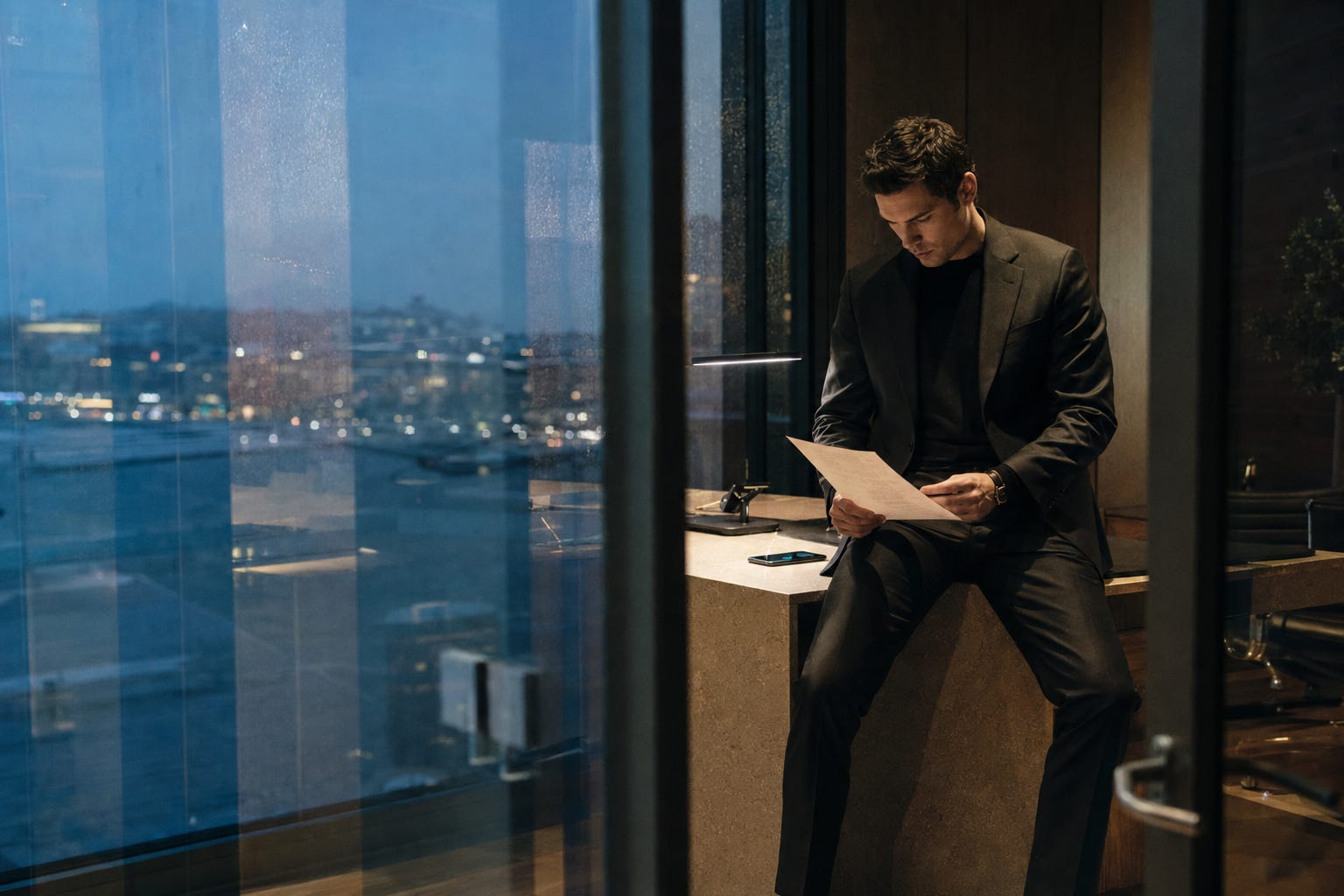
That reframing has ruined a certain kind of party for me, because you can watch the two currencies interact in real time.
Watch what happens when silence enters a crowded table. Some people rush to cover it. They top the story, answer the unfinished question, laugh half a second too early. Attention is being spent, not because they lack status, but because stillness can feel dangerously close to disappearing.
Then there is the person who receives the same room without scrambling to control it. She lets a silence sit at the table like an invited guest. She asks one question and then actually listens to the answer.
That person is accruing.
Stillness reads as wealth even when it is not, which is why media training teaches powerful people to slow down, and why con men speak at half speed. The tempo is the costume. Some people wear it over nothing. And this is where I have to turn the essay around and point it at us, at me, writing this, and at you, reading it on a device engineered to make silence impossible.
The phone is a noise machine that fits in a pocket. Every app on it is a stranger clearing their throat. We have built an economy in which the default condition of an ordinary life is interruption, and then priced the interruption’s removal as a luxury good.
Do Not Disturb is a butler now.
Airplane mode is a gated community.
The out of office reply has become what the country house once was: proof that you have somewhere else to be, and that the somewhere else is protected.
When historians write about our decade’s class system, they may not sort us by what we owned. They may sort us by who was reachable.
So the question this essay actually wants to ask is not how do the rich live? That genre is saturated and mostly fiction anyway.
The question is: what is your silence worth, and who is currently getting it for free?
Because everyone reading this is sitting on some reserve of it. The hour before the house wakes. The walk without headphones. The dinner where the phone stays in the coat.
These are not wellness rituals, whatever the apps say. They are holdings. And every notification answered reflexively is a tiny, voluntary transfer of those holdings to someone who did not pay for them, an attention economy in which you are somehow both the product and the philanthropist.
Of course, silence is not distributed equally. A quiet house, a private office and a day protected from other people’s demands remain privileges. A caregiver, a junior employee or anyone living close to other lives cannot simply declare herself unreachable and call it discipline.
Money buys the conditions of silence: distance, insulation, assistance, choice.
But some part of the discipline is not gated. Not every silence requires acreage, a private cabin or a waiting list. Sometimes it begins with deciding that not everything deserves an immediate answer.
Wealth notices this early because abundance makes the unbuyable easier to see. Once you can purchase almost everything, you discover quickly which things cannot be bought back. Time and quiet head the list.
It costs nothing to end a sentence before every point has been proved. To arrive, put the phone face down and let it remain there. To allow a provocation to expire without giving it a second life through your reaction.
Nothing, except the performance of availability, which is what many of us were really spending all along.
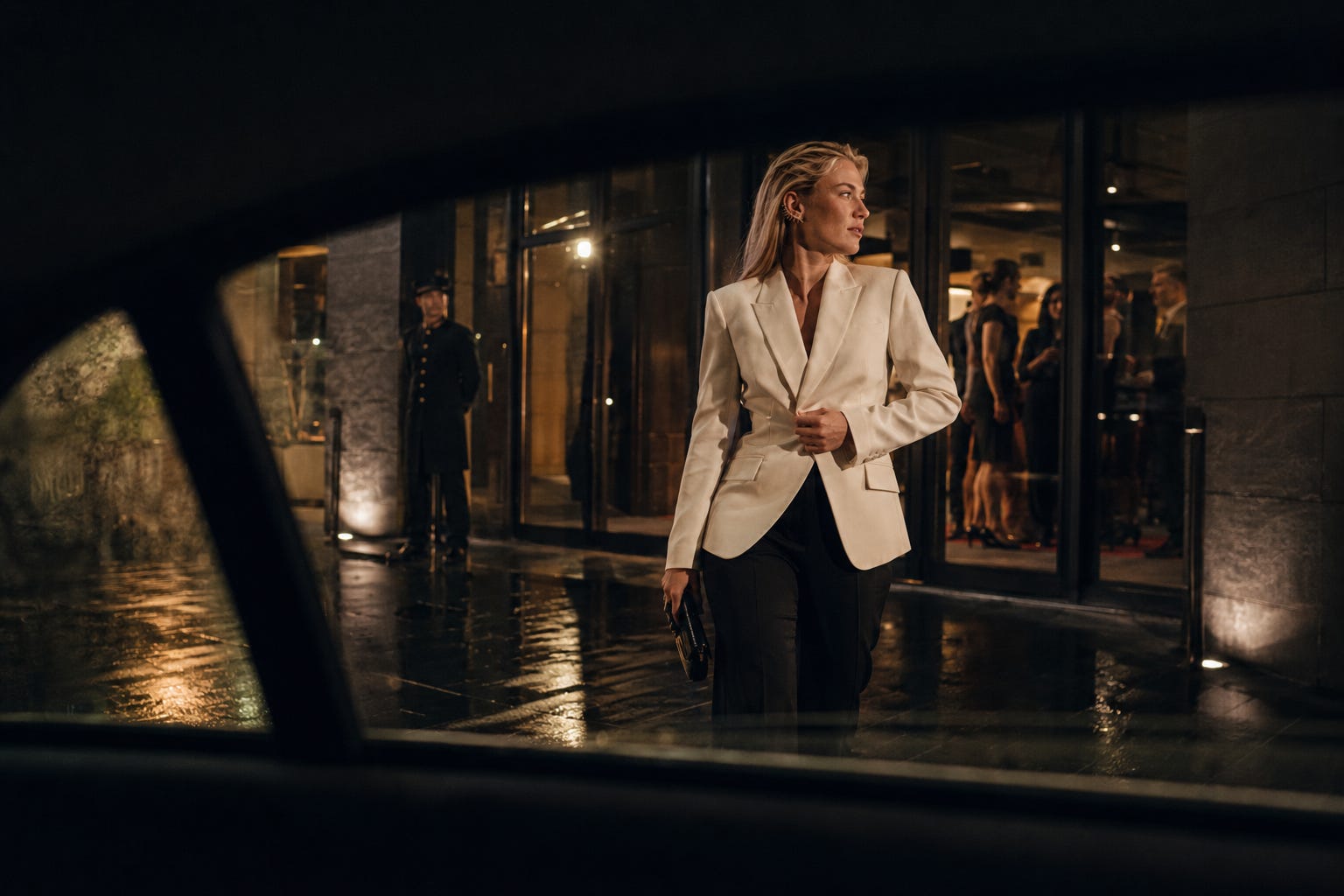
The bar in Geneva has a waiting list now. Of course it does. Quiet is always a growth market late in a loud decade.
The room can sell distance, insulation and the confidence that nobody will interrupt. What it cannot sell is the internal quiet the money manager described: the ability to decide that an event does not require your reaction.
The market can charge for the conditions. It cannot practise the discipline for you.
The most expensive thing in the room was never the wine.
Subscribe free for The Opulence Issue. Become a paid reader for complete essays, practical frameworks and the editorial notes beyond the public page.