


There is a version of self-optimisation that has become so crowded with products, rituals, and investment propositions that it has begun to resemble the problem it was meant to solve. We are a culture that will spend $400 on a weighted blanket, $180 on a magnesium supplement stack, and six months on a waiting list for a specialist consultation, and then go to bed at 1am scrolling through nothing in particular, because the hour before sleep is still, somehow, the last one we protect.
The irony is not subtle. The broader sleep economy has been estimated at around $585 billion globally, a figure that now stretches across mattresses, wearables, supplements, sleep tourism, apps, and clinical services. It is one of the fastest-growing wellness sectors in the world. And the primary driver of that growth is a gap between what we know and what we do, a gap the industry has every commercial incentive to widen rather than close.
What actually produces great sleep is not a product category. It is a set of decisions that, taken consistently, compound over weeks into something that looks, from the outside, like an unusual level of clarity, composure, and energy. The people who have made those decisions tend not to discuss them at length. They have simply moved past the conversation the rest of us are still having.
The research is no longer ambiguous. Recent longitudinal research has continued to associate short sleep duration, particularly below six to seven hours with higher risk of cognitive decline, while broader sleep-deprivation research links insufficient sleep with metabolic, cardiovascular, and immune consequences. The RAND Corporation’s economic modelling placed the annual productivity cost of sleep deprivation in the United States alone at over $411 billion. These are not wellness industry numbers. These are public health and economic research numbers, generated by institutions with no interest in selling you anything.
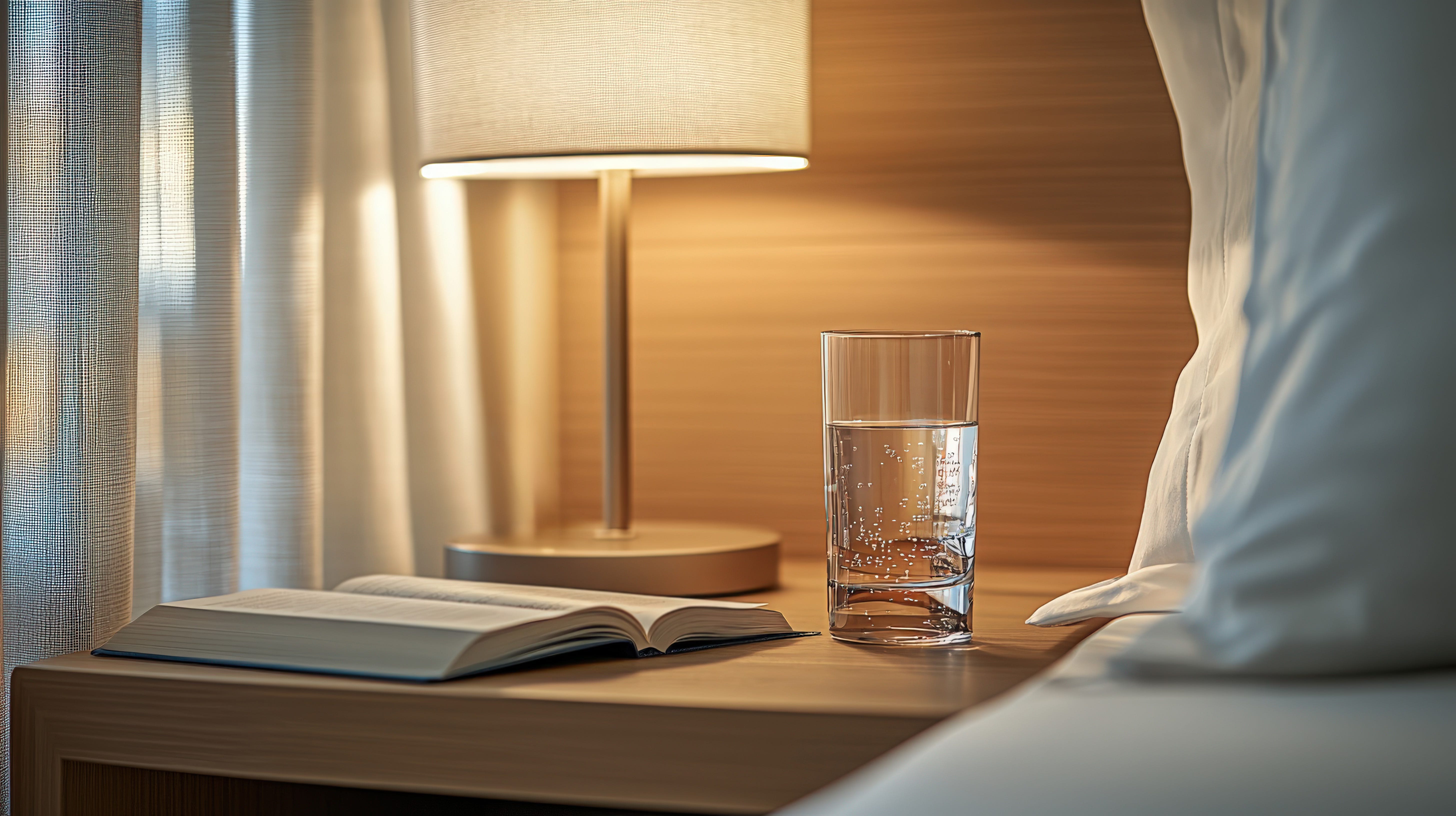
The thermal variable is the one most consistently overlooked. The body’s sleep onset is triggered in part by a drop in core temperature, and sleep-environment research commonly places the optimal bedroom temperature for most adults somewhere around 16 to 20 degrees Celsius, with roughly 18 degrees often used as a practical target. This is not an expensive intervention. It is a decision made once, and then every night.
The same logic applies to schedule consistency. The circadian rhythm is governed by light and time cues, and the single most disruptive thing most people do to it is varied sleep timing, an hour earlier on weeknights, two hours later on weekends, the pattern constantly reset by social demands and screen exposure. The research term is “social jetlag,” and studies on irregular sleep timing have linked it with metabolic disruption, mood dysregulation, and compromised immune response. All from inconsistency. Not from insufficient hours alone.
The $585 billion industry exists, in large part, because these two interventions, temperature and schedule are free, require no product, and produce no content. There is no before-and-after for going to bed at the same time every night. There is no photogenic moment in a correctly cooled room. The market fills the space between what people know they should do and what they are willing to do with things that feel like progress.
But this is where the conversation becomes uncomfortable, because sleep is not only biological. It is behavioural. It reveals what a person is willing to protect when nobody is watching.
Most people do not lose sleep because they do not understand its value. They lose sleep because the evening has become the place where every unmet need tries to negotiate for space. The unread messages. The delayed admin. The private anxiety. The extra episode. The shopping basket left open because buying something feels easier than changing something. The phone becomes less a device than a soft permission slip: one more minute of escape before the day officially ends.
This is why sleep is so difficult to improve. Not because the science is complex, but because the behaviour asks for boundaries. It asks you to disappoint the version of yourself that wants to be endlessly available. It asks you to stop treating exhaustion as proof of ambition. It asks you to admit that your nervous system cannot be negotiated with by taste, status, or intelligence.
There is a particular kind of adulthood that begins when you stop romanticising depletion. When you no longer confuse being needed with being important. When you understand that your face, your mood, your decisions, your appetite, your patience, your creativity, and your ability to make clean judgments are all being shaped by the hours you keep insisting are optional.
This is the part no product can do for you. A device can track your sleep. A supplement can support it. A mattress can make it more comfortable. But none of them can decide that the day is finished. None of them can close the laptop. None of them can make silence feel less threatening. None of them can teach you that rest is not a collapse after performance, but part of the architecture of a life that is actually working.
The luxury of great sleep, in the end, is not the mattress. It is not the supplements, the cooling system, or the breathable linen. It is the decision to treat those hours with the same seriousness you bring to everything else you do that matters. It is the willingness to let the last hour of the day be genuinely unproductive — not in a compensatory way, not as a reward for having been productive enough, but as an acknowledgment that the machinery needs to rest in order to function.
The people sleeping well in 2026 are not sleeping well because they found the right product. They are sleeping well because they decided to.
That is the most expensive thing most of us are still not doing.
Every day my Apple Watch tells me how much I have not slept. Some days it won’t even give me a number, perhaps to spare my feelings.