


At some point in the last few years, the wedding flex quietly moved.
It left the venue, which had been carrying too much weight for too long, and arrived somewhere more interesting: the menu. Not the table setting, not the flowers, not the photograph of candlelight through crystal. The actual food. What people eat, how they eat it, and whether the meal tells the truth about the people getting married.
This is not a prediction. It has already happened. The evidence is in the weddings people talk about years later and the ones they do not. The memory argument is simple and almost never discussed in wedding-planning conversations: guests forget centrepieces. They remember the dish they did not expect.
This essay is about why that is, what the most interesting menus are doing differently, and how to build a menu that becomes the part of the wedding people are still talking about at the ten-year dinner.
What Changed
The venue has been the primary status signal in wedding culture for longer than most people have been planning weddings. The country house. The vineyard. The converted industrial space with exposed brick. The rooftop with the right skyline.
These choices communicated financial capacity and social awareness with admirable efficiency. The right venue told the guests, before the ceremony began, approximately where in the status landscape this marriage was being launched.
The problem with venue-as-status-signal is that the venues available at any given price point are finite, well documented, and frequently recurring. The same spaces appear in the same publications at a rate that eventually produces something like venue fatigue not in the guests necessarily, but in the couple, who begins to understand that the specific venue they have chosen is not entirely specific. It has been chosen before, and it will be chosen again, by people with similar means and similar aesthetic preferences.
The menu does not have this problem.
A menu can be completely specific to two people. It can be built from their actual biography the place they met, the food they ate on the trip that changed their relationship, the dish one of them learned to cook during the year they spent apart, the ingredient that means something to one family and nothing to the other until the wedding, when it begins to mean something to both.
A menu built this way cannot be replicated. It does not exist on a venue list. It is not available to be booked by the next couple.
It is, in the truest sense, theirs.
What Most Wedding Menus Do
The three-course seated dinner has dominated wedding catering for a perfectly reasonable reason: it is the format most likely to offend nobody, accommodate everyone, be produced at scale without catastrophe, and arrive at every table at approximately the same temperature.
These are, with respect, the wrong criteria for food at a celebration that is supposed to be personal.
The safe wedding menu - starter, main, dessert, petit fours that nobody finishes is the product of risk aversion applied to a decision that should be risk-tolerant. It is the menu that says: we wanted the food to cause no problems, and we succeeded.
It is the food equivalent of painting a room a colour that will not be wrong.
The logic is defensible.
The outcome is forgettable.
The forgettability is not neutral. In a setting where the couple has spent significant resources on every element of the occasion, a meal that is not remembered is a resource that did not do its job. The flowers were beautiful and are now composted. The dress was photographed and is now boxed. The food consumed by every single person in attendance, experienced in the body rather than observed is the one element with the most direct route to memory.
Food memory is embodied.
The combination of flavour, texture, temperature, context, and company creates associations that often survive long after the visual details of a room have blurred. The meal you ate at an important moment in your life is likely still accessible in a way that the room you ate it in is not.
Your body remembers the dish.
Your eyes remember the venue.
The question is which of those things you want to be unforgettable.
What the Most Interesting Weddings Understand
The Omakase-Inspired Menu
The omakase format in which the kitchen decides and the guests follow transfers to a wedding setting with surprising elegance, provided the couple has the confidence to commit to it.
The logic is persuasive: the chef knows what is best that day, what is at its peak, and what sequence of flavours and textures will create the most complete meal. The guest’s role is to receive rather than select.
The format creates a shared rhythm guests moving through the same culinary narrative together, with thoughtful adaptations made where dietary requirements demand them. The wedding becomes a collective experience rather than a room full of individual orders happening in parallel.
The objection is dietary restriction, which is real and requires serious management. But it does not preclude the format. A capable kitchen can accommodate variation without breaking the logic of the meal.
Family-Style Service
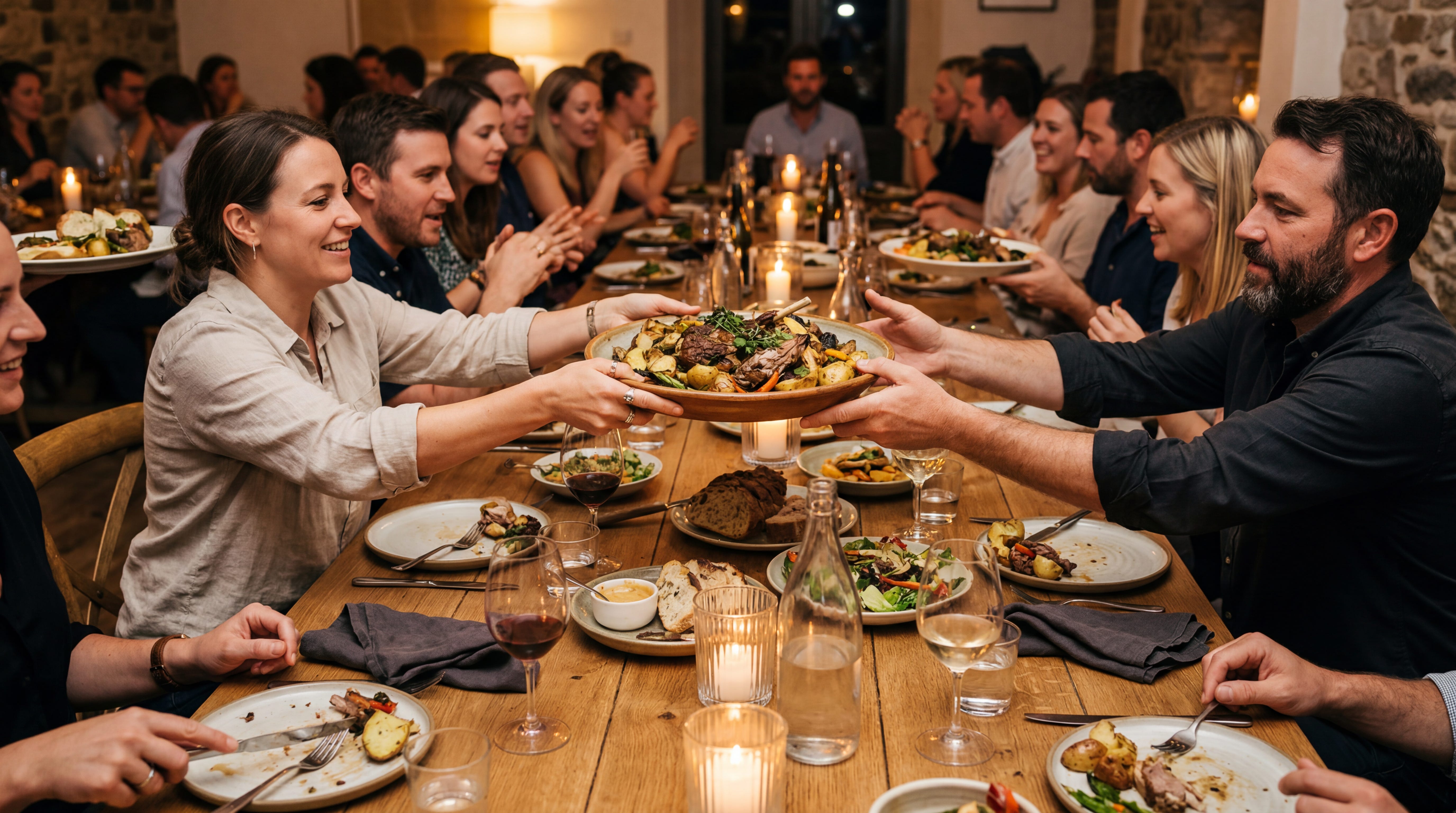
Enormous platters. Shared tables. The enforced intimacy of passing food the specific social choreography required when you are serving yourself from a dish that is also serving the person you do not know particularly well, sitting beside you.
Family-style service creates conversation in a way plated service does not. The food becomes the occasion for interaction rather than the pause between interactions.
It also communicates something specific about the couple: they want the table to feel like a table, not a collection of individual dining experiences occurring simultaneously in the same room.
Street Food from the Couple’s Biography
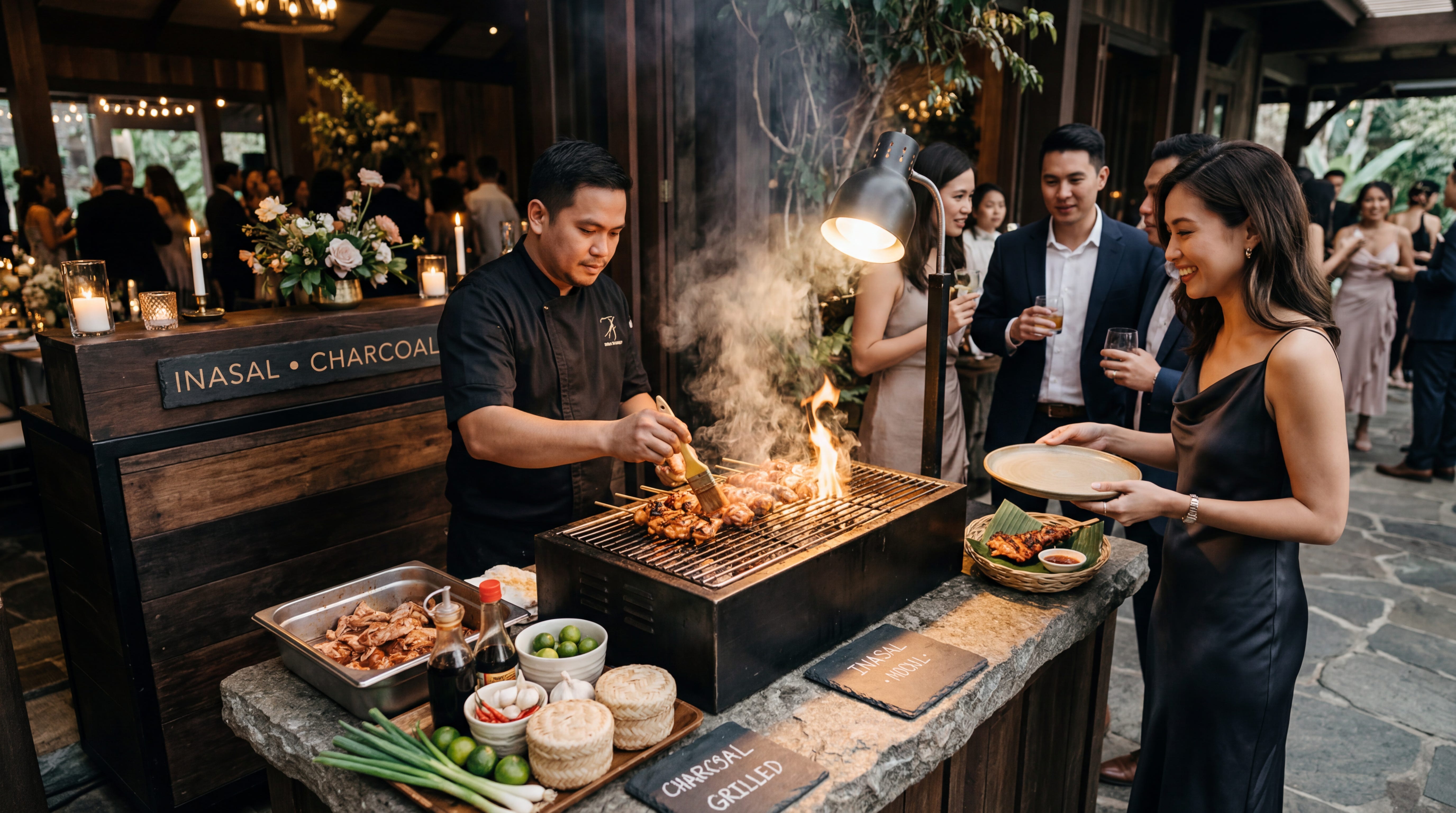
The Istanbul street-food dish from the neighbourhood where they lived for a year. The Brisbane barramundi preparation from the restaurant where one of them proposed. The London market stall that served the first meal they ever ate together.
Biography-based food requires the couple to have a biography that includes food and to be willing to share it, which is itself a form of hospitality.
The guests do not simply eat the menu.
They eat the story.
The Dessert Table That Is Not a Dessert Table
The cheese course given its proper due. The fruit presented as an event rather than an afterthought. Honey from a specific provenance. A dessert that requires assembly, participation, or choice rather than arriving as the passive final plate of a long sequence.
The most interesting dessert formats create one final moment of movement. They bring people back to the food at the point when formal dining would usually release them from it.
Dessert becomes not the ending of the menu, but the last social act of the table.
The Memory Argument
Ten years after a wedding, the guests who attended will remember a small number of things with specificity.
The ceremony particularly the moment that felt genuine rather than performed.
The person they sat next to.
The one thing that surprised them.
If the food was the thing that surprised them the dish they did not expect, the format that felt unusual, the flavour that belonged specifically to the couple in a way they could not have anticipated it will become part of the wedding they carry.
It will come up at the ten-year dinner.
It will be the thing they mention when someone asks what was memorable about the event.
The centrepiece will not be mentioned. The venue will be described in one sentence. The dress will be discussed briefly and then deferred to the photographs.
The food, if it was exceptional, will be discussed at length.
Because food is what bodies remember.
A Practical Framework for the Considered Wedding Menu
Start with biography, not categories
Before considering format, course structure, or cuisine, identify the food geography of the relationship.
Where did you eat when you first met?
What did you cook during the first year?
What does food mean to each family, and is there a way to hold both?
What dish, if it appeared on the menu, would make the people who know you best understand something true about you?
The menu should begin with memory before it begins with logistics.
Choose one format-breaking decision
You do not need to rethink the entire structure of a wedding meal. You need one decision that proves you were paying attention.
Family-style instead of plated.
A course that comes from somewhere unexpected.
A late-night dish connected to your history.
A dessert that requires participation rather than passive consumption.
One departure from the default can change the entire character of the meal.
Use the memory test
For every proposed dish, ask:
Is this the dish people will be describing at the ten-year dinner?
If the answer is probably not, the dish needs to be reconsidered or replaced by something more specific.
Specific is better than accomplished.
Surprising is better than safe.
Give the kitchen a biography
The best wedding caterers and private chefs are not designing menus from a standard template. They are working from information.
The more specific the information you give them about who you are and what the meal is supposed to mean, the more specific the result.
A brief that says, “We want elevated, seasonal cooking,” produces a generic menu.
A brief that says, “One of us is from Brisbane, one from Nice, we met in London, and we want those three cities present in the meal,” produces something that cannot be replicated.
The chef does not need a mood board.
The chef needs the truth.
The most luxurious wedding menu is not the one with the rarest ingredients or the longest course sequence.
It is the one that could not plausibly belong to anyone else.
Forward this to someone planning a wedding who is spending more time on the venue than on the meal. Or to someone who remembers the food from a specific occasion more clearly than anything else about it, they already understand the argument.
The June food section closes tomorrow with the table essay: what the act of feeding others reveals.