



The waiting list was never only about supply and demand.
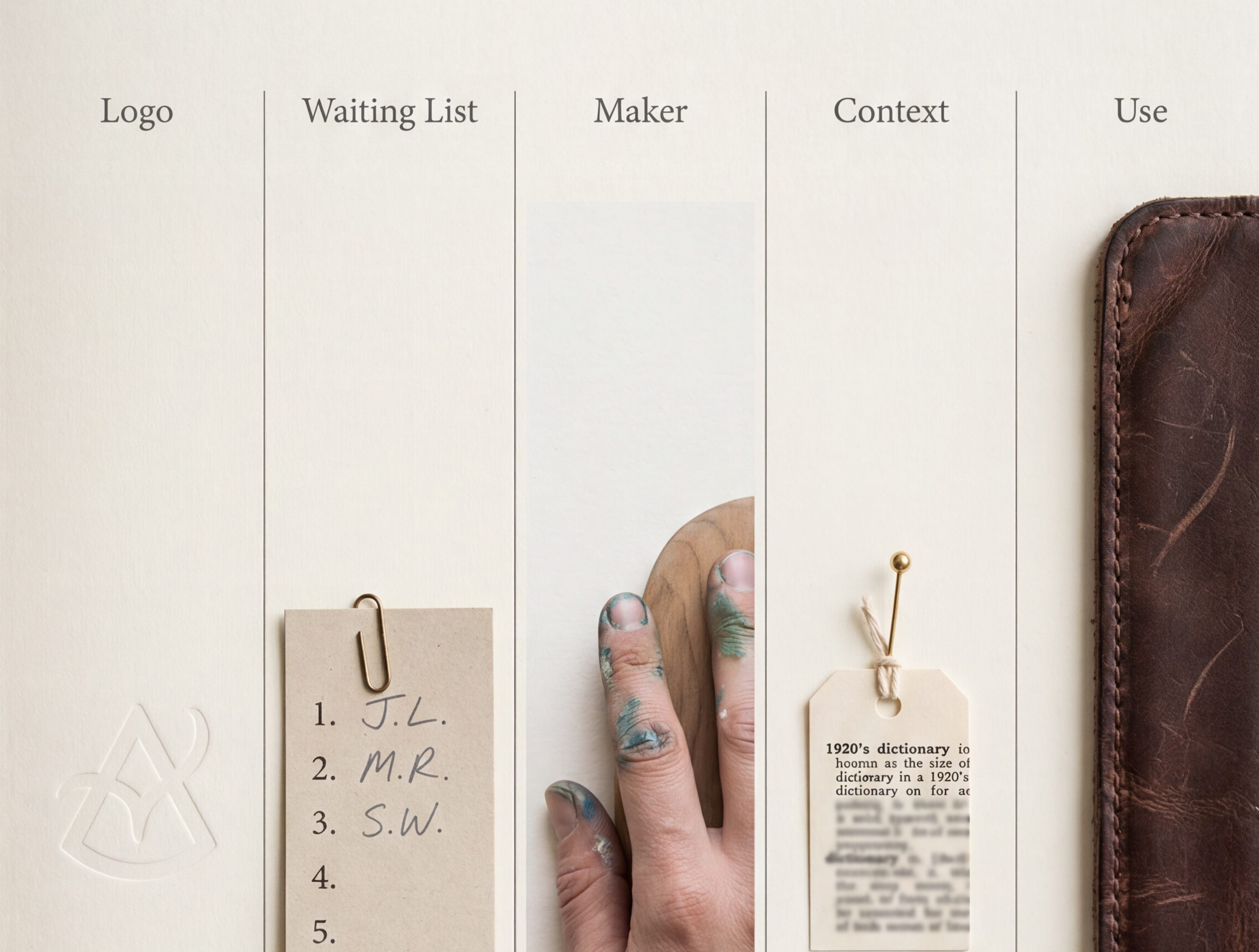
That was the public explanation. The actual mechanism was more interesting: delay changed the meaning of the object. A bag bought immediately is not the same cultural object as a bag waited for over eighteen months. The waiting list was not a logistical inconvenience. It was the product. The time you spent wanting was the thing you were really purchasing, and when the object finally arrived, it arrived carrying that accumulated desire as a permanent part of its value.
What is changing now is not desire itself. It is the mechanism that produces it.
The waiting list is being replaced by knowledge. The new status object is not the one that required patience. It is the one that requires understanding, and understanding, unlike patience, cannot be faked, accelerated, or purchased through a resale market.
This is the taxonomy nobody has written yet. That is why you are reading it here.
The Old Trophy Object: A Mechanism That Worked
To understand what is replacing the trophy object, you have to understand why the previous version worked as well as it did for as long as it did.
The It-bag economy of the late 1990s through mid-2010s operated on a simple and elegant logic: make a small number of highly recognisable objects, charge prices that exclude most people, create scarcity through limited production runs and theatrical waiting lists, and allow the visual legibility of those objects to do the social work they were designed to do.
The person carrying the bag did not need to explain it. The room did the work for them. The logo, the silhouette, the hardware, these were a shared cultural language in which fluency required money but not knowledge. You did not need to know anything about craft, provenance, material, or design history. You needed the object, and the object needed to be visible, and the transaction was complete.
What began to break this system was overexposure, and overexposure’s inevitable consequence, which is that exclusivity cannot survive scale.
When the waiting-list bag appeared on the arm of every C-list influencer at every airport and every hotel pool, it lost the specific function it had been designed to perform. The signal became noise. The status object became a category marker for people who aspired to status, which is a fundamentally different social signal from the one it was originally designed to transmit.
The brands understood this before their customers did. The response was predictable: accelerated product launches, sub-lines, collaborations, celebrity co-designs, each designed to generate short-term revenue while the core equity slowly eroded. The result was a luxury landscape in which the traditional markers of trophy-object status felt simultaneously ubiquitous and exhausted.
The Signal Break
The signal break did not happen suddenly. It happened over several years, in parallel tracks.
Logo fatigue arrived first among the most sophisticated buyers, the people who had owned the objects longest and understood best what they had originally purchased. These buyers did not stop spending. They redirected.
The anti-brand brand emerged as one response. Brands that build their appeal on the deliberate absence of overt signalling — Loro Piana being the canonical example, The Row a more recent iteration attracted buyers who wanted the same social function the logo bag had once provided, but through inverse logic: the absence of legibility as legibility. The bag nobody outside a specific circle recognises, as the signal to people inside that circle that you are inside it.
This works. It also has a ceiling, because it still relies on a shared cultural vocabulary just a smaller one.
Craft-led status is the most interesting of the responses, because it requires genuine knowledge rather than financial access. A ceramic object made by a particular studio. A piece of independent jewellery made to commission. A heritage bag from a manufacturer with a verifiable production history. A piece of vintage that required specific expertise to locate and authenticate.
These objects communicate differently from the logo bag. They require their carrier to be able to explain them, and the explanation is the point. The social transaction is not “look what I can afford.” It is “look what I know about.” Taste, in this version, is not a proxy for wealth. It is a demonstration of attention.
