


You can tell more about a person from their table than from almost anything else they will voluntarily show you.
Not the dressed table photographed before anyone arrives. Not the tablescape designed for the camera, the one with the perfect napkin fold and the candles still clean. The real table begins later: after the first glass, after the bread has been torn, after the host stops managing the room and either becomes part of the evening or does not.
The table is one of the oldest social technologies we have. It reveals generosity, anxiety, control, warmth, hierarchy, taste, confidence, and the specific relationship a person has with care.
It shows what someone believes hospitality is for.
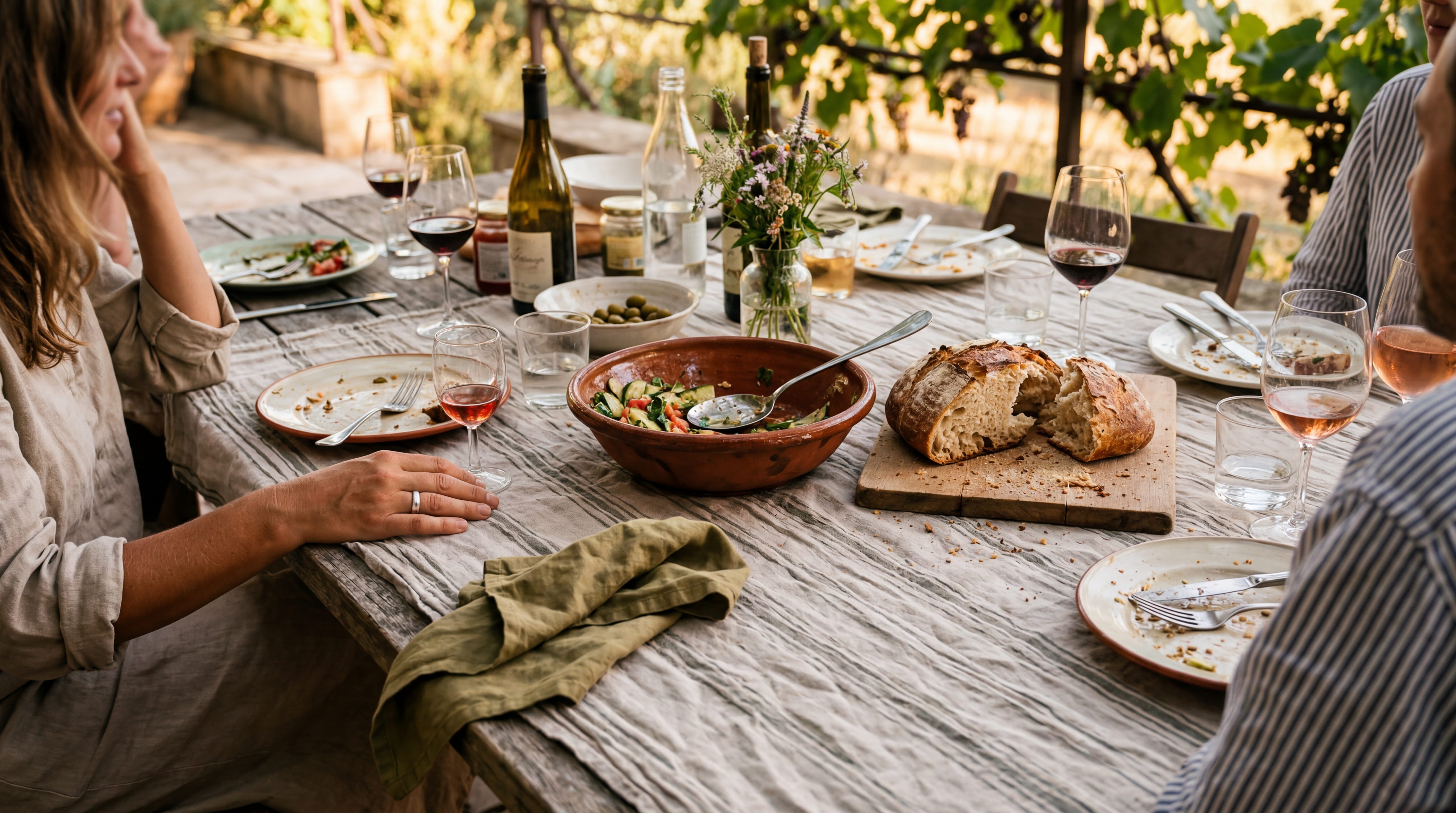
That is why a table can feel wrong before the food arrives. You register it immediately. Too much effort in the wrong place. Too little thought where thought was needed. A host who is performing ease rather than providing it.
Or, rarely and beautifully, a table with nothing to prove.
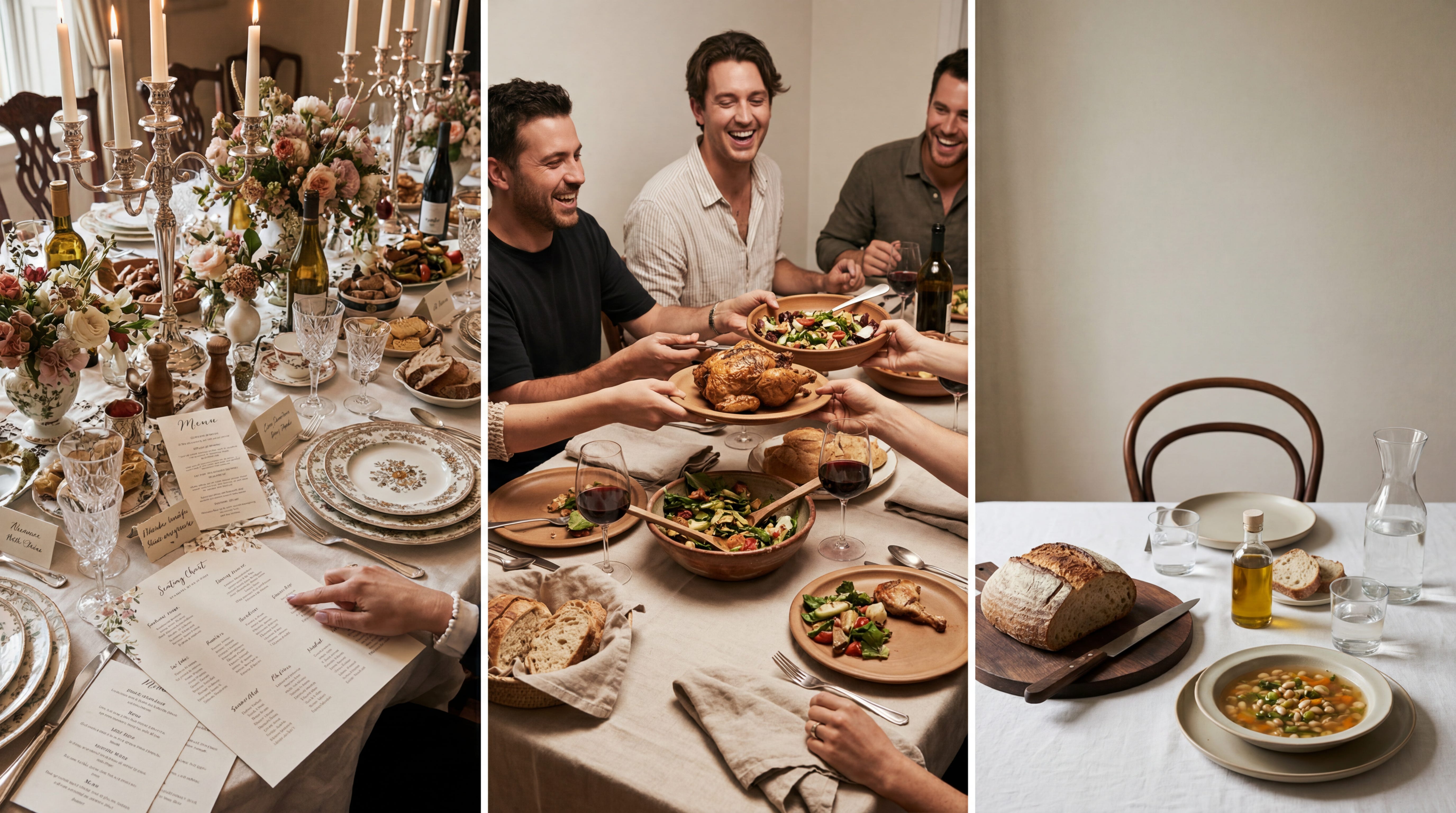
The Table Trying to Impress
The table trying to impress is usually overloaded.
Too many dishes. Too much decoration. Too many moments designed to be noticed. It is not ungenerous. Often it is the opposite: the host has worked hard, spent money, planned carefully.
But underneath the abundance is a nervous question:
Is this enough?
The anxious table does not feed people first. It asks to be evaluated.
The guest can feel the request. Compliment the flowers. Comment on the plates. Notice the effort. Confirm the host has done well.
There is nothing wrong with wanting beauty at a table. The problem begins when beauty becomes the room’s central demand. A table built to impress keeps the host outside the experience, managing reaction instead of participating in it.
The table is not asking for admiration because the host is shallow. It is asking because the host has not yet trusted that care can be felt without being displayed.
The food may be excellent.
The evening may still be tiring.
The Genuinely Hospitable Table
Hosting is the organisation of an occasion. Hospitality is the management of another person’s ease. The two often occur together, but they are not the same skill.
A genuinely hospitable table is usually simpler than expected.
It understands the sequence of human need. Something to drink when people arrive. Something small to eat before the official meal. A chair where the person who knows nobody will not feel abandoned. Enough food, but not so much that the room becomes about consumption rather than conversation.
Hospitality is not abundance.
It is attention.
The hospitable host notices the temperature of the room, the empty glass, the person who is being left out of the conversation, the dish that needs to come out before anyone becomes too hungry to be charming.
None of this is glamorous.
All of it matters.
The hospitable table has a moral quality without being moralistic. It does not exist to prove the host’s taste. It exists to make the people at it feel held.
That is a different kind of sophistication.
The Table With Nothing to Prove
The table with nothing to prove is the rarest kind.
It is considered without being laboured. It is generous without announcing generosity. The food may be simple, but it is correct. The plates may not match, but they belong together because the person who set them knows why they are there. The wine may be excellent or ordinary. Either way, it has been chosen rather than displayed.
The table with nothing to prove has one defining quality:
The host is present.
Not performing presence.
Actually present.
Eating with everyone else. Letting the evening happen. Allowing the table to become used, imperfect, alive.
The perfection of this table is not in how it looks before the guests arrive, but in how it feels two hours later.
You know when you are at one.
The room relaxes. People stay longer than they meant to. The conversation moves somewhere it could not have moved in a more managed environment.
That is the table worth learning from.
What the Table Actually Needs
A good table does not require less work. It requires the work to be directed toward the right things.
Something should be ready when people arrive, because hunger makes guests self-conscious faster than almost anything else. There should be a drink that does not require an explanation, a small thing to eat without ceremony, and enough flexibility in the meal that ten delayed minutes do not become a visible crisis.
The seating matters more than the centrepiece. The person who knows nobody should not be placed where they have to earn entry into the conversation. The guest who requires more attention should not become the responsibility of the quietest person at the table. Social comfort can be designed, but it should never feel managed.
At least one dish should survive the imperfections of an evening. It should not collapse because conversation ran long, because someone arrived late, or because the host sat down instead of returning anxiously to the kitchen.
Food that can tolerate life is often better hospitality than food requiring the room to organise itself around the exact minute of its perfection.
And then the host has to join.
This is the part no menu can compensate for.
A host moving constantly between kitchen and table may be working generously, but the absence is still felt. The most hospitable preparation is sometimes the decision to serve something simpler so the person who invited everyone can remain among them.
The table does not need to demonstrate how much effort the evening required.
It needs to make the effort disappear.
What Summer Changes
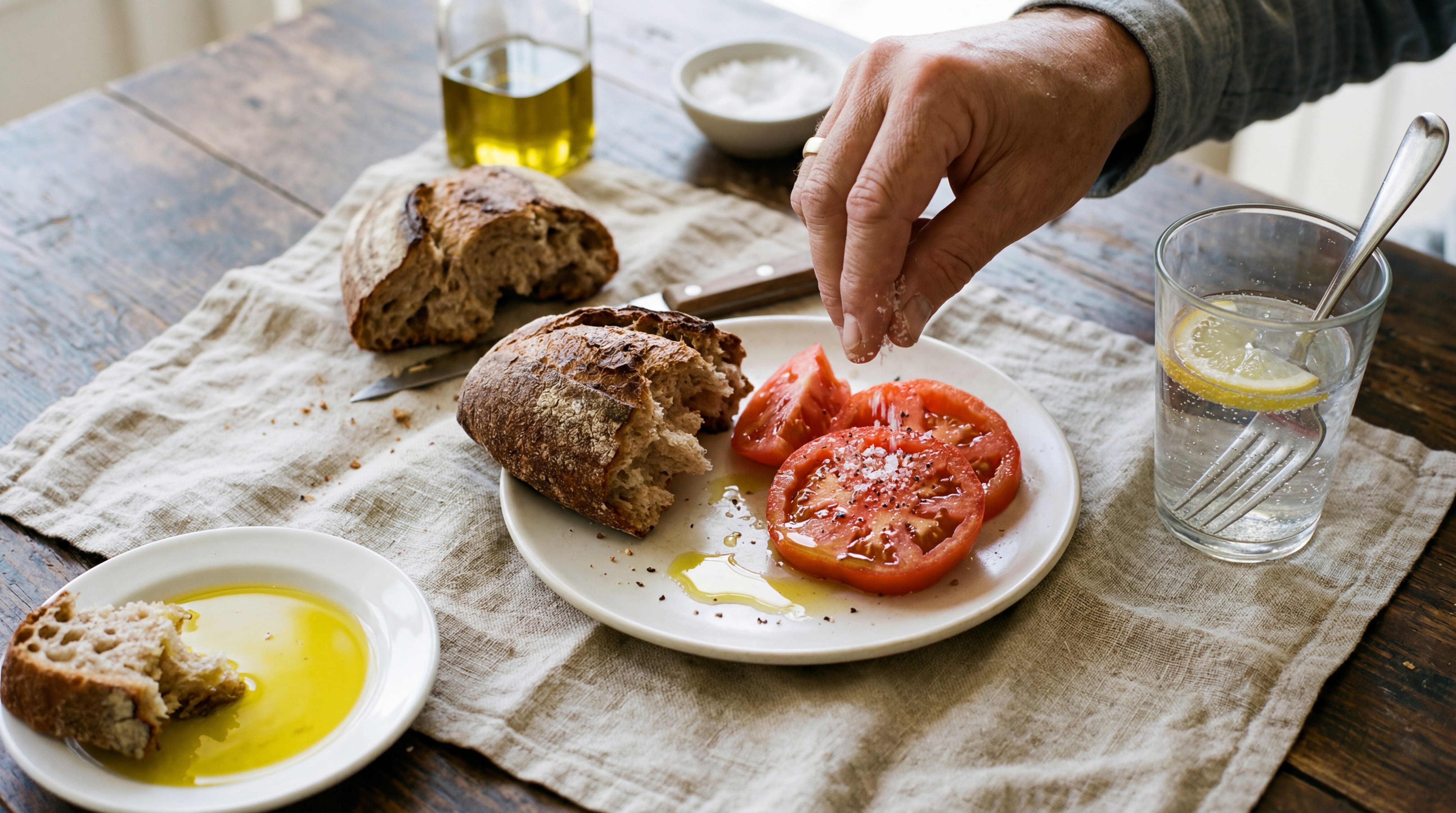
Summer reduces the table to its essentials.
Heavy formality becomes less persuasive. Food moves outside, or closer to outside. The meal becomes colder, brighter, more direct.
Tomatoes. Fish. Bread. Fruit. Herbs. Salt. Oil.
The best summer tables understand that the season does not want complication.
It wants accuracy.
This is where taste becomes visible in a quieter way. The decision not to overwork the food. The confidence to serve one beautiful thing properly rather than six things anxiously. The understanding that a bowl of cherries can be a dessert if the cherries are good enough and the room has arrived at the right point in the evening.
Summer punishes performance because performance overheats quickly.
The best summer table feels inevitable: of course this is what we are eating, of course this is where we are sitting, of course the evening should move at this speed.
That inevitability is not accidental.
It is taste doing its work without asking to be applauded.
What Your Table Says
If someone who knew nothing about you sat at your table this week, what would they understand?
Not what would they think of your cooking. That is the least interesting question.
What would they understand about your pace, your generosity, your control, your comfort with imperfection, your relationship with pleasure, your capacity to let other people relax?
The table is not a test.
It is information.
Some people feed to impress.
Some people feed to control.
Some people feed because care has to go somewhere, and the table is where they know how to put it.
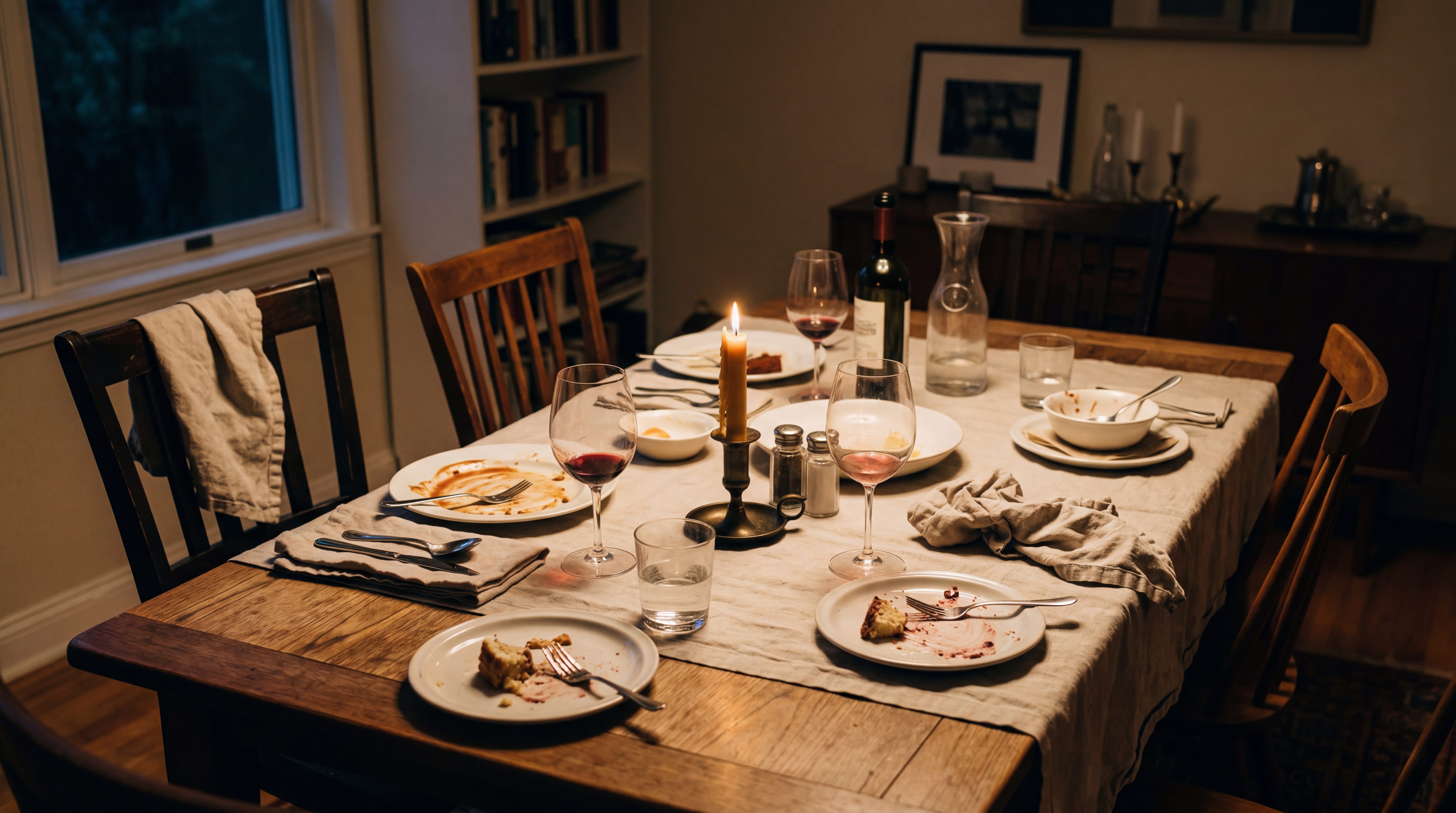
The most nourishing tables are set by people who have stopped performing and started feeding.
There is a difference.
You feel it immediately.
It is not in the linen, the menu, or the flowers.
It is in whether the room asks anything from the guest before offering something first.