


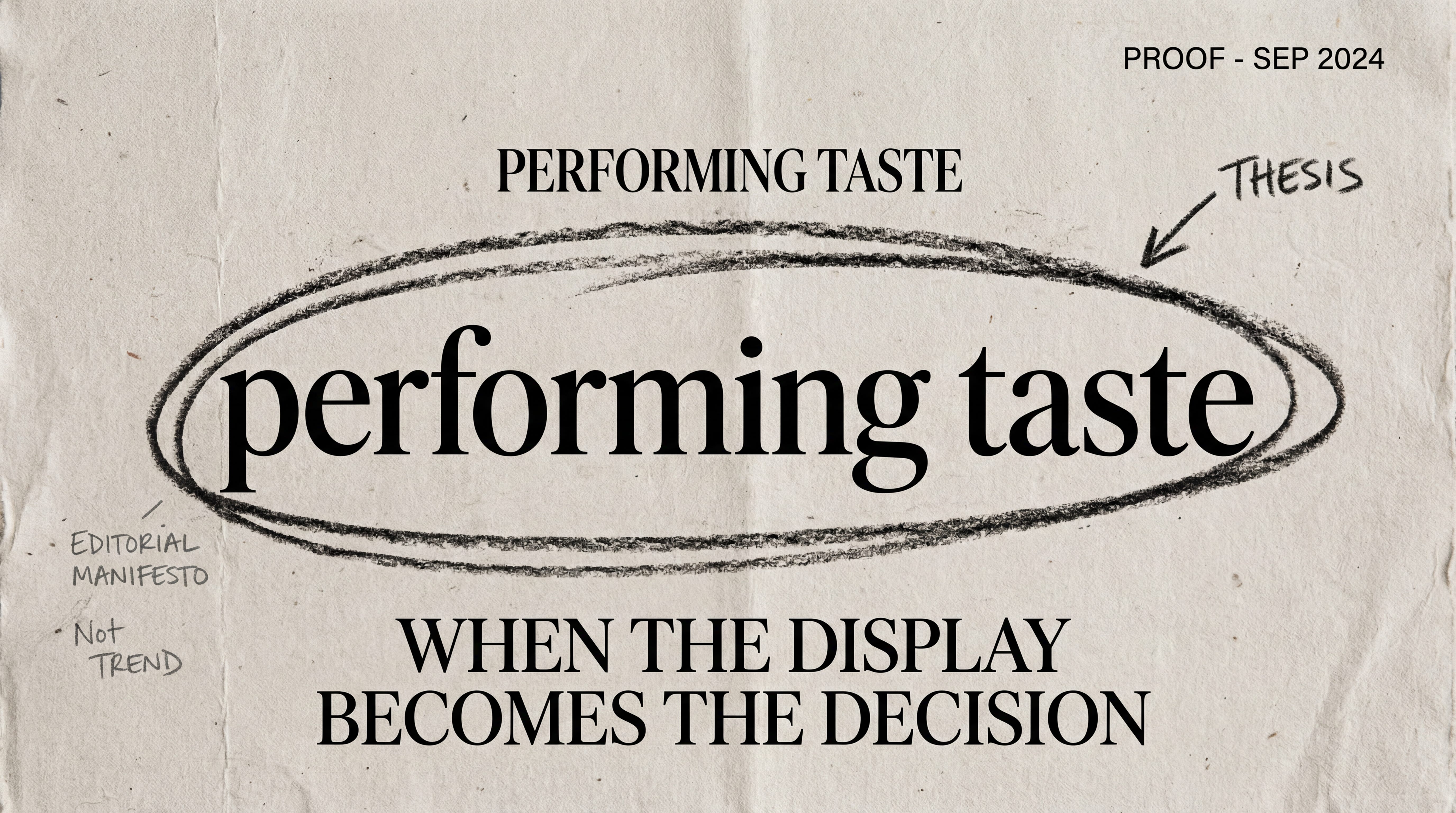
Somewhere in the last five years, taste became a performance.
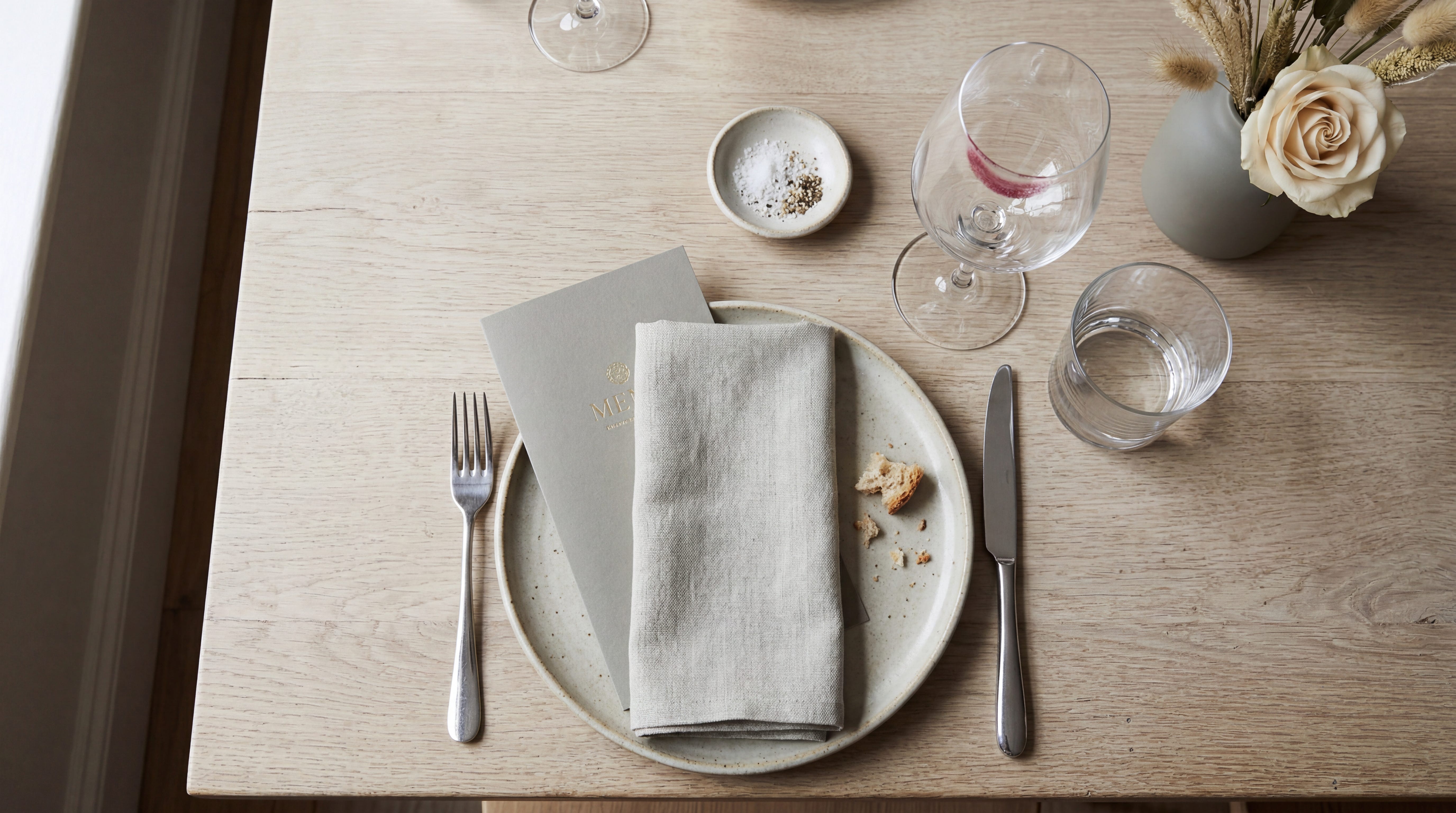
Not taste itself, taste has always been social, has always been communicated, has always done work in the world beyond the private pleasure of the person who has it. But the display of discernment became its own product. The flat lay that takes longer to arrange than the meal takes to eat. The bookshelf in the background, curated with more deliberateness than the books were read. The restaurant reservation posted before the food arrives. The brand nobody outside the right circle recognises, chosen precisely for that reason, displayed precisely because the exclusivity requires an audience to land.
OFFF DUTY is not interested in mocking that behaviour. The behaviour is understandable, and in some of its forms it is genuinely interesting. We are interested in something more specific: what happens when the performance becomes louder than the decision underneath it.
Because something does happen.
And it is worth examining.
What Performing Taste Looks Like
Let me describe the behaviour without cruelty, because cruelty would miss the point.
Performing taste is not the same as having taste and also sharing it. The two coexist and frequently overlap, and distinguishing them requires a level of psychological honesty about your own motivations that is genuinely difficult to maintain in real time. Most people performing taste are also, to some degree, actually exercising it. The problem is not inauthenticity. The problem is priority.
Performing taste means that the visibility of the choice has begun to drive the choice itself. The restaurant is selected partly because of what the reservation post will communicate. The object is purchased partly because of what carrying it will say. The book is chosen partly because of how it will read in the background. These are not purely cynical decisions the person making them may genuinely love the restaurant, the object, the book. But the performance layer is now doing work in the decision-making process that it probably should not be doing.
The clearest marker is this: the performed choice is always legible too quickly. It always arrives at the right moment. It always photographs well. It always slots into the current conversation with suspicious neatness.
Genuine taste is less convenient. It is specific in ways that do not always connect to the current moment. It includes the unfashionable enthusiasm, the unphotogenic pleasure, the decision that does not read well as a caption. The person with genuine taste is occasionally inexplicable. The person performing taste is always comprehensible on schedule.
This is the tell.
What Gets Lost
When the visible version of the thing begins to replace the thing itself, something specific is lost.
In food: The meal eaten for the meal for its flavour, texture, the specific pleasure of this combination in this moment is a different experience from the meal organised around its documentation. The person eating for the meal is present to it. The person eating for the post is partially elsewhere, managing the visual and narrative dimension of the experience while also nominally having the experience. Something is lost in that division of attention. It is not nothing.
In objects: The object chosen for how it will be understood by others is, by definition, not fully chosen for the person choosing it. The decision has been partially outsourced to the imagined audience. The object that results is real and sometimes genuinely beautiful, but it has a quality of incompleteness it is part of a performance rather than an expression of a specific private preference. It can be replaced by a different object when the cultural conversation shifts, without the person feeling that they have lost something essential.
In career: This is where the cost becomes most consequential. The career move posted about while it is still in progress, shaped partly by how it will play publicly, is different from the career move made entirely on the basis of private judgment and communicated after it is complete. The post-before-the-decision introduces an audience into the decision-making process before the decision is made. Audiences are not neutral. Their anticipated responses affect the logic of the choice.
The most significant decisions in most people’s careers the ones that actually changed the trajectory were made quietly. Not because secrecy is virtuous, but because private decisions are made on private terms. The choice is made for the person making it, based entirely on what they actually believe, without the distorting presence of an imagined public response.
In beauty: The skin protocol that exists to be posted about is a different object from the skin protocol that works. The performed routine is organised around legibility: it must be describable, photographable, and comprehensible to a general audience. The effective routine is organised around the individual biology of a specific person, which is frequently neither tidy nor photographable and almost never results in a compelling carousel.
The Exhaustion of Being Legible
The most tiring part of performing taste is not the performance itself. It is the constant requirement to remain legible.
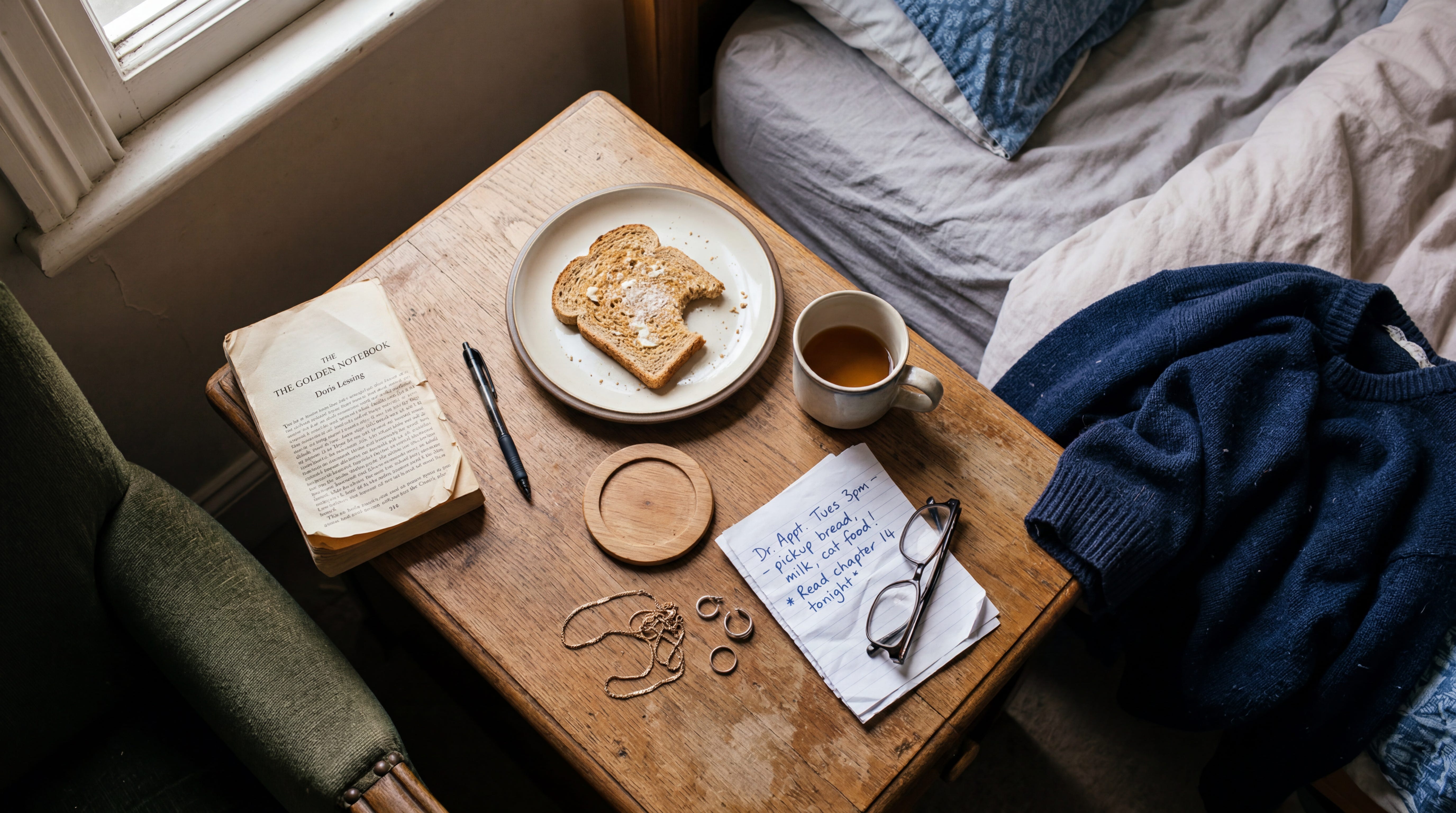
Every choice has to explain itself before it has fully belonged to you. The restaurant must signal the correct kind of appetite. The outfit must communicate the correct kind of intelligence. The holiday must look like the correct version of escape. The book must suggest the correct interior life. Even rest begins to acquire a visual grammar: the candle, the linen, the cup, the open journal, the evidence of slowness arranged with remarkable speed.
This is not vanity in the simple sense. It is a more sophisticated kind of pressure. The pressure to make your life readable as a coherent aesthetic project.
The problem is that actual taste is not always coherent in the moment it is being lived. It contradicts itself. It develops unevenly. It attaches to things for reasons that do not survive explanation. You may love the restaurant that nobody fashionable is discussing. You may keep wearing the bag that is no longer current because it has learned the shape of your day. You may prefer the meal that cannot be photographed well, the perfume that does not match your public style, the book you return to for private reasons you could not turn into content without cheapening it.
These are not failures of taste.
They are evidence that taste is still alive.
Taste that exists only as a public signal becomes brittle. It has to remain up to date. It has to keep proving that the person behind it knows what is being discussed, what has moved on, what is now considered obvious, what is just obscure enough to be interesting but not so obscure that no one understands the signal. This is exhausting because the audience is never actually present in one fixed form. The audience is imagined, shifting, demanding, and often more sophisticated in your head than it is in reality.
So the performance keeps adjusting.
The private self, meanwhile, becomes harder to hear.
This is the quiet cost. Not that people stop having taste, but that they stop trusting the first signal of preference before checking how that preference will read. The instinct arrives. Then the performance edits it. The edit may be subtle, but over time it changes the person making the choice.
A life built this way can become visually impressive and internally vague.
That is why the return to private taste matters. Not because public sharing is wrong. Not because beauty should be hidden. But because the choice has to exist before the audience arrives. If the audience is present at the birth of every decision, the decision is never entirely yours.
What Replaces It
This is not a retreat into privacy. It is not an argument for secrecy, restraint, or the abdication of public life. It is an argument for a specific kind of authority that emerges only when the performance layer is removed.
Choosing. The decision made entirely on its own terms, without the performance layer, has a quality that is perceptible to others even when those others cannot name it. People who consistently choose for themselves whose decisions are not calibrated to an imagined audience have a particular presence. Their choices are specific in ways that performed choices are not. They are sometimes unexpected, often inexplicable, and always characteristic.
Specificity. The person who knows what they actually want is different from the person who wants what is currently signalling correct wanting. The specificity is legible. It produces the kind of taste that is genuinely useful as a guide because it is based on actual experience and actual preference, rather than on an extrapolation of what the sophisticated person is supposed to prefer.
The private logic of taste. There is a version of your aesthetic sensibility that exists only in the decisions you make when nobody is watching. What you eat alone. What you wear when the day has no audience. What you choose to read when there is no one to observe you choosing. These decisions are information. They are, arguably, the most reliable information about your actual taste, because they are entirely free from the performance incentive.
OFFF DUTY is interested in that version. The section of your taste that you have not yet posted about. The preferences that are too specific, too unphotogenic, or too inexplicable to communicate effectively in a caption. The choices you make at midnight when the only audience is you.

Why This Is The June Thesis
Every section of this issue has been an argument for the same position.
The Opulence section was about objects whose value accumulates in private before becoming visible publicly. The jewellery worn closest to the skin. The bag chosen before visibility became the brief. The trophy object that requires knowledge rather than logo recognition.
The Fame section was about the specific costs of making the private public of building an audience around a version of yourself that is visible and legible, and what that visibility does to the decisions you make and the relationships you hold.
The Fashion section is about clothes chosen after the person wearing them has stopped asking for permission. The shoe worn before the trend arrived. The bag built for function. The decision made in the absence of an audience to confirm it.
The Food section which begins this week is about tables that have nothing to prove. Meals that are not documentation projects. Wedding menus that tell the truth about the people getting married rather than performing the version of them that the occasion suggests.
The Beauty section, which closes the month, is about protocols built for efficacy rather than legibility. Skin treated according to what it actually needs, not according to what the routine is supposed to look like.
The argument underneath all of it: the most considered choices are the ones made without an audience.
This is not a new idea.
But it is, in the current moment, a necessary one.
The question now is not what your taste says about you.
It is whether it still belongs to you.
The second half of June starts here. The archive now holds the complete argument behind the feed from the editor’s letter to this manifesto, and every essay between them.