


For more than a decade, beauty pursued perfection with extraordinary discipline.
Skin became smoother, brighter, more reflective. Faces were sculpted with precision, reshaped through contouring techniques designed to hold under artificial light. Highlighter was applied deliberately to catch the camera’s flash. Filters softened texture until skin appeared almost glass like, free from interruption, free from inconsistency.
The aesthetic was controlled.
It offered something deeply appealing: the possibility of managing the face as if it were a surface rather than a living thing.
Technology accelerated the promise. Editing tools became effortless. Social platforms rewarded images that appeared flawless at speed, optimised for small screens and shorter attention spans. Skincare routines expanded into elaborate systems, each step designed to correct, refine, improve.
For a time, the logic felt convincing.
If beauty could be perfected, why stop improving it?
But slowly, almost imperceptibly at first, something began to shift.
Perfect faces started to feel unreal.

The change did not arrive as a rejection. It arrived as a hesitation.
Makeup artists began speaking differently about skin. The language moved away from transformation and towards balance. Foundation became lighter, less absolute. Cream textures replaced heavy powders. Freckles, once carefully concealed, appeared again not as a statement, but as an acceptance.
Backstage, restraint began to carry more authority than technique.
Skin remained luminous, but not uniform. Faces retained variation. Expression was no longer treated as something to minimise.
Editors reached for a word that would have felt out of place a few years ago.
Believable.
That word matters more than it seems.
Because it signals a shift away from illusion and towards credibility.
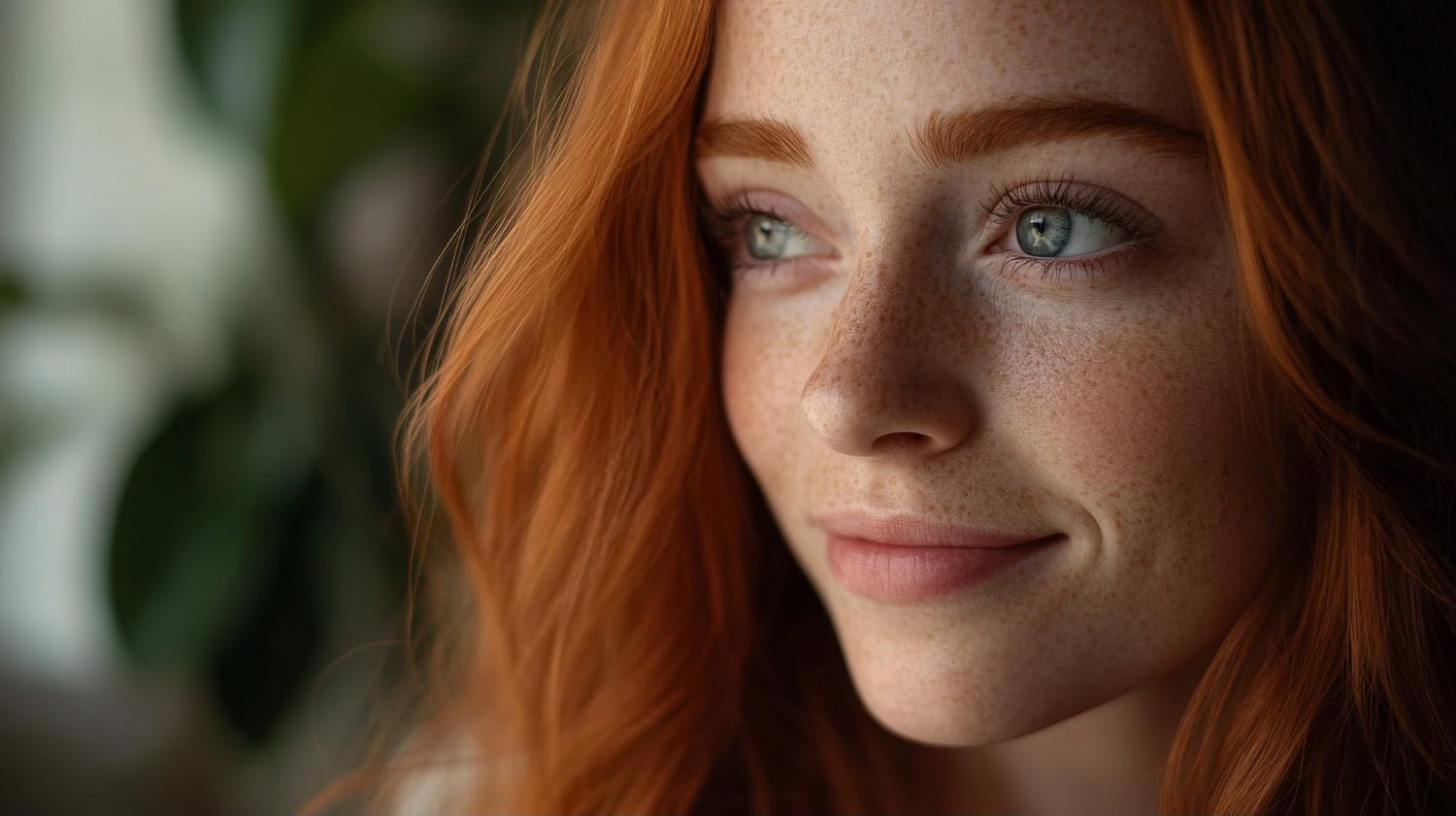
Beauty, like fashion, does not change arbitrarily. It responds to atmosphere.
In moments of expansion, aesthetics become exaggerated. In moments of uncertainty, they become controlled. But control, when pushed too far, begins to create its own tension.
What started as refinement slowly became distortion.
The face, in its perfected form, stopped feeling like a reflection of a person and started reading as a projection, something edited, constructed, slightly detached from reality.
And the eye adjusts quickly.
Once you begin to notice artificial perfection, you cannot unsee it.
For years, the industry positioned correction as progress.
Every irregularity could be softened. Every inconsistency could be evened out. The language was clinical: minimise, refine, resurface, perfect.
But correction has a psychological consequence.
When the face becomes a problem to solve, it never resolves. Each improvement creates a new standard. Each standard introduces a new flaw. The process continues, not because the face requires it, but because the expectation demands it.
Eventually, the effort begins to outweigh the result.
And a different question appears.
Not how to perfect the face.
But whether perfection was ever the point.
What if the goal is not perfection?
What if the goal is credibility?