


Why does Italian food feel like love? Because it calms the nervous system before it ever impresses the mouth. Try to remember the last time a plate of pasta genuinely moved you. Not the most expensive one, the one that moved you.
I would wager it was not complicated.
I would wager it had four ingredients, maybe five.
I would wager it arrived without ceremony, possibly in someone’s home, possibly somewhere small and a little loud, and that the first bite did something the price per cover could never explain: it made your shoulders drop.
Something in you unclenched.
For a moment you were not performing your life. You were just inside it, warm, fed, and there is no other word held.
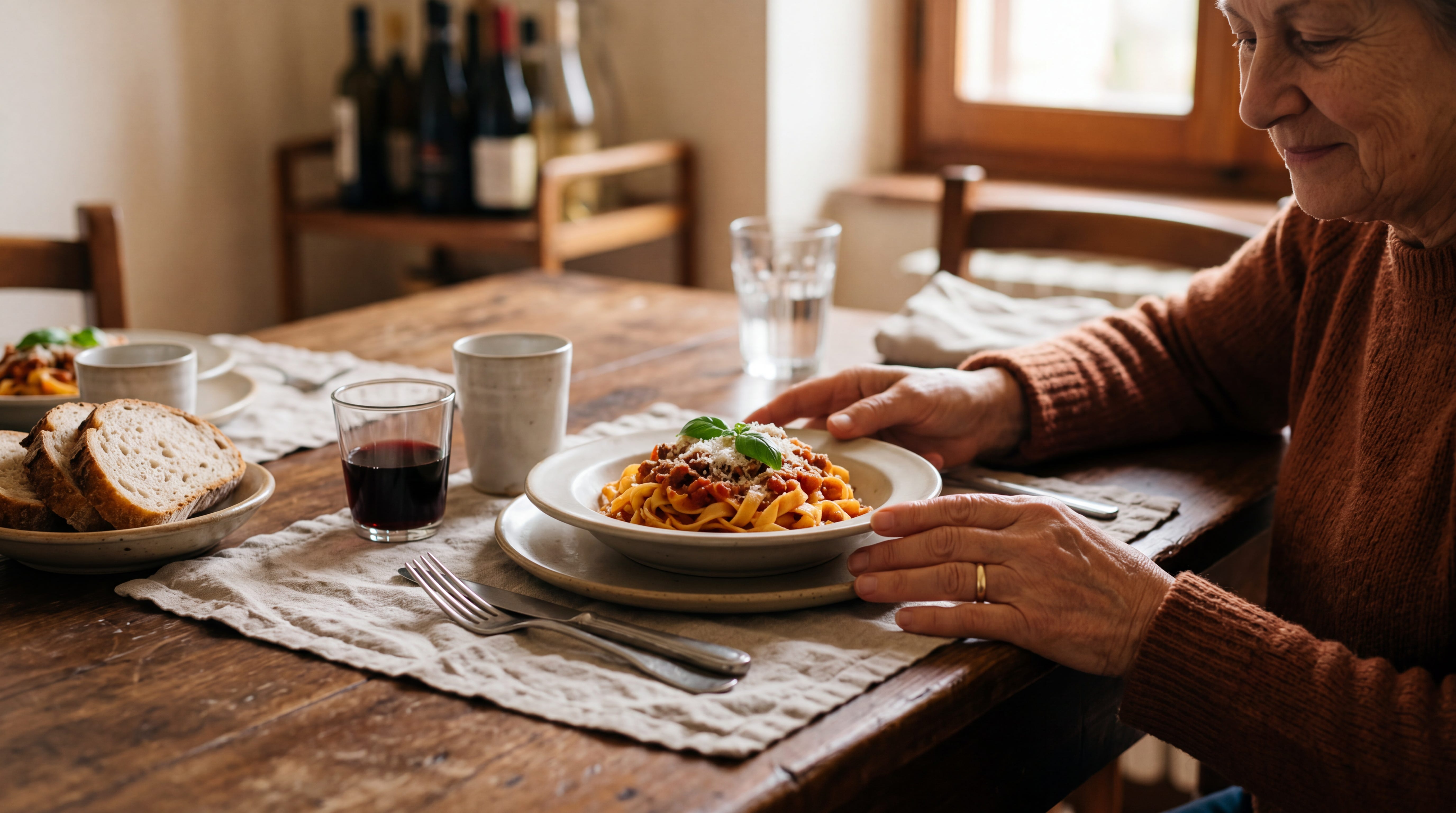
That feeling is not an accident of nostalgia. It is, I want to argue, the actual engineering of the cuisine.
Italian food is the most emotionally effective food in the world not because it is the most refined it often, gloriously, is not but because it was perfected over centuries to do one thing the human animal is desperate for and almost never gets:
it makes us feel safe.
And to understand why it works on us so completely, we have to talk about the body before we talk about the plate.
Consider what actually happens when you eat that bowl of pasta.
The simplicity is doing quiet neurological work.
A dish of three or four recognisable things does not put your brain on alert; there is nothing to decode, nothing to perform an opinion about, no complexity demanding to be admired.
The warmth, the soft texture, the gentle carbohydrate these are, almost literally, the sensory signals of infancy, of being cared for before you had language for it.
The cuisine speaks directly to the oldest, preverbal part of you, the part that learned, long ago, that being fed simply and warmly by someone who wanted you fed was the very definition of love.
Italian food did not invent that association. It just refuses, century after century, to break it.
This is also why Italian food travels so strangely well across class, geography, and memory.
A bowl of pasta in Rome, a tray of lasagna in a family kitchen, a late night plate of spaghetti in a restaurant you stumbled into by chance they do not need to be identical to produce the same emotional result.
The ingredients change. The room changes. The price changes.
But the logic remains.
Warmth. Recognition. Rhythm. Enoughness.
There is profound psychological relief in food that does not confront you with itself. Italian food rarely asks, Can you understand me?
More often it asks, Are you hungry? Sit down.
That question is more intimate, and more generous, than the one much modern dining insists on posing.
It is one reason the cuisine survives fashion so effortlessly. It is not built on novelty. It is built on reassurance. And reassurance, unlike novelty, does not expire.
A great bowl of pasta does not need to surprise you to matter. It needs to return you to yourself.
That is a much rarer skill.
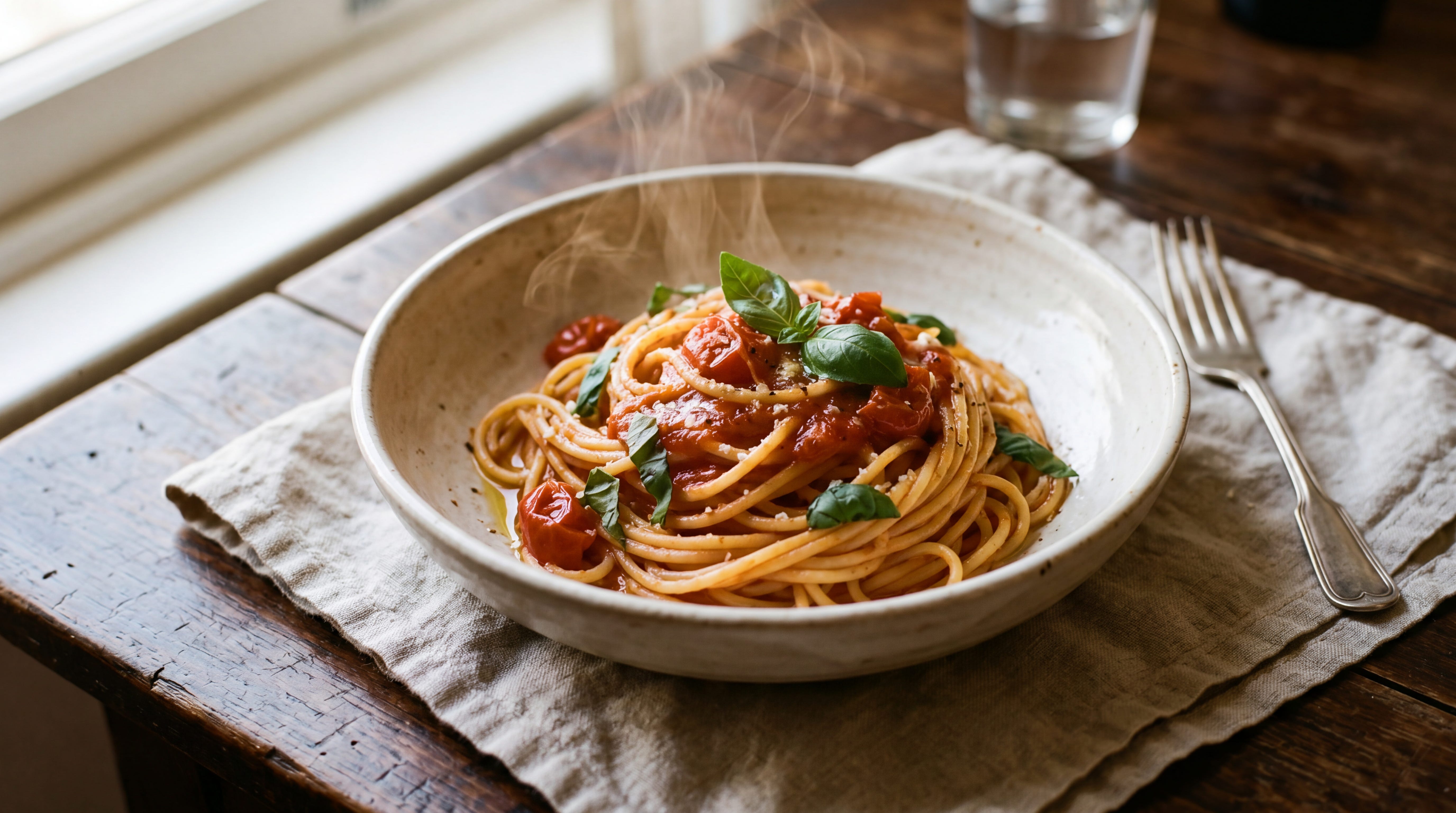
This is the thing the rest of fine dining gets backwards.
So much of ambitious cooking is designed to impress to startle, to dazzle, to make you sit up and applaud the chef’s intelligence. And impression is a cognitive event.
It happens in the front of the brain, the part that judges and compares and keeps score.
Italian food, at its truest, aims somewhere far older and far harder to reach. It aims for the nervous system. It is trying to settle you, not astonish you.
And a settled human being is a happy one in a way no astonished human being ever quite manages to be, because astonishment is exciting and exhausting, while settledness is the rarest luxury of modern life: the brief, total permission to stop bracing.
Now add the ritual, because the food is only half of it.
Italian eating is structurally social in a way that has nothing to do with cuisine and everything to do with belonging.
The long table.
The dish that must be passed.
The meal that refuses to be rushed, that insists sometimes maddeningly, to the efficient foreigner on time.
This is not inefficiency. It is the deliberate construction of belonging, repeated daily until it becomes the texture of a life.
When you eat this way, you are not consuming calories.
You are participating in a ceremony whose entire function is to remind everyone at the table that they are part of something, that they are wanted there, that they will be fed again tomorrow.
The food is the medium.
The message is: you belong here.
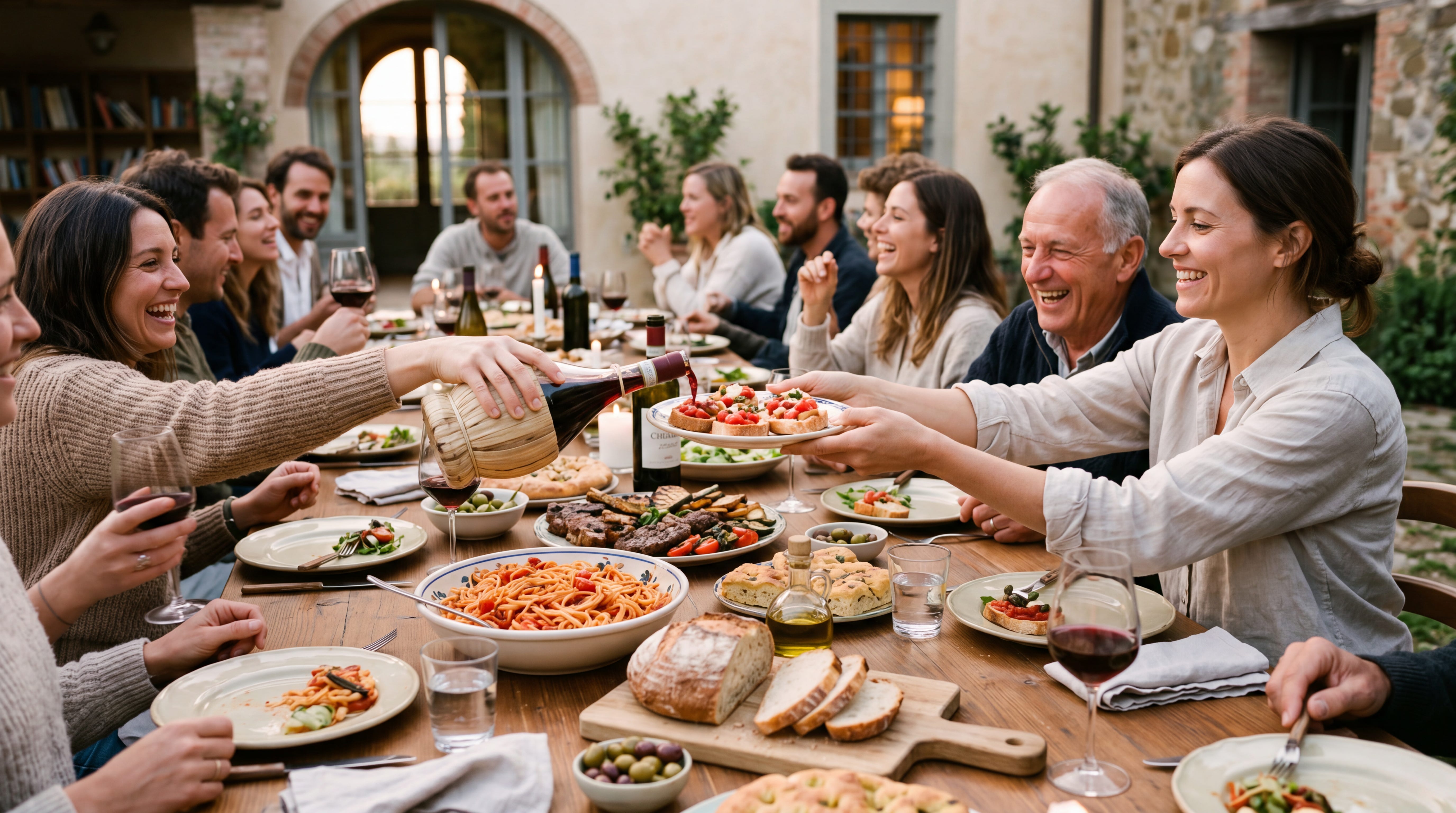
And here is where our obsession finally makes sense the global, slightly unhinged devotion to Italian food that has people queueing for an hour for a bowl of something a grandmother makes in twelve minutes.
We are not, I think, obsessed with the food.
We are obsessed with the feeling the food reliably delivers, and we are obsessed with it precisely because the rest of contemporary life delivers its opposite.
We live braced. We live optimised, scheduled, evaluated, and perpetually slightly behind. And then a plate of cacio e pepe arrives, and for the length of a meal the bracing stops.
Of course we are obsessed. We are not carbohydrate addicts.
We are comfort starved people who have found one of the last reliable sources of comfort that money can almost, almost buy.
The genius of the Italians and it is genius, even if they would shrug at the word is that they encoded all of this into a cuisine so simple it looks like nothing.
No molecular trickery. No twelve hour reductions performing their own difficulty.
Just good ingredients, treated with respect, served warm, shared slowly, by people who understand in their bones that the point of feeding someone was never to impress them.
It was to love them.
The pasta is just the most delicious possible way of saying so.
So the next time a simple plate undoes you a little, do not be embarrassed by the size of the feeling.
You are not being sentimental about noodles.
You are responding, correctly, to the most sophisticated emotional technology ever disguised as peasant food.
It calmed you before it flattered you. It held you before it impressed you. It loved you, in the only language a kitchen has ever really had.
And then it asked you to pass the bread.
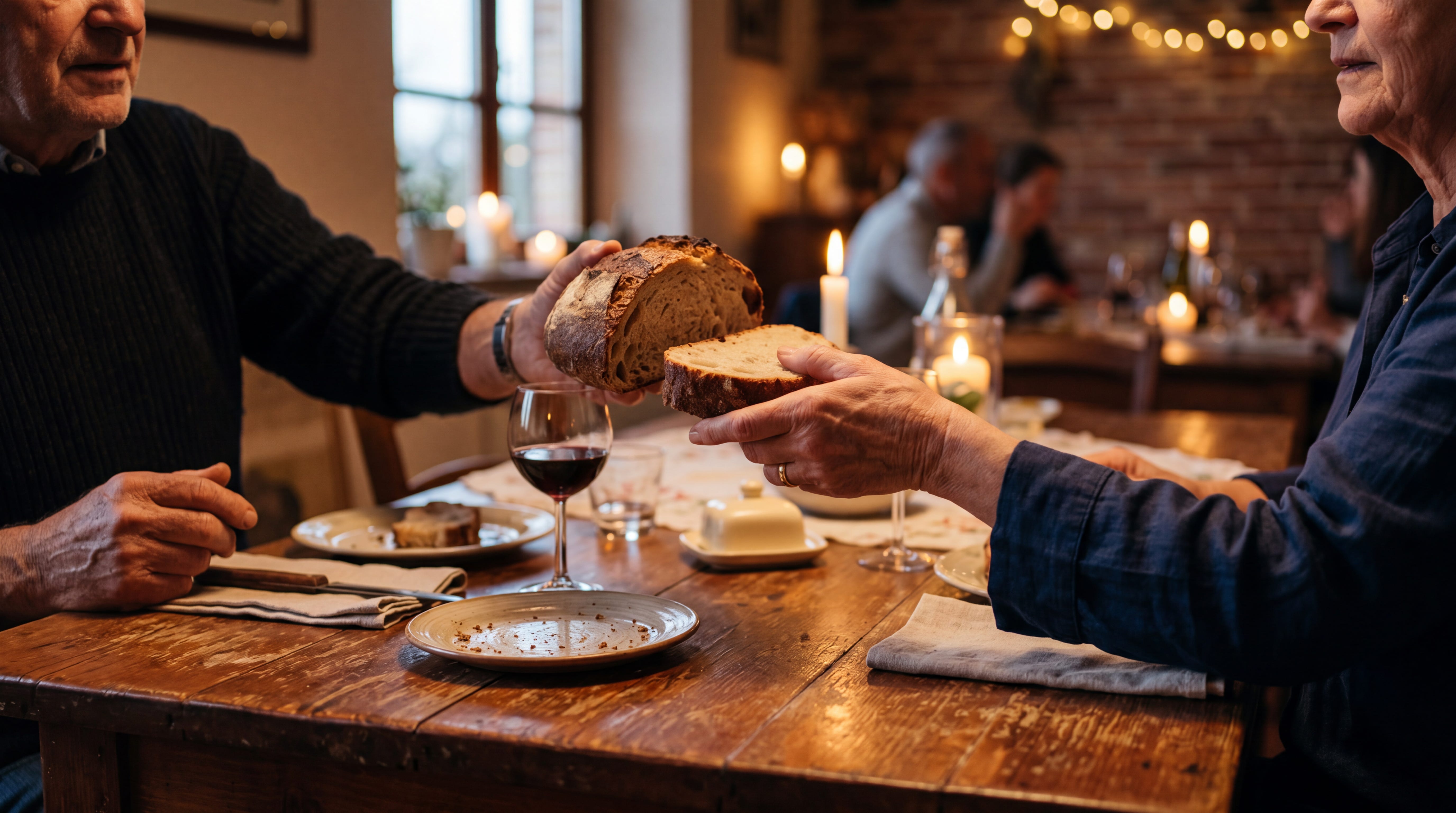
For those who want the machinery under the feeling, here is the part we keep behind the door.
The neuroscience, briefly and honestly.
The comfort of warm, simple, carbohydrate rich food is not poetry alone there is a real interplay between texture, temperature, blood sugar, and the parasympathetic nervous system, the rest and digest state.
Soft, warm food is low threat sensory input; the body reads it as safety and downshifts out of the low grade vigilance most of us carry all day.
Add the social ritual eye contact, shared timing, the rhythm of a slow table, and you are stacking two of the most reliable calming inputs the human brain has:
predictable comfort food and belonging.
Italian eating happens to maximise both at once.
That is the whole trick.
The 7 dishes that do it best and why each one works
1. Cacio e pepe — three ingredients, total textural comfort, zero cognitive load. The purest delivery of the settle, do not astonish principle.
2. Pastina in brodo — literally the food of Italian childhood; warm, soft, tiny, salty. It is comfort with the training wheels still on, and adults crave it for exactly that reason.
3. Risotto, stirred and shared from one pan — the act of the stirring, the patience, the communal serving. The ritual is the medicine.
4. A simple ragù over fresh pasta — slow cooked time, made tender. You can taste the hours, and hours read, emotionally, as care.
5. Pizza margherita, eaten with hands, passed and torn — informality plus warmth plus sharing. It dismantles social performance faster than almost any other dish.
6. Pane and good olive oil — the bread ritual. Breaking bread is the oldest belonging gesture we have; the Italians just kept it on the table.
7. An espresso to close, standing, unhurried — not comfort but punctuation. It marks the meal’s end as deliberately as the meal marked the day’s pause. The full grammar of the table.
The one rule that makes any of it land:
never optimise the table for speed.
The comfort is in the time. The moment you rush an Italian meal, you have kept the calories and thrown away the medicine.