


Your skin is not always ageing in the way skincare marketing has taught you to think about ageing.
The visible changes we place under that word — dullness, fine lines, uneven tone, persistent sensitivity, congestion, pigmentation that returns after treatment are often treated as a simple timeline.
Time passes. Skin changes. Buy the product that promises to slow the timeline.
That framing is incomplete.
A more useful question is not only how old the skin is. It is how inflamed the skin is, how often, and why.
The term inflammaging describes chronic, low-grade inflammation that can contribute to ageing processes in the body, including the skin. In skin, this matters because inflammation can affect barrier function, collagen quality, pigmentation pathways, healing, sensitivity, and the skin’s ability to tolerate the very actives people add in an attempt to look better.
This does not mean every skin concern is inflammation.
It does mean that inflammation is one of the most under-discussed mechanisms behind why skin can suddenly look older, more reactive, more tired, or less able to recover.
The productive question becomes: what is increasing the inflammatory load, and what would happen if you reduced it before adding another active?
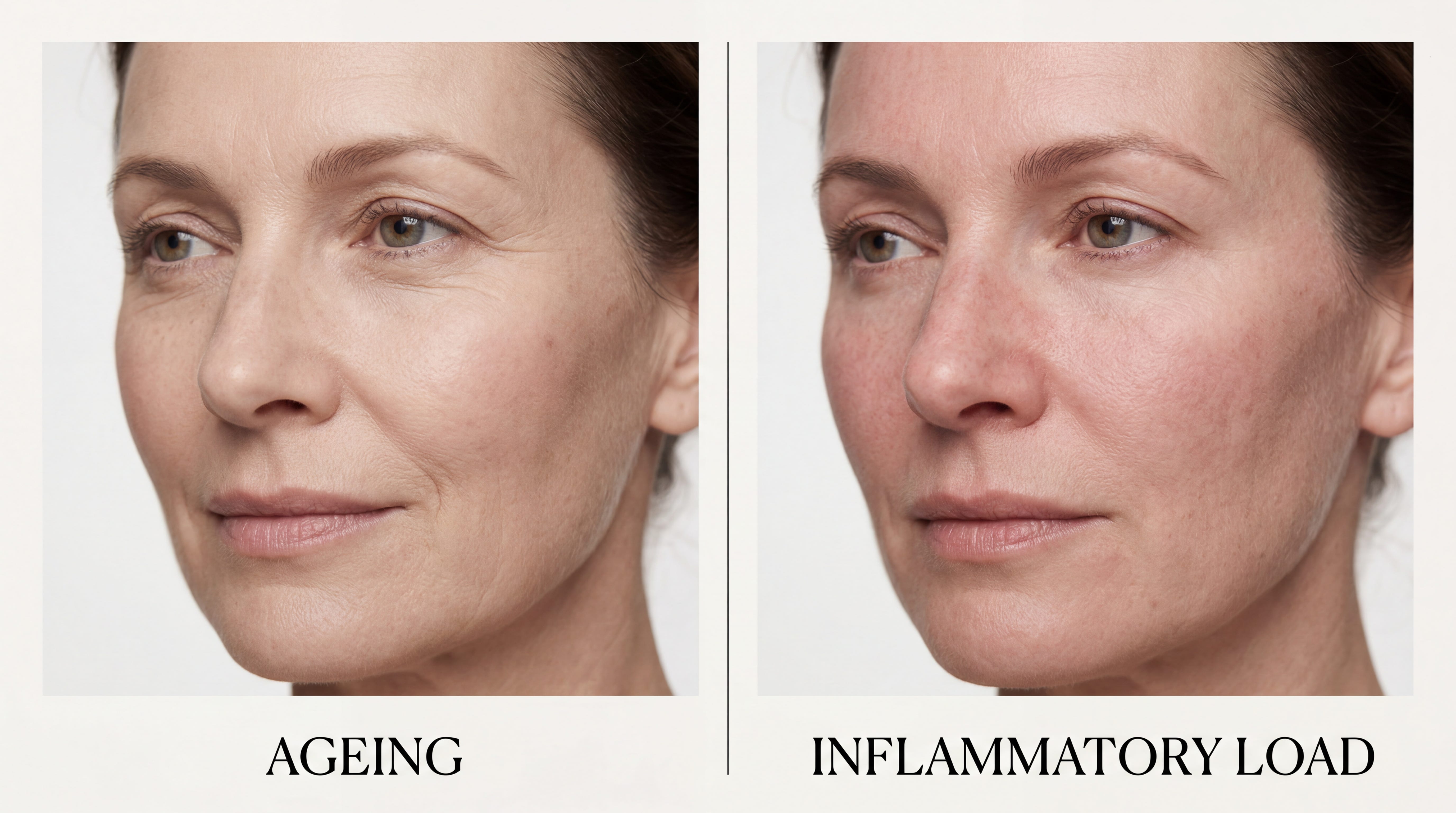
What Inflammation Looks Like on Skin
Inflammation is not always obvious redness.
That is why it is so easily missed.
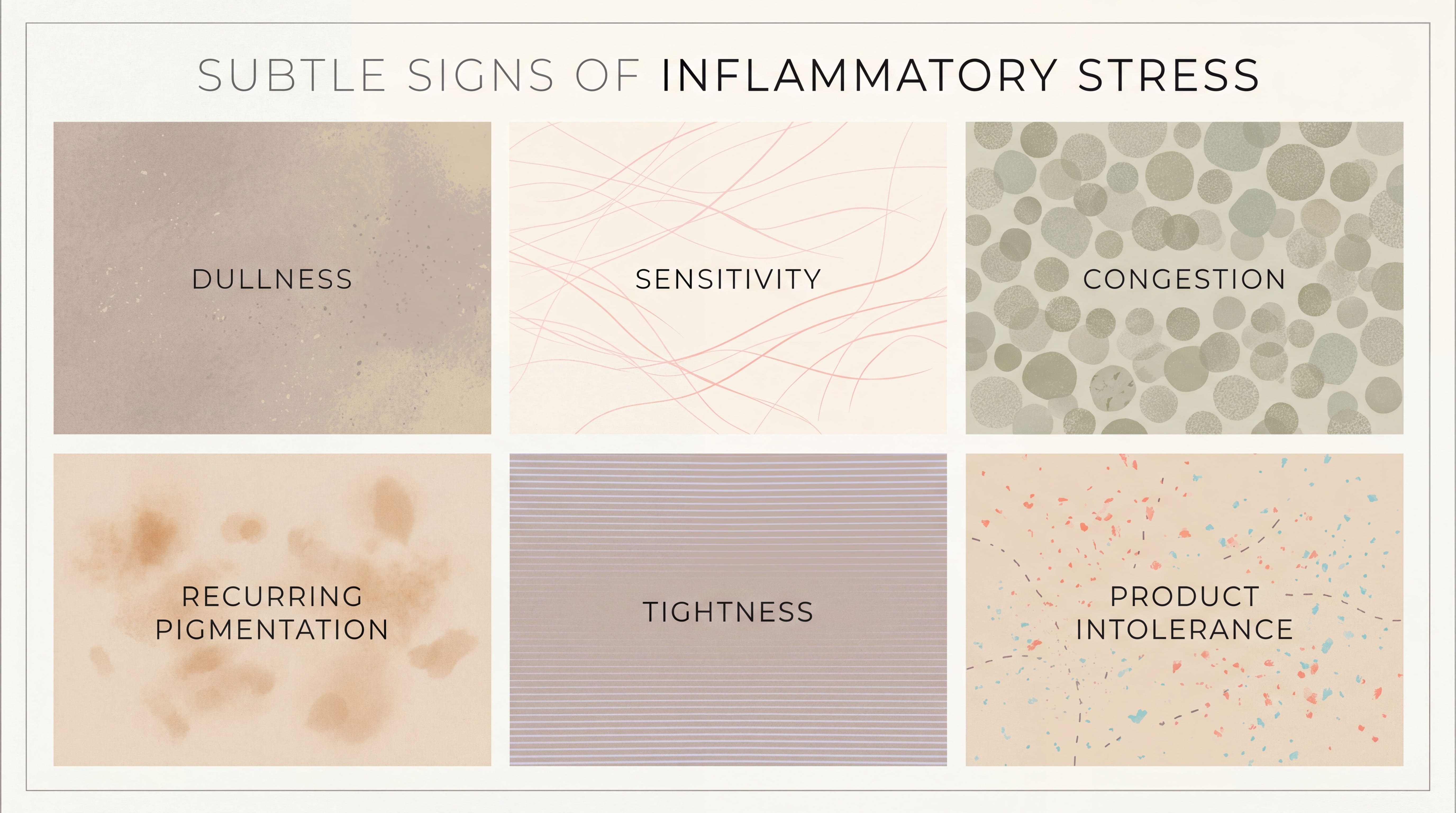
In some people it appears as flushing, rosacea-like sensitivity, or visible irritation. In others it looks like dullness that never resolves, congestion that returns despite exfoliation, fine lines that seem to appear faster than expected, pigmentation that keeps coming back after treatment, or a barrier that becomes reactive to products it used to tolerate.
The common mistake is to interpret every one of these changes as a deficiency requiring a stronger active.
More retinol. More acid. More vitamin C. A stronger peel. A more aggressive protocol.
Sometimes that is exactly the wrong direction.
Inflamed skin often needs fewer instructions, not more. The barrier is already receiving too many signals. Adding another active to a disrupted barrier can create the cycle many people recognise but rarely name: product helps briefly, skin becomes reactive, person stops, skin calms, person restarts stronger, skin worsens again.
That is not a lack of discipline.
It is often a failure to identify the mechanism.
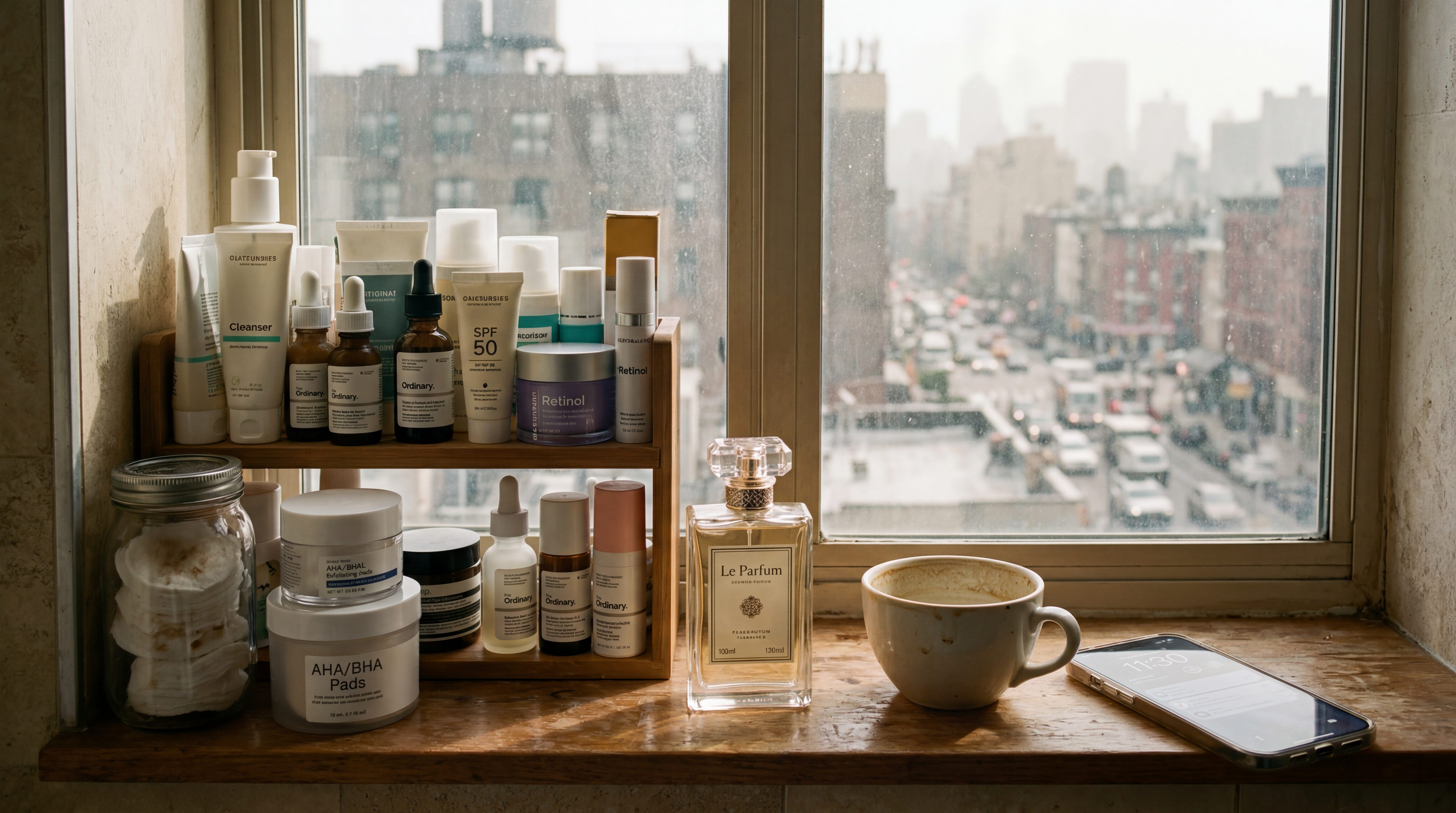
The Main Drivers
The biggest driver is still ultraviolet exposure. Not because sun damage is a tired warning, but because UV exposure triggers oxidative stress and inflammatory pathways that accelerate visible ageing.
SPF is not the boring step.
It is the anti-inflammatory foundation most routines are built on but rarely celebrate.
Pollution is another major contributor, particularly particulate matter in urban environments. Pollution increases oxidative stress on skin and can worsen pigmentation, dullness, and barrier strain.
Fragrance is underestimated. Not everyone reacts to fragrance, but for sensitive or inflamed skin it can be a persistent irritant, especially when used across multiple products.
The issue is not one fragranced cream.
It is the accumulated exposure across cleanser, serum, moisturiser, hair products, body products, and environment.
Over-exfoliation is the modern beauty mistake that keeps returning in new packaging. Acids, scrubs, peels, and exfoliating toners can all be useful in the right context. Used without recovery, they create the very texture and dullness they were purchased to fix.
Sleep deprivation and stress matter because cortisol and inflammatory pathways are not separate from the skin.
The skin is an immune organ.
It registers the life being lived through it.
Dietary patterns can also contribute for some people, particularly high-glycaemic patterns and alcohol. This does not require moralising food. It requires paying attention to patterns without pretending the body is not connected to the skin.
Why Inflamed Skin Looks Older
Inflamed skin often looks older because it loses the qualities people associate with healthy skin before it shows one dramatic symptom.
It becomes less even. Less reflective. Less comfortable. Makeup sits differently. Texture becomes more visible. Fine lines look sharper because the surface is dehydrated and the barrier is not holding water well. Pigmentation appears more stubborn because inflammatory pathways can keep triggering uneven melanin production.
The face can look tired even when the issue is not age itself, but recovery capacity.
This is where beauty marketing becomes dangerous. It teaches the consumer to read every visible change as decline, and decline as something that requires escalation.
Stronger retinoid.
Stronger acid.
Stronger peel.
Stronger brightening serum.
But inflamed skin does not always need a stronger instruction. Sometimes it needs fewer competing instructions.
The difference matters emotionally as much as practically. If you believe your skin is ageing suddenly, you panic. If you understand that your skin may be inflamed, overloaded, or barrier-compromised, you have a different kind of agency.
You can reduce triggers. You can simplify. You can rebuild tolerance. You can stop interpreting every flare, line, and dark mark as evidence that time has accelerated.
This does not make inflammation the explanation for everything. It simply makes it a mechanism worth ruling out before you spend more money on correction.
The most intelligent skincare routine is not always the one with the strongest actives.
It is the one that understands what state the skin is in before deciding what the skin should do next.
What Actually Helps
The anti-inflammatory protocol is not glamorous.
That is one reason it is under-sold.
Niacinamide at 4–5% is one of the most useful barrier-supporting ingredients in this category. It supports barrier repair, helps reduce the look of redness, and is generally well tolerated at moderate percentages.
Higher is not automatically better.
Sensitive skin often does worse with unnecessary intensity.
Azelaic acid is valuable because it sits at the intersection of inflammation, congestion, and pigmentation. It is often used in rosacea-prone and acne-prone contexts, and it can be particularly useful where redness and uneven tone exist together.
For persistent rosacea, acne, melasma, inflammatory pigmentation, sudden skin changes, or painful irritation, the correct move is not endless experimentation.
It is professional assessment.
Colloidal oatmeal has stronger clinical credibility than its quiet reputation suggests. It is barrier-supportive, soothing, and useful in reducing transepidermal water loss. It is one of the rare ingredients that sounds simple because it is simple, not because it is unsophisticated.
Centella asiatica, or cica, has a strong role in calming and supporting repair.
It is not magic.
It is useful because calming the skin is often a better first move than stimulating it.
Sunscreen remains non-negotiable. SPF 50 used consistently is one of the most important anti-inflammatory skincare steps for most people because it reduces one of the major drivers of the problem.
The more radical part of this protocol is not what it adds.
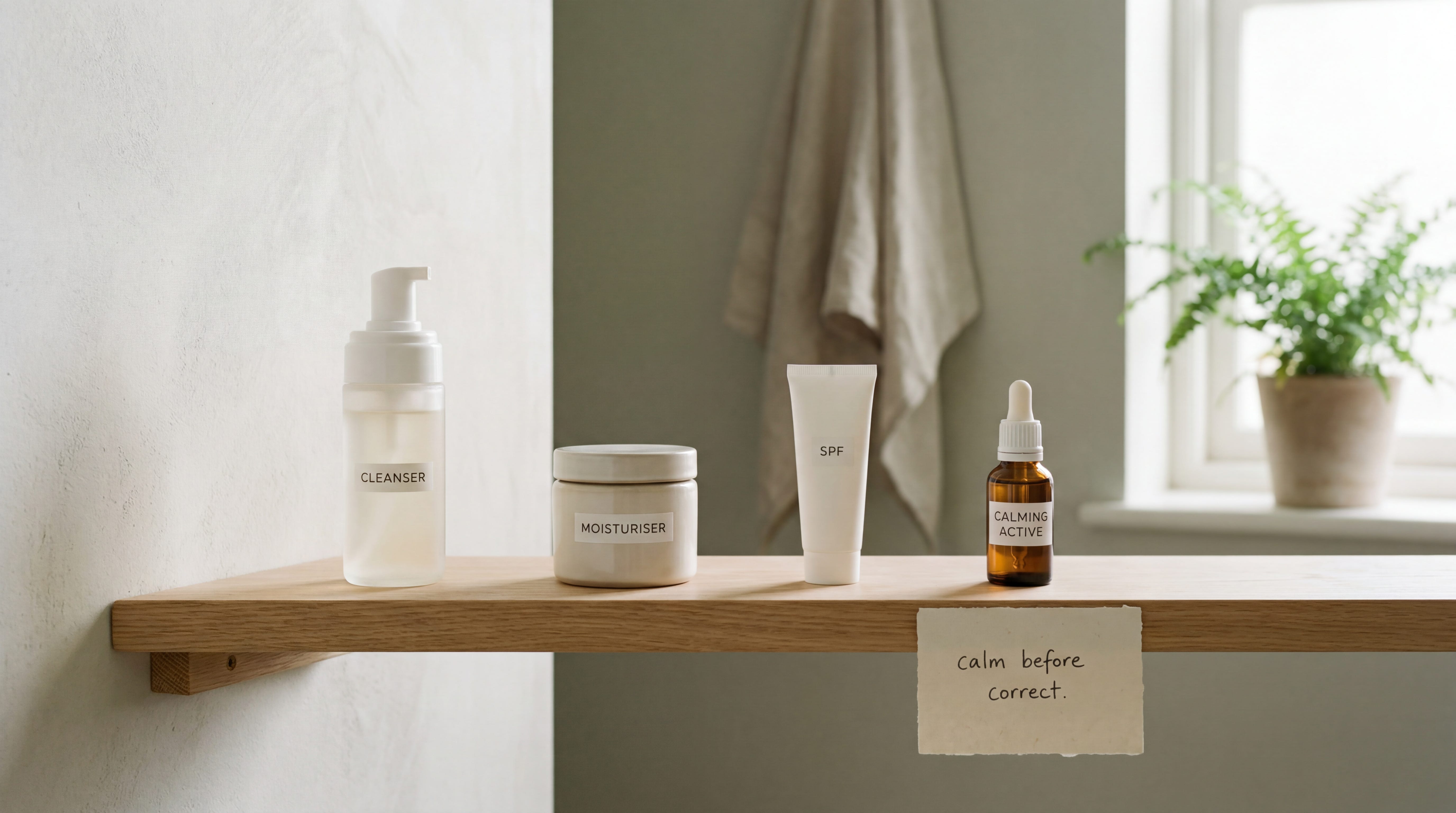
It is what it removes: excess exfoliation, unnecessary fragrance, overlapping actives, and the habit of treating every concern as a problem of insufficient intensity.
The Actives Problem
Retinol, vitamin C, and acids are not the enemy.
They are valuable tools.
The problem is sequencing. Many people introduce actives onto a barrier that is already inflamed, then conclude the active is too strong, the product is wrong, or their skin is simply difficult.
Sometimes all of that may be true.
But often the active is being asked to perform inside a system that is not stable enough to benefit from it.
The better sequence is calmer than most skincare content suggests.
First, reduce inflammatory load. Simplify the routine. Remove irritants. Use sunscreen consistently. Support the barrier. Watch what happens over four to six weeks.
Then, reintroduce actives one at a time, with a clear reason for each.
Not because the product is trending.
Not because the routine looks more serious with more steps.
Because the skin has a specific concern and the product has a specific role.
The skin does not need to be constantly corrected.
It needs to be understood.
What This Changes
The inflammaging lens changes the emotional relationship people have with their skin.
Instead of reading every change as decline, it invites a different interpretation: maybe the skin is not failing. Maybe it is responding. Maybe the dullness, sensitivity, congestion, pigmentation, and lines are not only signs of time, but signs of an inflammatory environment that can be modified.
This is not a miracle promise.
It is not anti-ageing in a new costume.
It is a more precise way to think about visible skin change.
The most useful beauty content does not tell people to fear ageing.
It gives them better language for what is actually happening.
Sometimes the correct next product is not the stronger one.
Sometimes the correct next product is the calming one.
Sometimes the correct next move is to stop making the skin prove it can survive the routine.
Medical disclaimer: This essay is editorial content and does not constitute medical advice. Persistent inflammation, acne, rosacea, pigmentation, sudden skin changes, or painful irritation should be assessed by a qualified dermatologist or medical practitioner.